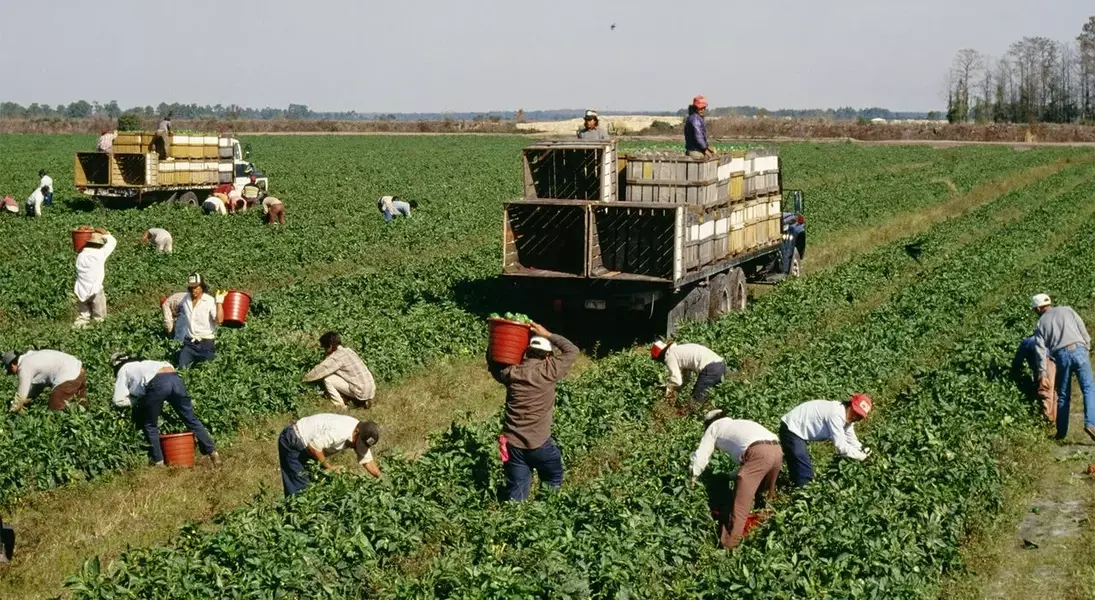
The agricultural industry has long grappled with securing a consistent workforce, a challenge that has grown more acute over time. While the reliance on migrant labor has increased, particularly in sectors like produce farming, the fundamental need for a stable and available workforce remains unmet. Despite modifications to guest worker programs such as H-2A, the underlying issue persists, highlighting a critical gap between policy and practical necessity within the farming community.
Recent pronouncements from government officials underscore a concerning disconnect regarding the reality of farm labor. For instance, the stated commitment to fostering an exclusively American agricultural workforce, coupled with a strict stance against undocumented workers, fails to acknowledge the current composition of the labor force, where a significant portion of field workers may lack formal legal status. While the idea of strategic deportations to avoid food supply disruptions is mentioned, the proposed long-term solutions, like a widespread shift to automation, are simply not viable in the short term for most farming operations. Automation, though promising for the future, is not yet at a stage to fulfill immediate labor demands across the sector.
Farmers require tangible and immediate solutions to ensure the continuity of their operations. The assertion that ample domestic labor is available, even referencing individuals on Medicaid, contradicts the ongoing struggle of agricultural enterprises to attract local workers, despite proactive recruitment efforts. Therefore, while border security is a valid concern, it must be balanced with the pressing need for a dependable farm labor pool. The industry cannot afford to rely on aspirational visions; instead, it demands pragmatic strategies that reflect the current on-the-ground conditions and sustain the backbone of the nation's food production.
Addressing the farm labor crisis demands a balanced and realistic approach that acknowledges the intricate dynamics of the agricultural workforce. By prioritizing practical solutions and understanding the indispensable role of all laborers, regardless of their origin, society can ensure a robust and resilient food supply for future generations.
