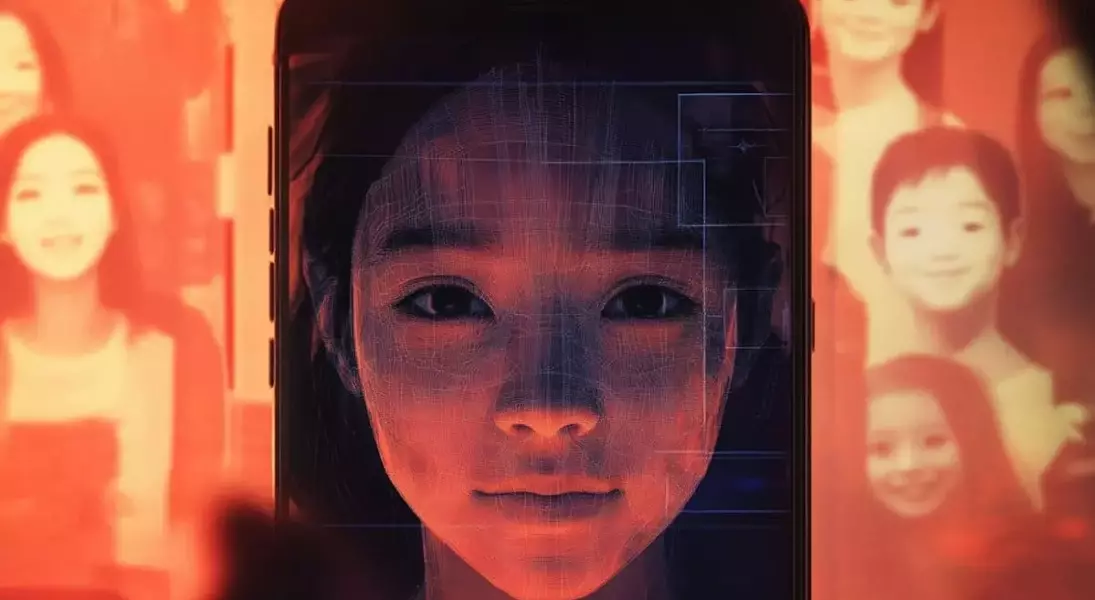
A groundbreaking study conducted by Rutgers University-New Brunswick has unveiled a new dimension of emotional expression in individuals with autism. The research highlights that while autistic individuals utilize the same facial muscles as neurotypical people to convey emotions, their expressions often remain too subtle for the human eye to detect. This discovery could revolutionize how we understand and interact with those on the autism spectrum. Employing a novel technique known as micromovement spikes, researchers managed to capture these faint emotional cues through short smartphone videos, offering fresh insights into previously overlooked communication methods.
The study, spearheaded by Elizabeth Torres, a psychology professor at Rutgers School of Arts and Sciences, utilized advanced data analysis techniques to track microscopic facial movements. These movements, captured via five-to-six-second video clips, revealed emotional nuances that typically go unnoticed. According to Torres, this unintentional disconnect may contribute to social isolation and misunderstandings regarding autistic behavior. The findings suggest that autistic individuals, particularly those who are nonverbal or require significant support, exhibit more varied and unpredictable facial expressions, making it harder for others to recognize their emotional cues.
Through an app developed by Torres and her team, participants were guided through four stages of video recording: practicing video capture, recording a resting face, smiling, and showing surprise. Data was collected across diverse settings, including schools, therapy gyms, and social events. Analysis of 126 participants, including 55 nonspeaking individuals who communicate by typing, demonstrated that although differences exist in the intensity of micro-movements between autistic and neurotypical individuals, the same facial muscles responsible for emotional expression are active in both groups.
Torres emphasized that the challenge lies not in a lack of expression but in the intensity falling outside what neurotypical individuals are accustomed to perceiving. This revelation underscores the importance of redefining our understanding of autism and fostering better social connections. The research suggests that by using accessible tools like smartphone cameras powered by artificial intelligence, there is potential to enhance diagnostic methods and support communication between autistic and nonautistic individuals.
Beyond merely detecting differences, this study offers a powerful tool to expand autism research and promote inclusivity. By recognizing hidden social and emotional competencies, the research aims to bridge gaps in perception and enhance mutual understanding. The implications extend to developing scalable methods for understanding social interactions in autistic individuals, challenging common misconceptions about autism and paving the way for more inclusive approaches in future studies.
This pioneering research not only sheds light on the subtleties of emotional expression in autism but also opens doors to improved diagnostic tools and communication strategies. By harnessing technology and innovative methodologies, the study fosters a deeper appreciation of the diverse ways individuals express emotions, ultimately enhancing social interactions and understanding across the spectrum.
