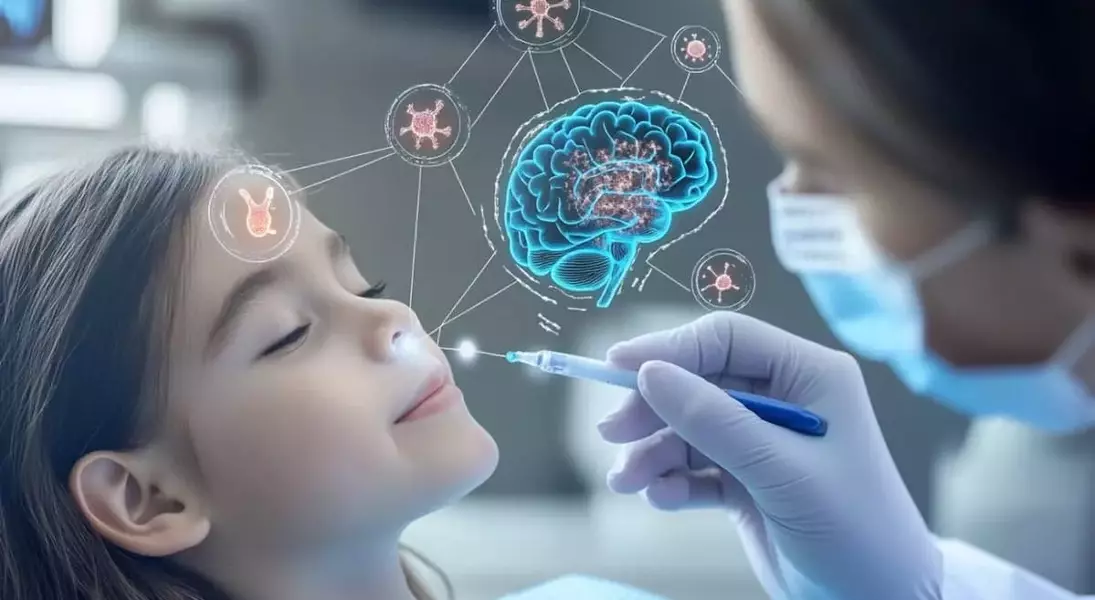
A groundbreaking study conducted by a team from the University of Hong Kong has uncovered a significant relationship between oral microbiota and autism spectrum disorder (ASD). By analyzing oral samples from young children, researchers identified 11 bacterial species that could serve as potential biomarkers for ASD. This discovery paves the way for a non-invasive screening method with an impressive 81% accuracy rate in predicting autism. The findings may revolutionize early detection methods by complementing traditional observation-based approaches.
The study highlights the potential for routine dental visits to include simple oral swabs that could identify children requiring further evaluation. With prevalence rates rising globally, this innovation holds promise for earlier intervention during critical developmental stages.
Pioneering Research on Oral Bacteria and Autism
By examining differences in oral bacterial communities between children with ASD and neurotypical peers, researchers have made a substantial leap forward in understanding the connection between microbiota and autism. Their analysis revealed distinct microbial compositions in each group, leading to the identification of key bacterial species associated with ASD. These findings suggest a promising avenue for creating practical tools that enhance early detection efforts.
Building on prior research into gut microbiota's role in autism, this study uniquely focuses on oral bacteria. The research team analyzed dental plaque samples using advanced sequencing techniques, discovering six discriminatory species present in children with ASD and five in neurotypical controls. This differentiation underscores the importance of oral microbiota in identifying potential biomarkers. Moreover, the lower bacterial diversity observed in ASD children compared to controls adds another layer of complexity to the microbiome-brain connection. As such, these results provide valuable insights into the mechanisms underlying autism development and offer new directions for future investigations.
Revolutionizing Early Screening Methods
This innovative approach introduces a highly accurate, non-invasive method for detecting autism at an early stage. The prediction model developed by the team achieves an impressive 81% accuracy rate through oral sampling, offering a biological complement to current subjective observation-based methods. Such advancements could transform how professionals identify autism cases, allowing for earlier referrals and timely interventions when they are most effective.
With autism prevalence rates steadily increasing worldwide, early identification remains crucial for optimizing therapeutic outcomes. Integrating oral swab screenings into routine dental check-ups represents a practical solution for expanding access to early detection services. The next phase of the study aims to expand the sample size, ensuring robust validation and refinement of this technology. Ultimately, the goal is to make this screening tool widely available, enabling more children to benefit from early intervention therapies during pivotal developmental periods. This breakthrough not only enhances our understanding of the microbiome-brain link but also empowers healthcare providers with reliable tools to support autistic children and their families effectively.
