The recent narrative arc of Prime Video's flagship fantasy series takes a bold turn by reinterpreting the legendary lore surrounding the creation of the Ruling Ring. As the storyline progresses in the third season, the central antagonist Sauron remains relentlessly focused on unraveling a crucial metallurgical mystery previously guarded by Elven craftspeople. After resorting to shape-shifting deception and coercive interrogation techniques against captive Elves, the dark ruler finally determines that crafting his ultimate instrument of dominion demands rare metals originating directly from the blessed realm of Valinor. This pivotal realization leads him to target a legendary hammer crafted by the legendary ancient artisan F→anor, setting up a dramatic journey toward the volcanic hearth of Mount Doom, as conventional smithing fires prove entirely ineffective against such an enduring heirloom. By altering the traditional chronological sequence of canonical events and introducing new story catalysts, the television adaptation presents a distinct version of Middle-earth's history that departs significantly from J.R.R. Tolkien's original legendarium. These developments not only heighten the personal drama and emotional conflicts between key figures such as Galadriel, Celeborn, and Sauron, but they also reframe the tragic downfall of Elven civilization and the dark lord's ascension in a fresh, suspenseful television context.
Throughout the recent episodes, the plot centers on Sauron's desperate quest to unlock the secret technique required to forge a ring capable of subjecting all others to his command. Believing that fallen Elven masters harbored invaluable craftsmanship secrets, the villain subjects prisoners to severe physical trials in pursuit of answers. Through cunning manipulation and disguise, Sauron deceives his captives into revealing that the key to perfecting the master ring lies in incorporating gold and silver infused with the light and purity of Valinor, echoing the elemental properties previously used in sacred Elven jewelry.
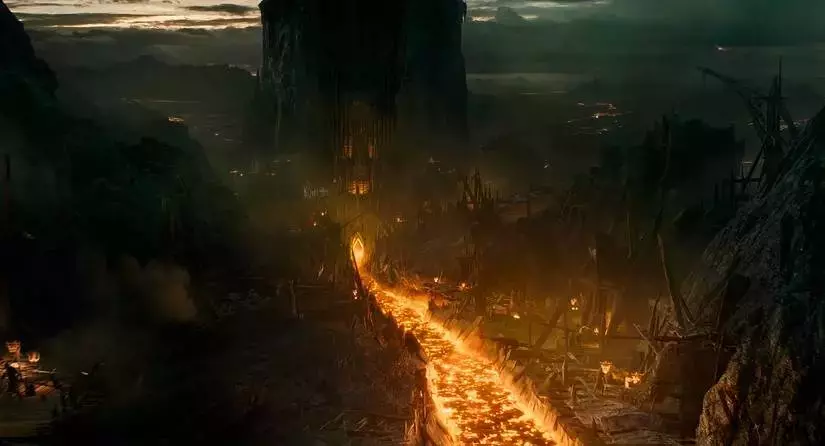
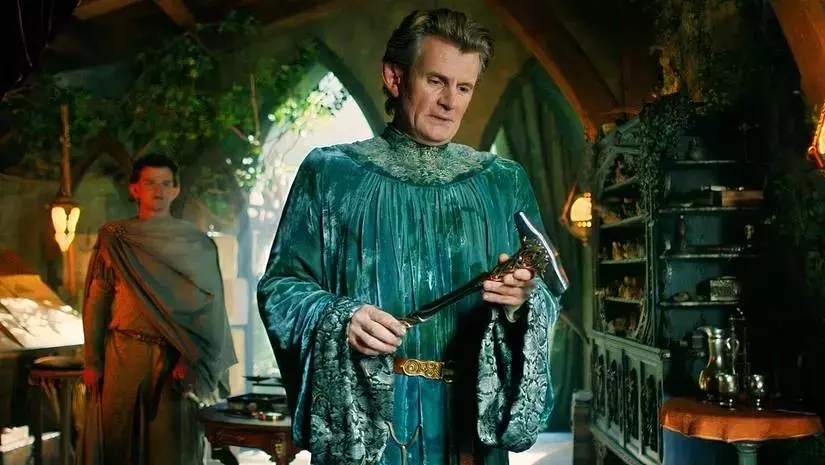
Having acquired F→anor's historic smithing hammer from the fallen realm of Eregion, Sauron recognizes that the artifact itself contains the exact Valinorean metals needed for his sinister endeavor. However, legendary Elven craftsmanship ensures that the hammer cannot be destroyed or melted by ordinary flames, nor can standard forge heat alter its composition. The narrative establishes that only the intense, primordial heat found within the depth of Mount Doom possesses the destructive power required to melt down F→anor's tool, driving the villain toward the volcanic domain where his dark throne will ultimately reside.
This artistic choice marks a notable divergence from Tolkien's original texts, where the precise composition and crafting steps of the Ruling Ring remain deliberately shrouded in mystery. In the published literature, the dark antagonist forged the Ring centuries prior to the fall of Eregion and the loss of its master smiths. The television series rearranges these timelines to build a more compact, character-driven dramatic arc, intertwining the fate of ancient Elven heirlooms with Sauron's evolving plot to conquer the lands of Middle-earth.
Ultimately, this reimagined narrative trajectory transforms the origin of Middle-earth's most potent weapon into a personal tragedy involving ancient legacies and stolen heirlooms. As the dark lord moves closer to fulfilling his ominous ambition at the volcanic core of his dark territory, the story highlights the tragic irony of Elven creations being repurposed for total subjugation, paving the way for a dramatic confrontation that will shape the future of the realm.
