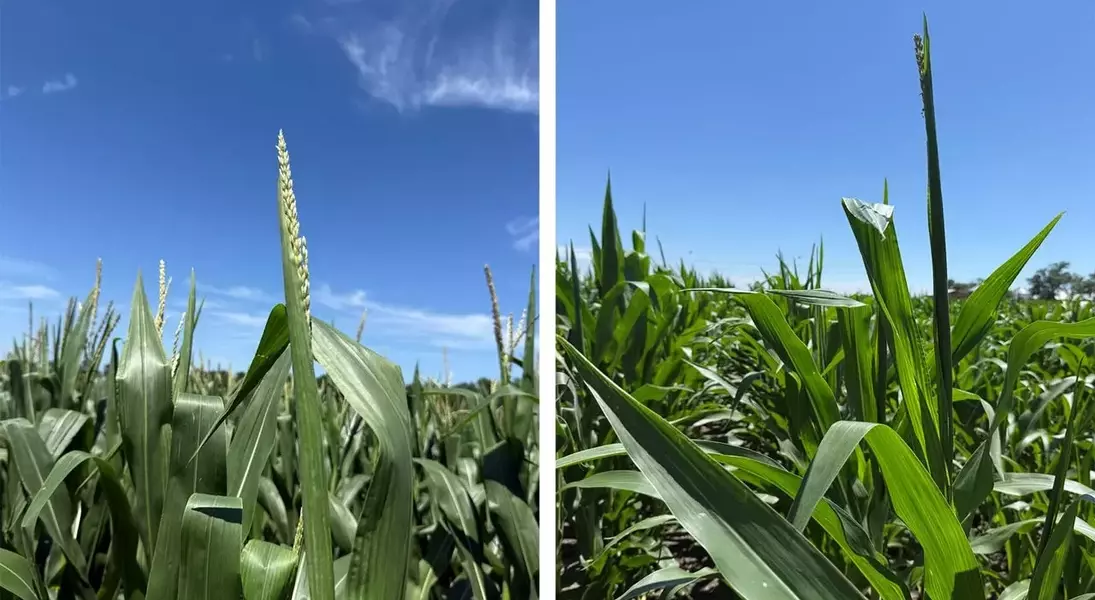
Across the agricultural heartland of the Midwest, a baffling phenomenon is emerging in cornfields: a significant number of plants are exhibiting a peculiar condition where their tassels, crucial for pollination, remain tightly encased within their leaves. This unusual growth pattern has raised concerns among farmers and agronomists alike, prompting a closer examination of its causes and potential repercussions on the region's vital corn yields.
Unraveling the Mystery: When Corn Tassels Stay Concealed
A Widespread Anomaly in Corn Development
Farmers from Kansas to Illinois are reporting an unprecedented sight in their fields: corn tassels that fail to emerge fully from their protective leaf sheaths. This deviation from normal development has agricultural experts puzzled, noting its widespread but hybrid-specific nature. Such an occurrence is rare, with seasoned agronomists recalling only a handful of similar instances over decades of observation.
The Science Behind the Wrapped Tassels
The prevailing theory suggests this phenomenon is a manifestation of a 'rapid growth syndrome,' likely triggered during the late vegetative stages of the corn plant's life cycle. A confluence of specific environmental conditions — including elevated temperatures, abundant moisture, and optimal nutrient availability — is thought to stimulate this atypical growth, causing the tassels to begin shedding pollen while still enveloped by leaves.
Yield Implications: Awaiting the Harvest's Verdict
The primary concern arising from this unusual tassel behavior revolves around its impact on pollination efficiency. Modern corn hybrids are meticulously bred for synchronous silk emergence and tassel development to ensure optimal fertilization. When pollen dispersal occurs within the confines of the leaf, it can hinder silk receptivity, potentially leading to reduced kernel set. While the full extent of yield reduction is yet to be determined, observations suggest that a significant portion of ovules may remain unpollinated in affected fields, particularly those planted early in the season.
Assessing the Damage: Field Scouting and Future Outlook
Agronomic specialists emphasize the critical need for vigilant field scouting to understand the scope of the problem. While direct intervention to correct the wrapped tassels may not be feasible, thorough observation will provide invaluable insights into the percentage of affected plants and the severity of pollination compromise. This data will be crucial for farmers to explain any unexpected yield shortfalls during harvest and to inform future planting and management strategies, adapting to the unpredictable nuances of crop development in a changing agricultural landscape.
