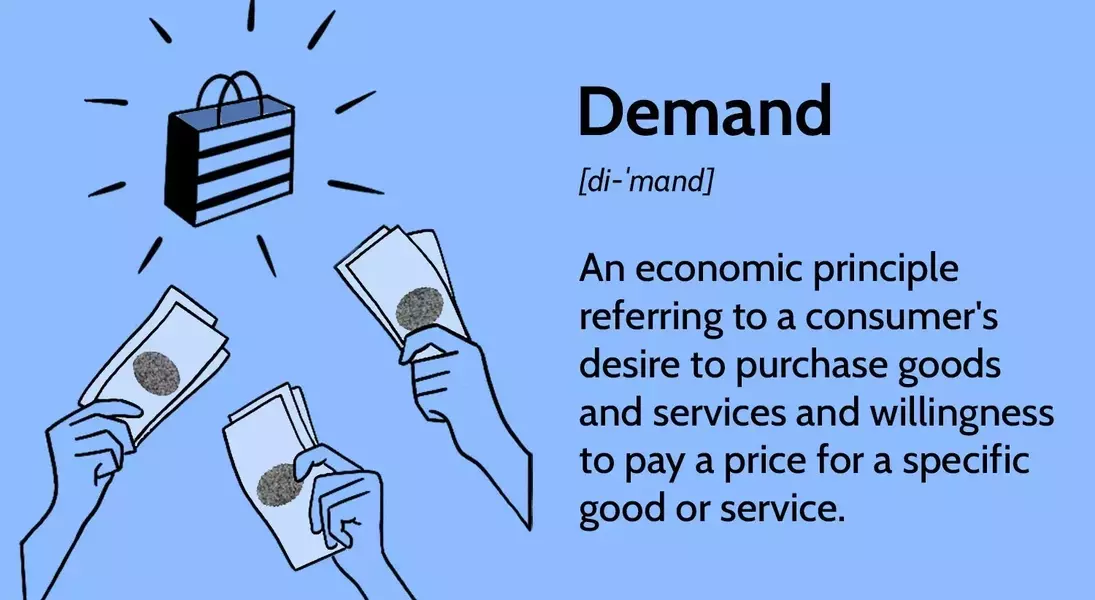
In economics, demand refers to the total quantity of a specific good or service that consumers are willing and able to acquire at various price points within a defined timeframe. It's a critical concept for businesses to understand, influencing production levels, pricing strategies, and ultimately, profitability. The dynamic interplay between consumer desire and purchasing power shapes market trends and economic stability.
At its core, the concept of demand hinges on consumer behavior. When prices for products or services decrease, individuals tend to increase their purchasing volume. Conversely, an escalation in price generally leads to a reduction in demand. This fundamental principle dictates market dynamics and consumer choices. Businesses invest significant resources in forecasting demand accurately to avoid potential pitfalls: underestimating demand can result in lost sales and missed revenue opportunities, while overestimating can lead to an accumulation of unsold inventory and financial losses. Therefore, a precise understanding of demand is crucial for effective business operations and overall economic health.
Demand is intrinsically linked with supply, forming the bedrock of market equilibrium. While consumers aim to secure goods at the lowest possible cost, suppliers strive to maximize their profits. A delicate balance must be struck: excessively high prices deter consumers, leading to insufficient sales for suppliers, whereas prices set too low, though boosting demand, may fail to cover production costs or yield adequate profits. Various elements can sway demand, such as a product's intrinsic appeal, the availability and pricing of competing alternatives, consumer access to financing, and the perceived scarcity of a good or service. These factors contribute to the ever-shifting landscape of market demand.
Several key factors predominantly influence consumer demand. Firstly, the price of a product or service inversely correlates with demand; lower prices typically stimulate higher demand. Secondly, consumer income plays a significant role; an increase in disposable income usually translates to greater purchasing power and thus higher demand. Thirdly, the pricing of substitute goods is crucial. If the cost of alternative products rises, the demand for the original product tends to increase. Fourthly, consumer preferences are vital; a growing liking for a particular product naturally boosts its demand. Lastly, consumers' expectations regarding future price changes can drive current demand; if they anticipate a price hike, they may accelerate their purchases.
The Law of Demand describes the fundamental inverse relationship between the price of a good or service and the quantity consumers are willing to purchase. This principle states that as the price of an item increases, the quantity demanded will decrease, assuming all other factors remain constant. Conversely, if the price of an item decreases, the quantity demanded will increase. It is important to note that this law focuses exclusively on the price-quantity relationship, abstracting away from other demand determinants like consumer income, preferences, or the availability of substitutes. When these other factors come into play, they can cause shifts in the entire demand curve, which is distinct from a movement along the curve caused solely by price changes.
The demand curve serves as a visual representation of the Law of Demand, graphically illustrating how changes in price affect the quantity of a product or service consumers are willing to buy. This downward-sloping curve, with price on the vertical axis and quantity demanded on the horizontal axis, provides businesses with a valuable tool. By observing the curve, companies can identify optimal pricing strategies that balance consumer purchasing behavior with desired profit margins. Conversely, the supply curve typically slopes upward, indicating that producers are willing to offer more goods at higher prices. The convergence of these two curves reveals the market equilibrium, where the quantity demanded meets the quantity supplied at a specific price point.
The point where the supply and demand curves intersect is known as market equilibrium, representing the price at which the quantity of a good or service consumers are willing to buy perfectly matches the quantity suppliers are willing to sell. Any shift in demand, for instance, an increase, will move the demand curve to the right, leading to a new intersection point at a higher price. This signifies that consumers are now prepared to pay more for the same product. In dynamic, competitive markets, these equilibrium prices are constantly adjusting as various factors influencing supply and demand evolve. This continuous adjustment process ensures that markets tend towards efficiency, balancing the interests of both buyers and sellers.
The concept of demand extends beyond individual markets to encompass the entire economy. While specific goods and services face unique market conditions influenced by factors such as competition and consumer preferences, macroeconomics examines aggregate demand. Aggregate demand represents the total demand for all goods and services produced within an economy by all consumers. Unlike individual market demand, aggregate demand is not sensitive to factors like competition between substitute goods or shifts in consumer preferences among different products, as it considers the overall consumption of all goods. Therefore, understanding both market demand for specific items and aggregate demand for the economy as a whole is essential for comprehensive economic analysis.
In the realm of macroeconomic policy, central authorities like the Federal Reserve actively manage aggregate demand to influence economic stability. When there is a need to curb demand, monetary tools such as raising interest rates and limiting the growth of the money supply and credit are employed, which typically leads to increased prices. Conversely, to stimulate demand, these authorities might lower interest rates and expand the money supply, providing consumers and businesses with more funds for spending. However, the effectiveness of such policies is not always guaranteed. For example, during periods of rising unemployment, consumers may be hesitant to spend or take on debt, even with attractive low interest rates, indicating that even aggressive policy interventions can face limitations in influencing demand.
Ultimately, demand stands as a foundational principle in economics, illustrating the propensity of consumers to acquire goods and services at varying price levels. This understanding is instrumental for businesses in making informed decisions about pricing and inventory management, thereby contributing to their profitability. For consumers, a grasp of demand empowers them to make judicious purchasing choices. The demand curve visually underscores the inverse relationship: as prices escalate, demand typically recedes, and conversely, a decrease in prices often precipitates a surge in demand.
