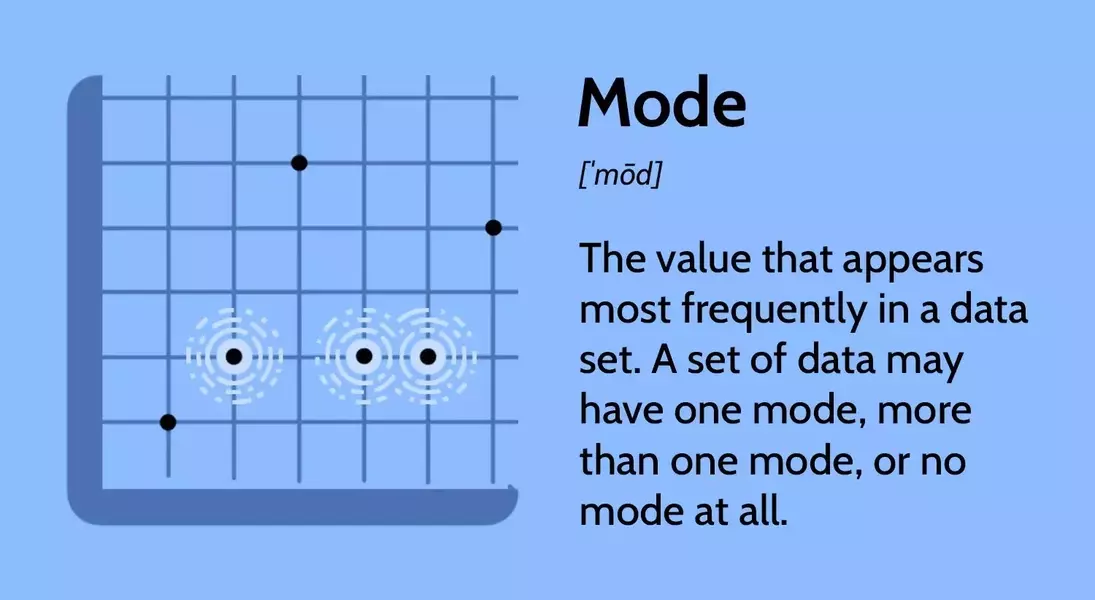
In statistical analysis, a fundamental concept is the mode, which identifies the most frequently appearing value within a collection of data points. This measure of central tendency provides insight into the predominant element in a dataset. Unlike the average (mean) or the middle value (median), the mode focuses purely on frequency, making it particularly insightful for certain types of information.
The mode's utility is most apparent when dealing with categorical data, where numerical averages or ordered medians are not applicable. For instance, determining the most preferred product in a market survey or the most common demographic characteristic in a study relies heavily on identifying the mode. A dataset can exhibit various modal patterns: it might have a single mode, multiple modes (bimodal or multimodal), or even no mode if all values appear with the same frequency. Researchers and analysts must consider these variations when interpreting the mode, as its presence and nature can significantly influence the conclusions drawn from the data. While simple to compute, understanding its strengths and weaknesses—such as its insensitivity to extreme values and potential instability with small datasets—is essential for accurate and meaningful statistical interpretation.
Mastering the concept of the mode, alongside other statistical measures like the mean and median, empowers individuals to gain a comprehensive understanding of data distributions. This knowledge is not confined to academic or research settings; it has practical applications in everyday decision-making. From businesses optimizing inventory based on popular product choices to individuals assessing trends, the ability to identify and interpret the mode allows for more informed actions and a deeper appreciation of the patterns that shape our world.
