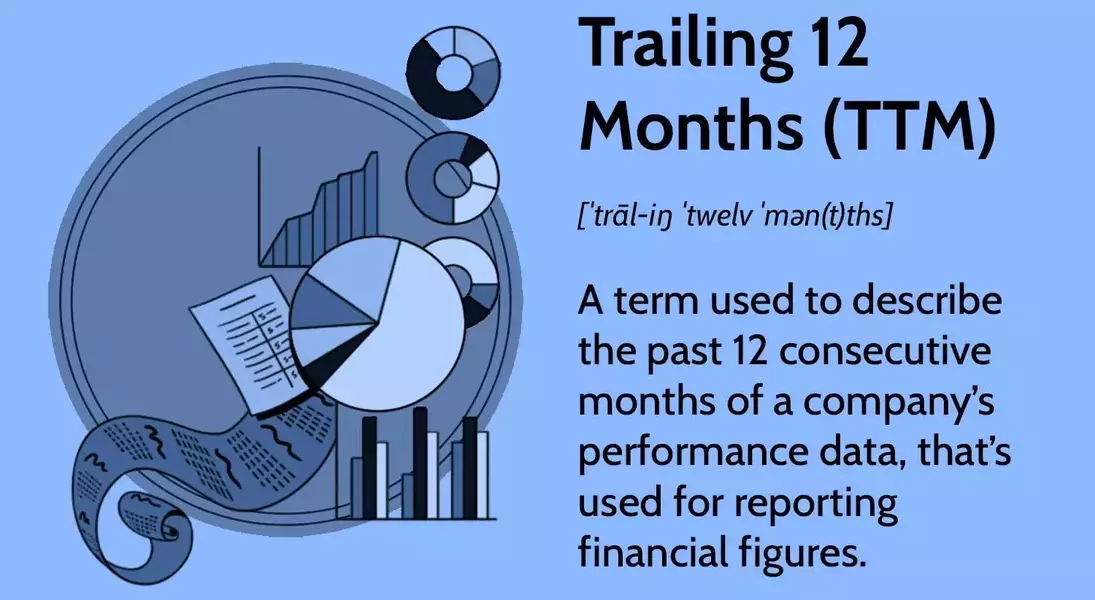
Trailing 12 Months (TTM) serves as an essential analytical tool in finance, offering a dynamic and seasonally adjusted view of a company's performance over the most recent year. Unlike annual reports, which can quickly become outdated, TTM provides a continuous, up-to-the-minute snapshot of a business's financial health. This metric is instrumental in assessing various financial indicators, including earnings, revenue, and key ratios like the price-to-earnings (P/E) ratio and yield. By utilizing TTM data, investors and analysts can gain deeper insights into a company's growth trajectory, profitability, and overall financial stability, facilitating more informed investment decisions and strategic planning.
Current Financial Trajectories: A Deep Dive into Trailing 12 Months (TTM)
In the dynamic realm of financial markets, understanding a company's performance is paramount. Trailing 12 Months (TTM) offers a vital lens through which to view this performance, providing a continuous, 12-month rolling sum of financial figures. This methodology contrasts sharply with traditional annual reports, which can quickly become stale in rapidly evolving market conditions. TTM data, by its very nature, is more current and responsive, reflecting the immediate past and offering a more accurate representation of a company's ongoing financial state.
For analysts and investors, TTM is not just a calculation; it's a critical tool for detailed evaluation. It encompasses a range of financial metrics, including earnings, revenue, earnings per share (EPS), and dividend yield. These figures are indispensable for conducting fundamental analysis, allowing for precise comparisons of a company's recent performance against its historical trends and against competitors within the same industry. For example, a significant increase in TTM revenue from previous periods highlights robust growth, offering a clear signal to potential investors.
Locating and calculating TTM data typically involves aggregating financial information from a company's most recent quarterly reports. For revenue, this means summing the figures from the last four consecutive quarters. Similarly, TTM yield for a stock is determined by totaling the dividends paid over the past 12 months and dividing by the current share price. The TTM Price-to-Earnings (P/E) ratio, a widely used valuation multiple, is derived by dividing the current stock price by the TTM EPS. These calculations provide a clear, current valuation snapshot, distinct from forward-looking P/E ratios that rely on projected earnings.
Ultimately, TTM figures offer a consistent and relevant framework for evaluating financial health, regardless of a company's fiscal year-end. They smooth out seasonal fluctuations and provide a clearer picture of underlying trends, making them invaluable for both internal financial assessments and external investment analysis.
The concept of Trailing 12 Months (TTM) provides a continuous, up-to-date overview of a company's financial health, enabling more precise analysis and comparison than static annual reports. This dynamic approach to financial metrics equips investors with the agility to respond to market shifts and make informed decisions, highlighting the importance of current data in an ever-changing economic landscape.
