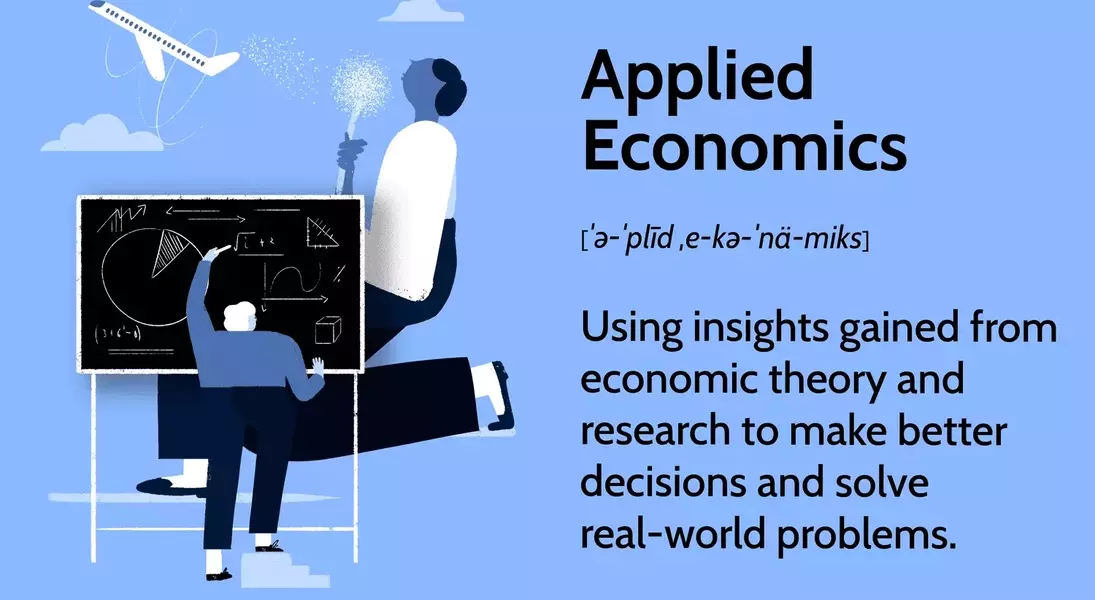
Applied economics serves as a crucial bridge, transforming abstract economic theories and research findings into actionable insights for navigating real-world challenges. This practical discipline empowers individuals, organizations, and governments to make more informed decisions by systematically evaluating the potential consequences of various choices. By rigorously analyzing costs, benefits, incentives, and human behavior, applied economics enhances strategic planning across diverse sectors, including personal finance, business operations, and public policy formulation. It essentially provides a framework for predicting outcomes and optimizing strategies in a dynamic world.
Translating Economic Principles into Actionable Strategies
Applied economics is fundamentally about leveraging economic theories and empirical research to address concrete situations and guide practical decision-making. Its core objective is to improve the quality of choices made by individuals, businesses, and policymakers through a rigorous assessment of costs versus benefits, an understanding of incentives, and an appreciation of human behavioral patterns. This field often employs case studies and econometrics—the application of real-world data to statistical models—to test theories and compare results, thereby establishing hypothetical outcomes based on established economic principles.
For instance, in the realm of personal finance, consider a consumer contemplating the purchase of a luxury item with limited funds. Applied economics allows for a comprehensive assessment of the financial implications, comparing the immediate cost and long-term impact on assets against the anticipated benefit of owning the item. This analytical approach helps individuals ascertain the true value and feasibility of such an expenditure. Beyond monetary decisions, understanding concepts such as rational choice, game theory, behavioral economics, and evolutionary economics can empower individuals to make superior decisions in various aspects of their personal lives and relationships.
Similarly, businesses extensively utilize applied economics to refine their strategic choices. By integrating economic laws of supply and demand with historical sales data and market research, companies can optimize pricing strategies and production levels. An awareness of economic leading indicators and their relevance to specific industries and markets enables more effective operational planning and overall business strategy. Furthermore, insights derived from concepts like principal-agent problems and transaction costs can inform the development of more effective compensation structures, contract designs, and corporate strategies, fostering greater efficiency and success.
For public policymakers, applied economics is an indispensable tool. Economists are frequently tasked with forecasting the macroeconomic and microeconomic consequences of proposed policies, or evaluating the impact of existing ones. Macroeconomic modeling is routinely used to project changes in key indicators such as unemployment rates, economic growth trajectories, and inflation levels at national, regional, and state scales. Understanding how economic incentives and behavioral responses, shaped by public policy, influence real-world trends like job creation, migration patterns, and crime rates, is crucial for developing effective policies and mitigating unintended consequences. For example, applying the principles of supply and demand, alongside empirical research, can lead to more informed policy decisions regarding minimum wage laws.
Applied economics equips us with the analytical framework necessary to navigate the complexities of decision-making in a world of finite resources. By moving beyond abstract theories to practical application, it offers valuable insights for improving outcomes across individual, corporate, and governmental spheres. Embracing this interdisciplinary approach fosters greater efficiency, smarter planning, and more effective problem-solving in our dynamic economic landscape.
