The global stage of artificial intelligence and robotics has witnessed a remarkable milestone with the launch of the World Humanoid Robot Games. This event signifies a pivotal moment in technological advancement, showcasing the astonishing capabilities of humanoid robots in a competitive arena. Far beyond mere entertainment, these games serve as a testament to the ongoing evolution of robotics, illustrating how these intelligent machines are increasingly integrated into complex, dynamic environments. The meticulous planning and execution of such an event underscore a global drive towards accelerating innovation, fostering international collaboration, and exploring the multifaceted applications of robotic systems in both industry and daily life. It is a vibrant display of ingenuity, where the boundaries between human athletic prowess and mechanical precision begin to blur, offering a glimpse into a future profoundly shaped by advanced automation.
The World Humanoid Robot Games: A New Era of Athleticism Unfolds in Beijing
In a spectacular display of cutting-edge technology and athletic ambition, the inaugural World Humanoid Robot Games officially commenced on a recent Thursday in the vibrant metropolis of Beijing, China. This historic event, hosted within the magnificent confines of Beijing's National Speed Skating Oval, has drawn an impressive contingent of over 500 sophisticated humanoid robots. These mechanical competitors, representing 280 distinct teams from 16 countries including powerhouses like China, the United States, Brazil, and Germany, are vying for top honors in a series of challenging disciplines.
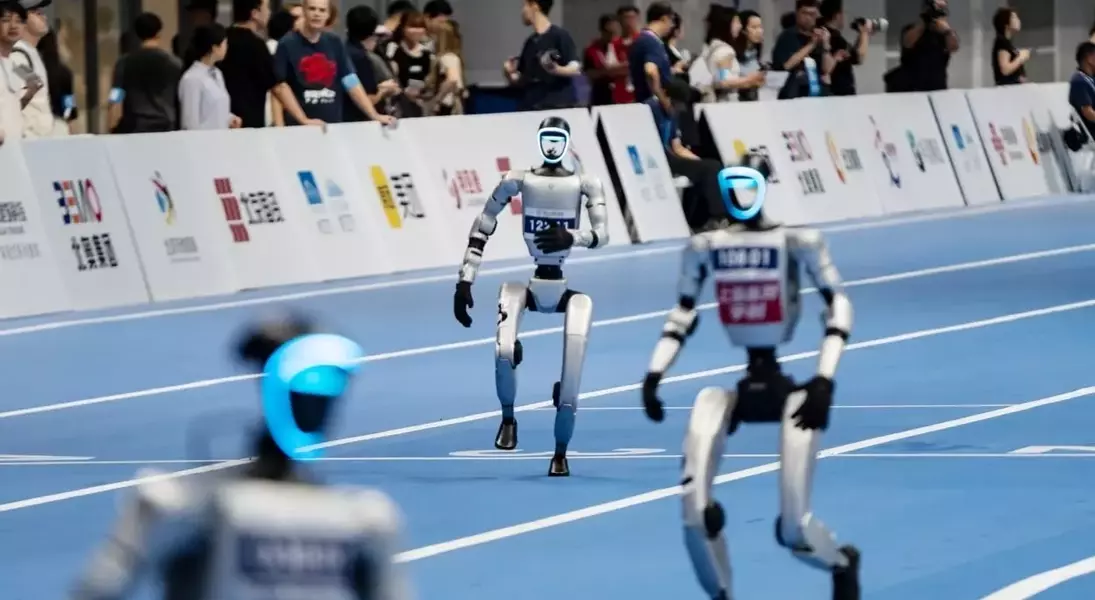
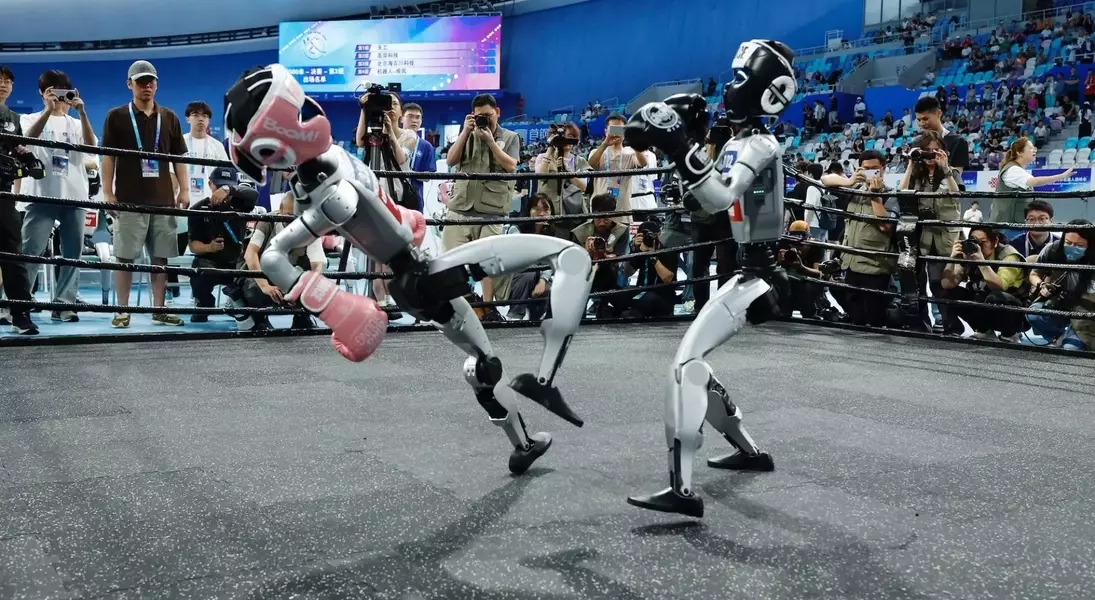
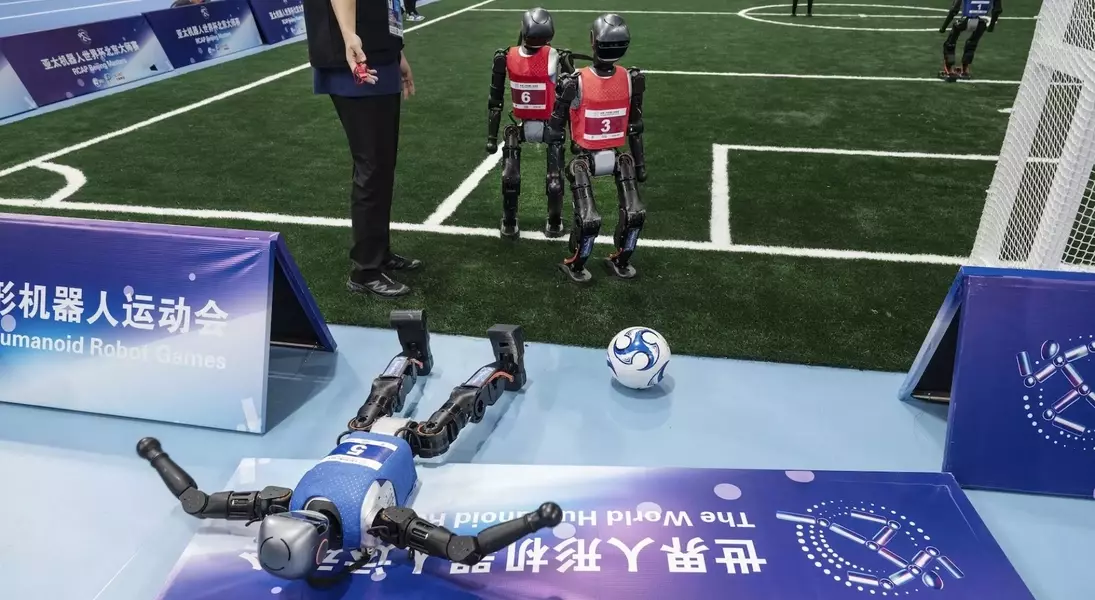
The participating entities span the globe, encompassing renowned universities and leading private robotics enterprises. Notable names include China's own Unitree Robotics, Noetix Robotics, and Fourier Intelligence, all at the forefront of robotic innovation. Each robot, remotely controlled by its human support team, is undergoing rigorous evaluation across 26 varied events designed to test their agility, precision, and overall skill. The competition portfolio is expansive, featuring traditional sports such as football, intricate martial arts demonstrations, elegant gymnastics routines, and a full suite of track and field events, including high-speed running races and a demanding 100-meter obstacle course.
To ensure fair and rigorous competition, stringent criteria have been established for all robot participants. Each robot must be either self-developed, procured, or leased by the competing teams. Furthermore, they are mandated to possess a defined trunk, fully functional upper limbs, and two bipedal feet, reflecting the humanoid nature of the games. An essential requirement also stipulates that each robot must incorporate its own independent energy source. Beyond these general specifications, specific events carry additional restrictions; for instance, robots participating in long jump or high jump events are expressly prohibited from utilizing elastic or auxiliary take-off devices, emphasizing inherent robotic capabilities.
This landmark event builds upon a series of successful robot sporting competitions held earlier this year in China. These precursors include the world's first-ever humanoid half-marathon, which captivated audiences in April, and a thrilling robot kickboxing match that took place in May. Demonstrating the advanced capabilities of its creations, Unitree proudly secured the first gold medal of the Games on a recent Friday. One of their swift Unitree H1 humanoid robots triumphantly completed the demanding 1,500-meter race in an impressive time of 6 minutes and 34 seconds, setting an early benchmark for robotic athletic excellence.
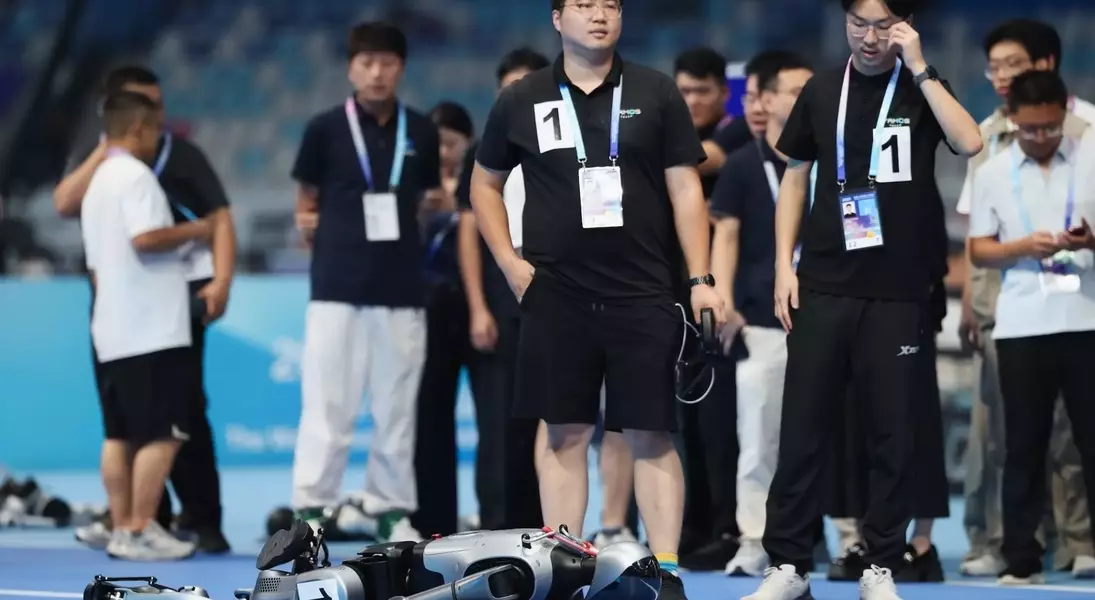
The captivating action of the World Humanoid Robot Games is being broadly covered, with major media outlets offering live stream access, allowing a global audience to witness this extraordinary convergence of technology and sport. The games are scheduled to conclude on Sunday, with public attendance welcomed through ticket sales. The atmosphere is uniquely dynamic, with human engineers fervently directing their robotic proxies from the sidelines, their faces etched with concentration as their mechanical athletes execute complex maneuvers, occasionally stumbling but always demonstrating remarkable resilience. The opening ceremony itself was a spectacle, featuring a full robotic band, diminutive robots dancing alongside children, a robotic fashion parade, and even martial arts demonstrations by charming panda-themed robots.
The organizers of this monumental event—a collaborative effort involving the Beijing Municipal People's Government, China Central Radio and Television, the World Robotics Cooperation Organization, and the Robocup Asia-Pacific International Council—have articulated a clear vision. Their aim is to forge an international nexus that seamlessly integrates technological competition, economic stimulus, and cross-cultural exchange. They envision a competitive and exhibition platform that will not only accelerate the profound integration of robots into human society but also significantly contribute to economic growth and societal progress, ultimately fostering a deep symbiosis between science, technology, sports, and culture.
While competitive robotics events are not entirely new, the sheer scale and comprehensive nature of the World Humanoid Robot Games mark a significant global public relations triumph for China. This initiative is strategically aligned with the nation's ambitious expansion in robot manufacturing, a concerted effort to enhance its competitive standing against other global technology leaders, particularly the United States. In a clear demonstration of its commitment, China’s National Development and Reform Commission announced plans in March to allocate an astounding ¥1 trillion (equivalent to $138 billion USD) towards robotics development over the forthcoming two decades. Furthermore, China's industrial robot installations surged by five percent in 2024, solidifying its position as the world's largest robot market.
The World Humanoid Robot Games represent more than just a competition; they are a profound cultural and scientific phenomenon. From the perspective of an observer, it is truly awe-inspiring to witness these machines, once confined to the realm of science fiction, now exhibiting athletic capabilities on a global stage. This event serves as a powerful reminder of humanity's ceaseless pursuit of innovation and our innate desire to push the boundaries of what is possible. It sparks contemplation on the future of work, leisure, and even companionship, as robots become increasingly sophisticated and integrated into our daily lives. The sight of human controllers strategizing intensely while their metallic athletes perform embodies a unique synergy, hinting at a future where humans and advanced machines collaborate in unprecedented ways. It's an exciting, albeit slightly disquieting, preview of a world where robotic excellence could someday rival, or even surpass, human performance in various fields, compelling us to redefine our understanding of capability and competition.
