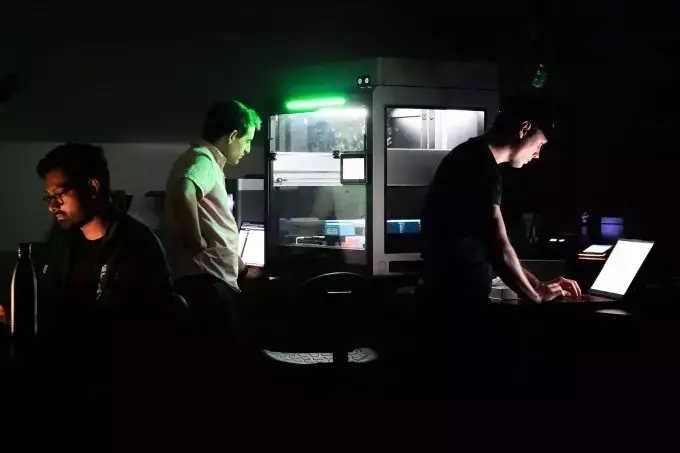
In a unique twist of fate, Cristian Ponce and Théo Schäfer, dressed as Indiana Jones at a Halloween party organized by Entrepreneur First, discovered their shared vision for transforming laboratory work. Their backgrounds in bioengineering and underwater robotics led them to identify a critical need in the scientific community: automating repetitive lab tasks. Inspired by recent advancements in large language models (LLMs), they founded Tetsuwan Scientific to bridge the gap between human intent and robotic execution.
From Manual Labor to Automated Precision
Ponce and Schäfer recognized the inefficiencies in traditional lab work, particularly the time-consuming nature of manual pipetting. The duo aimed to develop a system that could automate these processes without requiring specialized programming skills or expensive equipment. By leveraging lower-cost lab robots and integrating them with advanced AI, they sought to create a more accessible solution for researchers.
Their initial challenge was clear: existing automation solutions were either too complex or too costly. Scientists often found it simpler and more cost-effective to perform tasks manually. However, Tetsuwan Scientific’s approach differed. They focused on modifying affordable, off-the-shelf robots to handle routine lab duties. This innovation promised not only to save time but also to reduce human error, making experiments more reliable and reproducible. The founders believed that by freeing up technicians from mundane tasks, they could redirect their efforts toward more creative and intellectually stimulating aspects of research.
Empowering Robots with Scientific Reasoning
A pivotal moment came when Ponce and Schäfer witnessed OpenAI’s multi-model product launch, which demonstrated LLMs' ability to interpret scientific data and provide actionable insights. This breakthrough inspired them to integrate AI into their robots, enabling them to understand and execute experiments autonomously. The key was developing software that could translate scientific intentions into precise robotic actions, something previously unattainable.
Tetsuwan Scientific’s robots are designed to think like scientists. Equipped with sensors and sophisticated algorithms, these machines can assess experimental outcomes and make adjustments as needed. Unlike earlier robotic systems, which lacked contextual understanding, Tetsuwan’s creations can interpret physical properties such as viscosity and crystallization. This capability allows them to perform tasks accurately and adapt to changing conditions. With an alpha customer already onboard and significant funding secured, the company is poised to revolutionize how scientific discoveries are made, potentially leading to unprecedented advancements in various fields.
