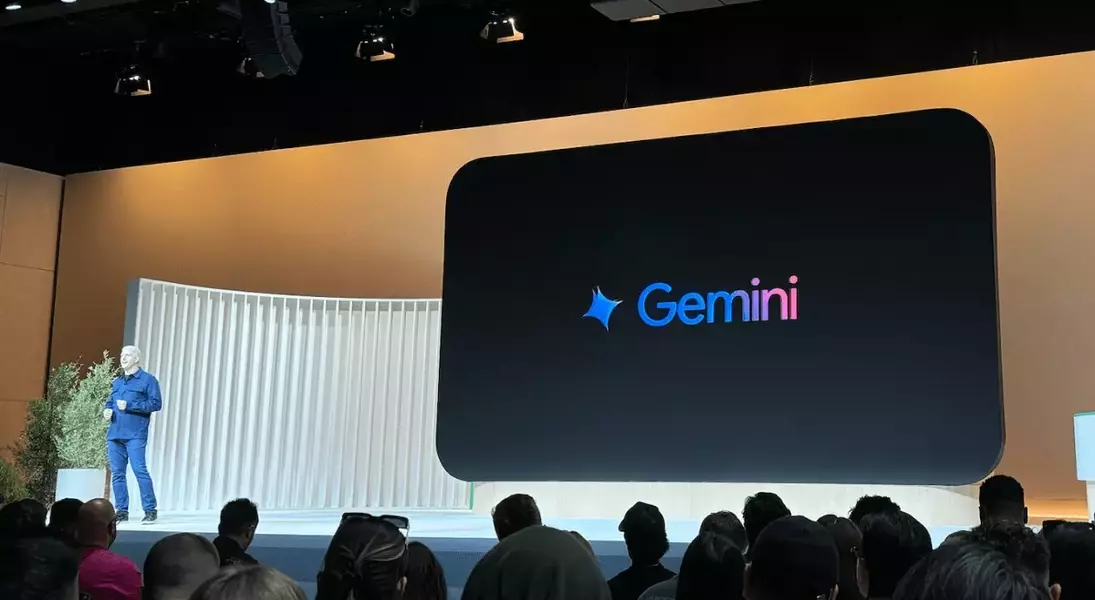
In a significant development, Google has announced the expansion of its advanced in-depth research mode for its AI-powered assistant to an additional 40 languages. This move follows the recent launch of this feature, which aims to provide users with a comprehensive research tool capable of generating detailed reports through multiple iterative steps. The challenge lies in ensuring accuracy and grammatical correctness when summarizing information in various native languages. Despite these challenges, Google is committed to using reliable sources and conducting rigorous fact-checking to maintain the integrity of the information provided.
Enhancing Global Accessibility with Multilingual AI Research Tools
In the vibrant landscape of artificial intelligence, Google has taken a major step forward by extending its cutting-edge research capabilities to a broader audience. The company's latest initiative now supports a diverse array of languages, including Arabic, Bengali, Chinese, Danish, French, German, Gujarati, Hindi, Indonesian, Italian, Japanese, Kannada, Korean, Malayalam, Marathi, Polish, Portuguese, Swahili, Spanish, Tamil, Telugu, Ukrainian, and Urdu. This expansion was announced just weeks after the initial release of the in-depth research mode, which allows premium Google One users to harness an AI-driven research assistant that iteratively refines its findings.
The process begins with crafting a research plan, followed by sourcing relevant information. Subsequently, the tool performs searches to extract knowledge, repeating this cycle several times before finalizing a report. Ensuring the reliability of information is paramount, especially when dealing with multiple languages. HyunJeong Choe, Director of Engineering for the Gemini app, emphasized the importance of using clean data and trustworthy sources. However, she acknowledged that inaccuracies can still occur, particularly in summarizing content in non-English languages like Hindi.
To address these challenges, Google employs a multi-layered approach. Native sources are prioritized, and the backend leverages Google Search to validate information. Before deployment, thorough evaluations and fact-checks are conducted in each language. Jules Walter, Product Lead for International Markets, highlighted the company's commitment to quality assurance, noting that local teams review datasets to ensure accuracy from a native perspective. Additionally, contractors tasked with improving Gemini's responses are now required to evaluate every prompt meticulously, ensuring comprehensive feedback on content, style, and format.
From a journalistic standpoint, this expansion underscores the growing importance of multilingual AI tools in bridging communication gaps across different cultures and regions. It highlights the need for continuous improvement in AI technologies to ensure they deliver accurate and culturally sensitive information. As AI continues to evolve, the focus should remain on fostering trust and reliability, ensuring that these tools serve as valuable assets in the global exchange of knowledge.
