Real Madrid, a titan of European football, has undergone a comprehensive restructuring during the recent summer transfer window, marking a pivotal moment in the club's illustrious history. This strategic overhaul, spearheaded by newly appointed manager Xabi Alonso, signifies a determined effort to rejuvenate the squad and reclaim its dominant position in both domestic and continental competitions. After a trophy-less and often disheartening previous season, which culminated in the departure of former coach Carlo Ancelotti, the club's leadership, under the vigilant eye of president Florentino Perez, sanctioned a substantial investment in new talent and a complete re-evaluation of its operational strategies. This ambitious project aims to infuse new energy and tactical sophistication into the team, setting the stage for a promising and highly anticipated new campaign.
Real Madrid's Transformative Summer: Insights into Alonso's Strategic Vision
The dawn of Real Madrid's 2025-26 La Liga season later today, commencing with a highly anticipated fixture against Osasuna, heralds a new and exhilarating chapter for the club under the astute leadership of Xabi Alonso. The preceding season was undeniably a period of profound disappointment for the Bernabeu faithful, characterized by a conspicuous absence of major silverware and a series of frustrating setbacks that ultimately led to the departure of esteemed coach Carlo Ancelotti.
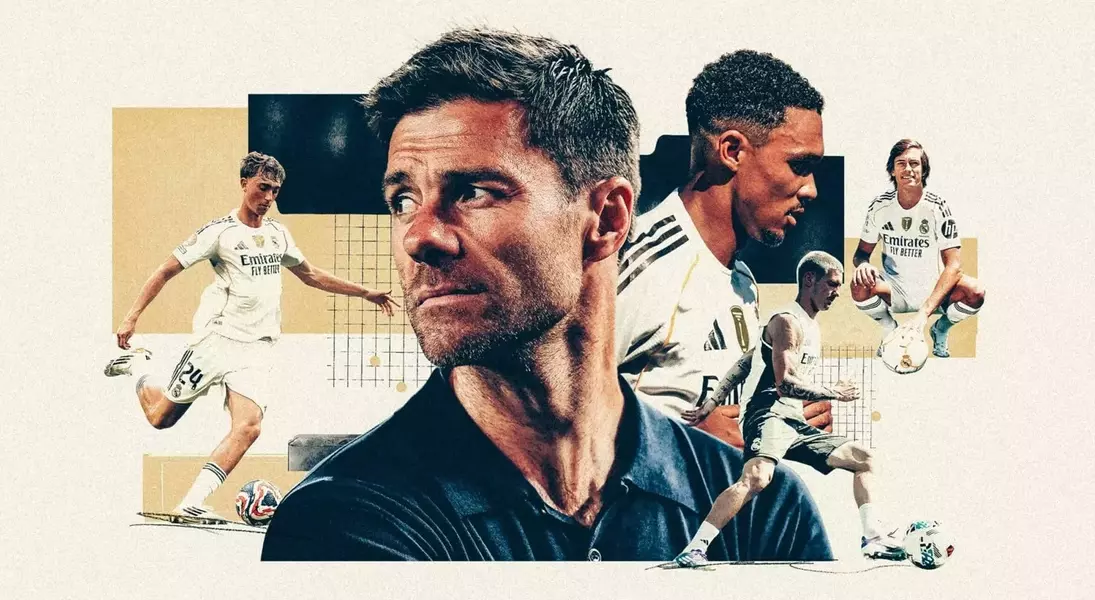
In a decisive response to these challenges, club president Florentino Perez moved swiftly to appoint Alonso, a figure revered for his tactical acumen and deep understanding of the game. Concurrent with this managerial change, Perez authorized an impressive transfer budget of approximately €180 million (£155 million; $210.5 million), which was meticulously allocated to secure pivotal new signings. Among these significant acquisitions were defensive stalwarts Dean Huijsen, Alvaro Carreras, and Trent Alexander-Arnold, alongside the highly promising young Argentine playmaker, Franco Mastantuono. These strategic recruitments were designed to fortify key areas of the squad and inject much-needed vitality.
Alonso's earnest endeavors to revitalize a team that had, by the conclusion of Ancelotti's tenure, appeared somewhat listless, remarkably commenced during the Club World Cup. This tournament, while offering glimpses of optimistic potential to Madridistas, also starkly underscored certain enduring vulnerabilities. Drawing upon insights from numerous credible sources within Real Madrid and those intimately connected to the club, the narrative of Real Madrid's transformative summer rebuild unfolds with compelling detail. These sources, preferring anonymity to safeguard their relationships, have illuminated the intricate processes and strategic decisions that shaped this pivotal period.
The meticulous planning for Madrid's 2025-26 squad was initiated well in advance of Ancelotti's official departure to assume the Brazil national team role in late May. The shortcomings of the Italian's previous term became painfully evident through a series of bruising defeats, notably a resounding 5-1 aggregate loss to Arsenal in the Champions League quarter-finals and a staggering 16 goals conceded across four domestic encounters against Barcelona, including the Copa del Rey final.
Alonso, at 43 years old, possesses an intimate understanding of Madrid's operational intricacies, having played under Ancelotti at both Madrid and Bayern Munich. Prior to formally assuming his new role on May 26, Alonso diligently sought perspectives from trusted associates within the club, including his former teammate Alvaro Arbeloa, now coaching Real Madrid Castilla, and Luis Llopis, who continues as the first-team goalkeeper coach.
His past as a player has afforded Alonso profound insight into the inner workings of Madrid under the steadfast leadership of Perez. The 78-year-old president remains the ultimate arbiter of all significant strategic decisions. Crucial to the club's scouting endeavors is Juni Calafat, the chief scout, who is instrumental in identifying promising talents, particularly younger prospects, and fostering vital relationships with agents and families. Meanwhile, the long-serving director general, Jose Angel Sanchez, acts as the crucial liaison between the operational levels and President Perez, orchestrating all complex negotiations.
In stark contrast to Ancelotti, whose involvement in transfer planning was reportedly limited and at times a source of frustration for him, Alonso has been far more deeply integrated into the process of identifying and persuading target players. Some observers contend that the club's hierarchy, including Perez himself, has finally embraced many of Ancelotti's prior assessments, acknowledging the imperative for substantial investment, particularly in strengthening the defensive line.
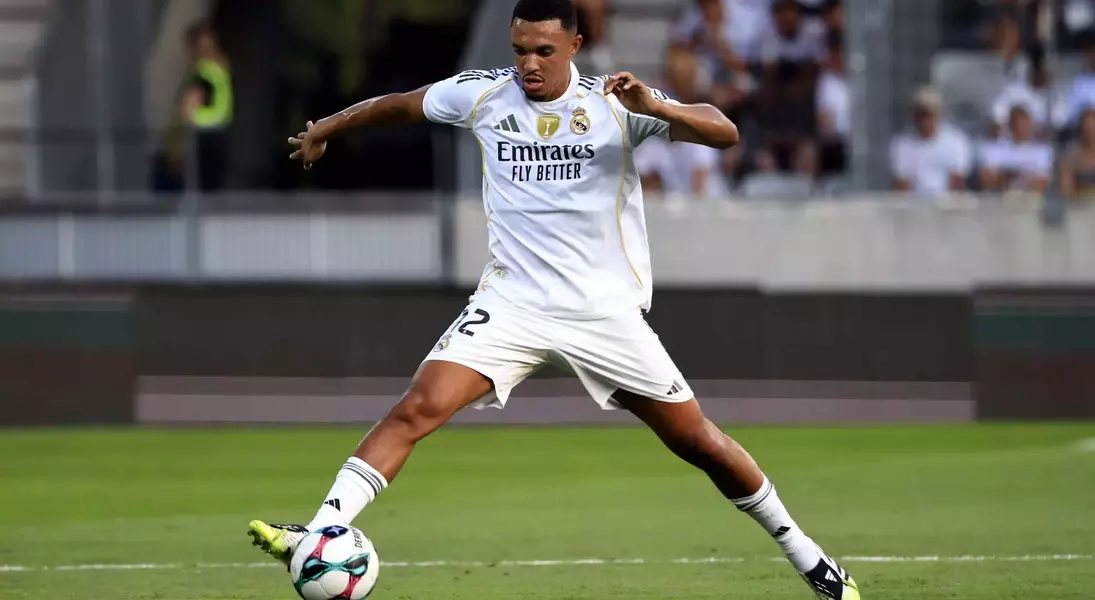
The impetus to secure Alexander-Arnold from Liverpool originated well before Ancelotti's departure, with his availability perceived as a significant 'market opportunity.' The club's decision to disburse €10 million to facilitate the English right-back's participation in the Club World Cup underscored a clear strategic intent to utilize this tournament as a means of moving forward from the previous season's challenges. Alonso's appointment preceding this competition was similarly motivated by this forward-looking vision.
Alonso's influence was particularly evident in the acquisitions of former Bournemouth center-half Huijsen and ex-Benfica left-back Carreras. Both players align perfectly with Alonso's tactical blueprint, which envisions a departure from Ancelotti's deeper defensive block in favor of a more proactive, high-pressing approach. Initial reservations regarding the £50 million (€58 million, $67.5 million) release clause for Huijsen were ultimately overcome, especially given the scarcity of fit central defenders – with only 22-year-old backup Raul Asencio available – during the lead-up to the Club World Cup. While Madrid's sporting directors and coach reached a consensus on Carreras, a former Madrid youth player, a deal could not be finalized in time for the tournament. Decisions concerning players whose contracts were expiring were ultimately made by the club's hierarchy. Jesus Vallejo's departure was predetermined, while Luka Modric and Lucas Vazquez, both former teammates of Alonso, were not offered new contracts.
The Club World Cup presented Alonso with a formidable challenge. He was tasked with rapidly assimilating his new squad, constructing an entirely new defensive unit, and concurrently implementing the compact team organization, rapid counter-pressing, and meticulously rehearsed patterns of play that had proven so successful during his tenure at previous club Bayer Leverkusen.
During training sessions in Miami, the Basque manager maintained a pervasive presence, often engaging directly with players, feeding balls into drills, or setting them up for shooting exercises. A full month spent together in the United States proved invaluable in cultivating new personal relationships within his squad. Alonso himself articulated the importance of this shared experience during a tournament press conference, stating, \"Spending so much time together, at breakfast, lunch, and dinner, helps build those bonds of confidence which are so important for the future.\"
This fresh tactical approach was vividly symbolized by fitness coach Ismael Camenforte Lopez, who ingeniously integrated physical preparation with the practice of specific match scenarios – a distinct departure from predecessor Antonio Pintus’s more traditional, hard-running methods. Another notable innovation was the use of drones to record each training session, with analysts then producing concise yet detailed video summaries for Alonso to meticulously illustrate his precise expectations to the players. A coaching staff source conveyed to The Athletic that \"The main objective was to change the dynamics. With more videos, more personalization, more detailed analysis, and more focus on things like punctuality and intensity.\"
As the tournament progressed, individual and collective performances demonstrated marked improvement, at least until the semi-final stage. While Ancelotti’s 4-3-3 formation was largely retained, a three-man defensive setup was also judiciously trialed. Alonso’s positive influence on the team was most conspicuously displayed during crucial knockout victories against Juventus (1-0) and Borussia Dortmund (3-2). The new coach’s in-game tactical adjustments garnered widespread admiration, with key players such as Jude Bellingham, Federico Valverde, Aurelien Tchouameni, and Alexander-Arnold deployed in varied positions at different moments, showcasing remarkable tactical flexibility.
Furthermore, there was a discernible increase in the trust placed in younger players. Arda Guler, who had largely been a benchwarmer the previous season, emerged as a regular starter, while 21-year-old forward Gonzalo Garcia was selected for the starting XI ahead of established players Rodrygo and Brahim Diaz. Both decisions yielded positive results, with Guler excelling in a newly assigned deeper playmaking role, and Gonzalo impressively netting four goals in six games during the U.S. tour.
The 4-0 semi-final defeat by Paris Saint-Germain, though undeniably embarrassing and painful, served as a crucial learning experience for both Alonso and the club's leadership. Glaring individual errors by Asencio and Antonio Rudiger underscored the continuing need for defensive reinforcements. Moreover, the 4-3-3 formation, featuring Kylian Mbappe and Vinicius Junior on the wings, was ruthlessly exposed and punished by Luis Enrique’s impeccably organized Champions League victors. In his post-match press conference, Alonso candidly admitted, \"There’s a lot of room for improvement. It hurts today, but it will also serve us as a guide for where we need to improve.\"
Following the Club World Cup, Real Madrid's players embarked on their summer holidays, yet back at the Bernabeu, the meticulous planning persisted. Alonso maintained close communication with key club figures even during his vacation in his home province of Gipuzkoa. The promising Argentinian international Mastantuono soon arrived, a significant club investment of €63.2 million, in which Alonso played an intimate role. The decision was also made to revisit the acquisition of Carreras to upgrade the left-back position. A deal was successfully concluded with Benfica for €50 million, with a separate transfer agreed upon for 21-year-old Castilla left-back Rafael Obrador to move in the opposite direction.
Sources indicated that while the Madrid hierarchy remained theoretically open to additional signings, many of Alonso’s primary requests had already been fulfilled, and the squad already comprised 24 senior players, just shy of the maximum allowance of 25. A significant hurdle to any further changes, however, was the reluctance of any current first-team players to depart. Spanish newspaper Marca vividly illustrated this predicament on August 1 with a front-page feature portraying nine Madrid players – Andriy Lunin, Fran Garcia, Ferland Mendy, David Alaba, Rudiger, Dani Ceballos, Garcia, Endrick, and Rodrygo – none of whom were central to Alonso’s long-term plans but all expressed a strong desire to remain at the club.
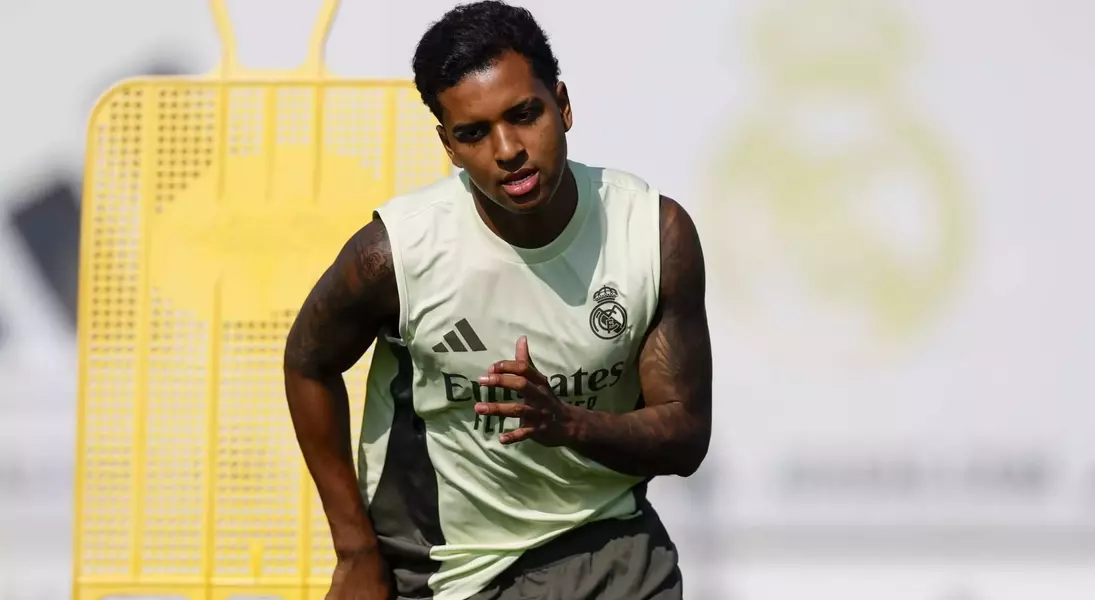
Rodrygo was identified as the most obvious candidate for a substantial transfer fee; however, securing a buyer proved challenging. Ideally for Alonso, any funds generated from player sales would be reinvested in acquiring a top-tier central midfielder, a role expertly filled by Guler during the Club World Cup. Manchester City’s holding midfielder Rodri’s name has been mentioned in club circles, although no concrete plans for a move this summer were ever formulated.
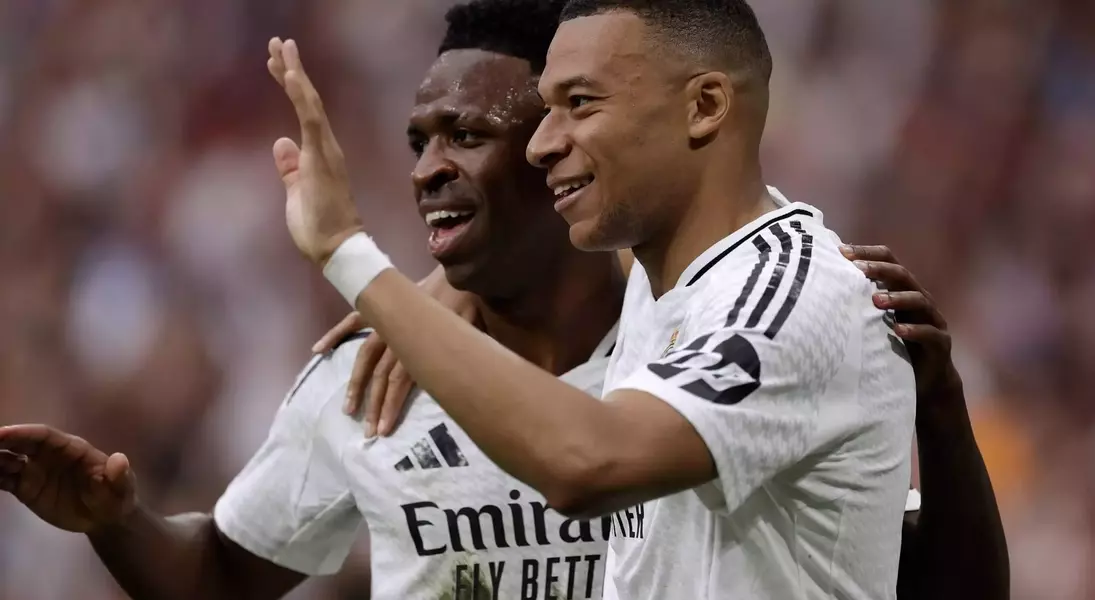
The addition of another experienced central defender would also be highly beneficial, particularly to facilitate a three-man defense when tactical requirements demand it. However, the most pressing tactical dilemma emerging from Madrid’s time in the United States, especially after the humbling PSG defeat, revolved around how to seamlessly integrate both Mbappe and Vinicius Jr into the starting XI while adhering to Alonso’s non-negotiable, high-energy, and high-pressing tactical philosophy. This remains an exceptionally sensitive issue. Negotiations for a new contract for Vinicius Jr have encountered obstacles, with the Brazilian’s dip in form since missing out on the 2024 Ballon d’Or trophy raising concerns among the Madrid hierarchy. Meanwhile, Mbappe was permitted to inherit Modric’s coveted No. 10 jersey, despite the club’s usual policy of prioritizing longer-serving players for such esteemed numbers.
The need for squad balance was further emphasized by the assignment of the No. 9 shirt to 19-year-old Brazilian forward Endrick, while young homegrown rival Garcia secured a new contract and will be a part of the first team for the 2025-26 season. Behind the scenes, strategic maneuvers continued at the Valdebebas training center. Real Madrid’s medical services underwent a comprehensive overhaul with the explicit aim of improving the club’s injury record. Furthermore, Pintus transitioned from day-to-day training responsibilities into a newly created ‘performance manager’ role.
The extension of last season into July with the Club World Cup meant that Madrid had a mere 15 days of pre-season training before the commencement of their 2025-26 campaign. Real Madrid TV commentators vociferously criticized La Liga for denying the team a longer break, a potent reminder of the acrimony and tumultuous atmosphere surrounding the club last season. The logistical complexities of traveling to play a friendly against WSG Tirol in Austria last Tuesday further complicated preparations. According to staff sources, the coaching team did not suggest arranging this particular match.
Such inherent challenges are an unavoidable aspect of managing at Real Madrid, where simplicity is a rare commodity. What distinguishes this summer, particularly when juxtaposed with recent years, is the profound influence Alonso has exerted in shaping both the squad and the overall club setup. Above all his star players, Alonso is now openly recognized as the visionary leader of what the club fervently hopes will be an exciting new project. This affords the coach a welcome degree of control, as he firmly believes he possesses the strategic foresight to guide the team back to competing for the most coveted trophies, and that substantial progress has already been made towards this ambitious objective. However, this also entails personal risks for a manager who is still relatively young, especially if the new season does not unfold according to his meticulously laid plans.
The transformative summer at Real Madrid under Xabi Alonso's guidance signals a resolute shift towards a more proactive, tactically flexible, and youth-oriented approach. As observers, we are compelled to acknowledge the courage and foresight demonstrated by the club's leadership in entrusting such a significant rebuild to a relatively young manager. Alonso's evident commitment to integrating innovative training methods and fostering stronger personal bonds within the squad is commendable, reflecting a modern vision for football management. However, the true measure of this ambitious project will lie in its execution during the unforgiving competitive season. The inherent challenges of integrating new talent, managing player expectations, and navigating the intense pressures of top-tier football will test Alonso's mettle. From a fan's perspective, this renewed focus on strategic investment and a fresh tactical identity offers a beacon of hope for a club that demands nothing less than excellence. The journey ahead will undoubtedly be fraught with challenges, but the foundational changes made this summer suggest a promising trajectory towards reclaiming Real Madrid's rightful place at the pinnacle of global football.
