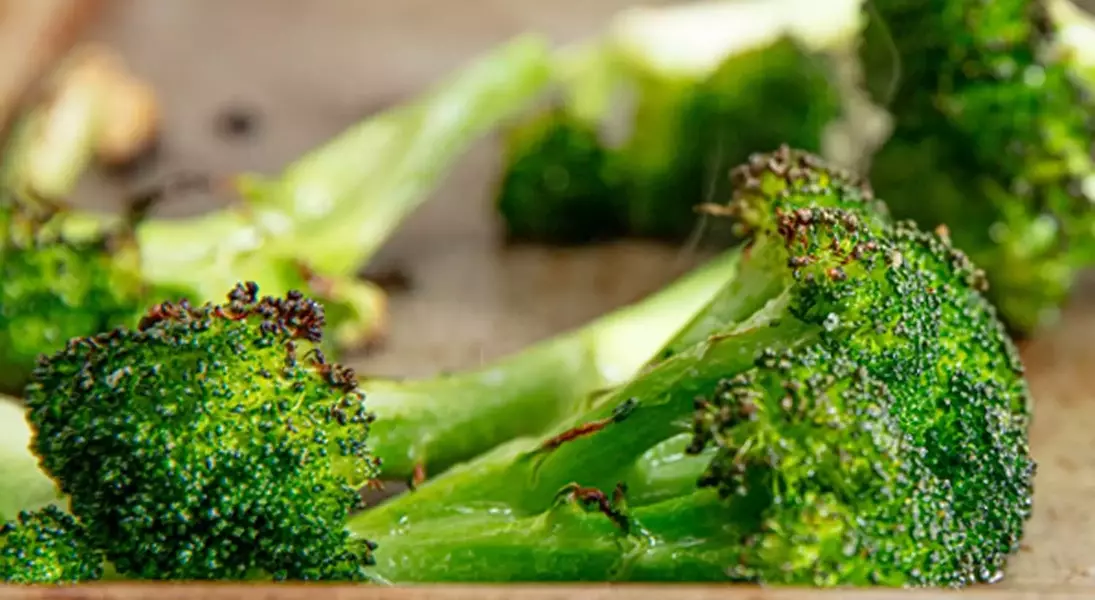
Transforming broccoli into a deliciously tender and richly browned roasted dish often presents a culinary puzzle. Its distinctive tree-like form, with delicate florets atop fibrous stalks, makes uniform cooking a true art. This insightful piece delves into a counterintuitive yet highly effective strategy: embracing the power of steam after the initial roasting phase. By understanding the science behind heat transfer, especially the significant role of latent heat, home cooks can overcome the common pitfalls of dry, leathery, or unevenly cooked broccoli. The article further emphasizes critical roasting factors, such as maintaining high temperatures and consciously bypassing convection settings, to achieve an unparalleled depth of flavor and texture, ultimately elevating a simple side dish to a culinary highlight.
Unveiling the Secrets to Superior Roasted Broccoli
For countless home cooks, the pursuit of perfectly roasted vegetables can often lead to frustration, particularly when dealing with the intricate structure of broccoli. This common predicament — broccoli that emerges from the oven either too dry and leathery or with unpleasantly crisp stalks and burnt florets — is a familiar challenge. The inherent unevenness of broccoli's form, where delicate buds and robust stalks coexist, makes achieving uniform tenderness and an appealing golden-brown exterior notoriously difficult.
In a compelling series of culinary investigations conducted recently, a groundbreaking approach has emerged to conquer this long-standing kitchen dilemma. The core of this innovative technique, which defies traditional roasting wisdom, involves the strategic application of moisture at the culmination of the cooking process. After broccoli florets have undergone their initial roasting and developed a desirable level of browning, but before they reach complete tenderness, they are swiftly removed from the oven. The key next step is to immediately and snugly cover the roasting pan with foil, effectively trapping the residual heat and, crucially, the nascent steam. Allowing the covered pan to rest for approximately ten minutes, or even better, placing it back into a turned-off oven for a mere five minutes to benefit from the residual warmth, works wonders.
This method brilliantly harnesses the scientific principle of "latent heat of vaporization." When water transforms into steam, it absorbs a substantial amount of energy. Conversely, when this steam condenses back onto the surface of the broccoli, it releases this stored energy directly into the vegetable. This targeted transfer of heat efficiently penetrates and softens the denser stalks without overcooking or burning the more delicate florets, resulting in a consistently tender texture throughout. This post-roasting steaming dramatically improves the overall eating experience, eliminating the tough, resistant qualities often associated with inadequately cooked broccoli stalks.
Further experiments meticulously explored various cooking sequences, revealing that pre-steaming or microwaving broccoli prior to roasting actually impeded the desired browning process and flavor development. It was discovered that the intense heat of initial roasting is essential for kickstarting the Maillard reaction, a chemical process responsible for creating those complex, savory flavors and appealing golden hues. Steaming beforehand was found to prematurely halt the enzymatic activities crucial for taste formation and could potentially expose the florets to natural acids, inadvertently slowing down the browning. Therefore, the sequence of roasting first, then steaming, proved to be the most advantageous, marrying robust flavor with optimal texture.
Beyond this revolutionary steaming technique, other critical factors significantly influence the outcome of roasted broccoli. Employing high heat, typically in the range of 425°F to 500°F, for a shorter duration is paramount. Lower temperatures over extended periods cause excessive moisture loss, leading to dehydrated, leathery results. High heat not only promotes efficient browning but also encourages the development of broccoli's natural sweetness, preventing the release of undesirable sulfurous notes. Conversely, eschewing the convection setting in ovens is strongly advised. While convection is beneficial for many water-rich vegetables, the constant circulation of hot air around broccoli’s irregular structure tends to dry it out too rapidly, mimicking the negative effects of an air fryer and rendering it leathery. By thoughtfully combining these insights – the ingenious application of steam, the utilization of high heat, and the deliberate avoidance of convection settings – home cooks can confidently achieve exemplary roasted broccoli, overcoming its inherent structural challenges and delighting in a truly superior culinary creation.
As a devoted culinary enthusiast and occasional kitchen experimenter, this revelation about roasting broccoli has profoundly reshaped my approach to preparing vegetables. It's a testament to how deeply understanding the science of cooking can unlock seemingly simple yet incredibly impactful techniques. Before encountering this method, I, like many, often resigned myself to a certain inconsistency when roasting broccoli; some parts charred and bitter, others stubbornly firm. The idea of introducing moisture after roasting felt counterintuitive, almost sacrilegious to the dry-heat dogma of roasting. Yet, the logic behind latent heat, explained so eloquently, illuminates why this technique is not just a hack but a sophisticated application of physics in the kitchen. It's truly inspiring to realize that the perfect texture isn't achieved through more brute force heat, but through a thoughtful, two-stage process that respects the unique characteristics of the vegetable. This piece doesn't just offer a recipe tweak; it instills a deeper appreciation for the intricate dance between heat, moisture, and flavor, encouraging us to question conventional wisdom and embrace scientific curiosity in our daily cooking. It's a reminder that even the humblest ingredients hold culinary secrets waiting to be uncovered, transforming everyday dishes into extraordinary experiences.
