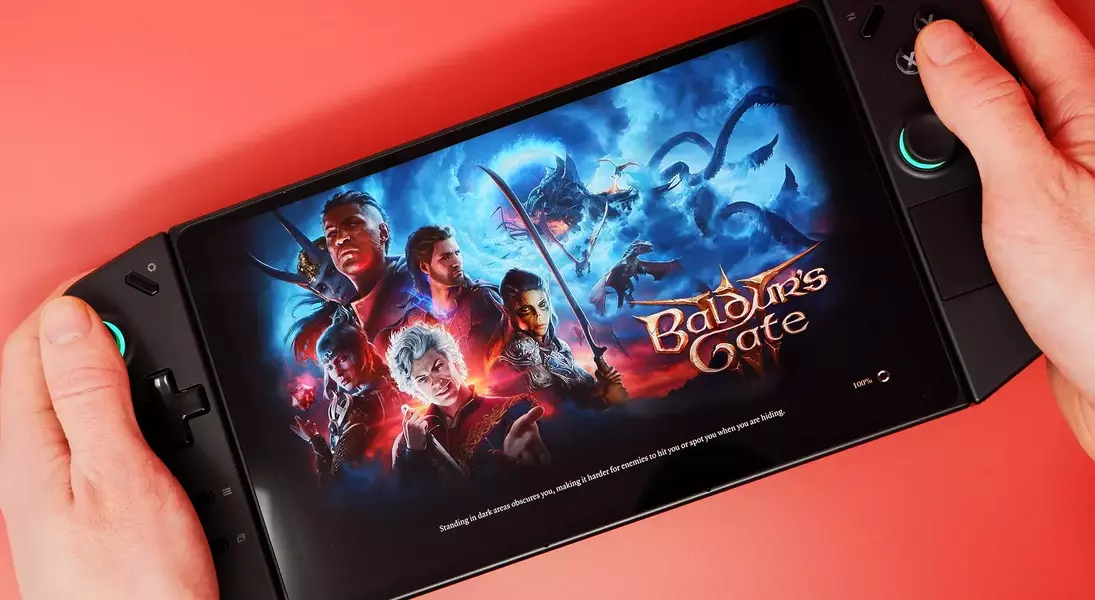
In the dynamic realm of handheld gaming PCs, where rapid technological advancements often raise questions about long-term product viability, Lenovo has stepped forward with a definitive commitment. The company recently dispelled swirling rumors by announcing its unwavering support for the original AMD Ryzen Z1 Extreme-equipped Legion Go until at least 2029. This declaration aims to reassure consumers and reinforce Lenovo's position in the competitive handheld gaming market, ensuring consistent performance and compatibility through ongoing driver and BIOS updates.
Lenovo Reaffirms Commitment to Legion Go's Future
In a significant development for the handheld gaming community, Lenovo officially addressed concerns regarding the future of its Legion Go (8.8”, 1) device. On an unspecified date, following a period of industry speculation, the company issued a statement to PCWorld, unequivocally affirming its commitment to the product. The statement clarified that "Support for the Lenovo Legion Go (8.8”, 1) has not been discontinued," directly countering previous rumors that emerged from a machine-translated customer service response from Lenovo Korea, which had suggested a halt in driver updates for the original handheld. Lenovo further elaborated that it would actively provide necessary driver and BIOS updates until October 2029. The company emphasized its collaborative efforts with AMD to ensure a steady release of driver updates, each rigorously tested and reviewed by Lenovo's internal protocols. This proactive announcement seeks to differentiate Lenovo from competitors, particularly in light of recent performance discussions surrounding other AMD Ryzen Z1 Extreme-based handhelds, such as the Asus ROG Ally, which experienced noticeable performance discrepancies when attempting to run demanding titles like Resident Evil Requiem compared to the older Steam Deck. While a driver update was released for the ROG Ally, it did not significantly enhance in-game performance, fueling further discussions about AMD's driver support for its Ryzen Z1 chips. Lenovo's clear and specific pledge stands in contrast, offering a strong assurance of sustained investment in its flagship handheld gaming PC, a device that, despite being less than two years old, continues to command a substantial price point even in the second-hand market.
Lenovo's explicit commitment to the Legion Go until 2029 highlights a crucial aspect of consumer electronics: long-term support. In an era where hardware rapidly evolves, a manufacturer's dedication to ongoing updates and maintenance can significantly impact user confidence and product longevity. This move by Lenovo not only secures the value proposition for current Legion Go owners but also sets a precedent for future handheld gaming devices, emphasizing the importance of sustained post-launch support. It reminds us that cutting-edge technology, without consistent care, can quickly lose its edge, and that true innovation lies not just in creation, but in commitment to continuity.
