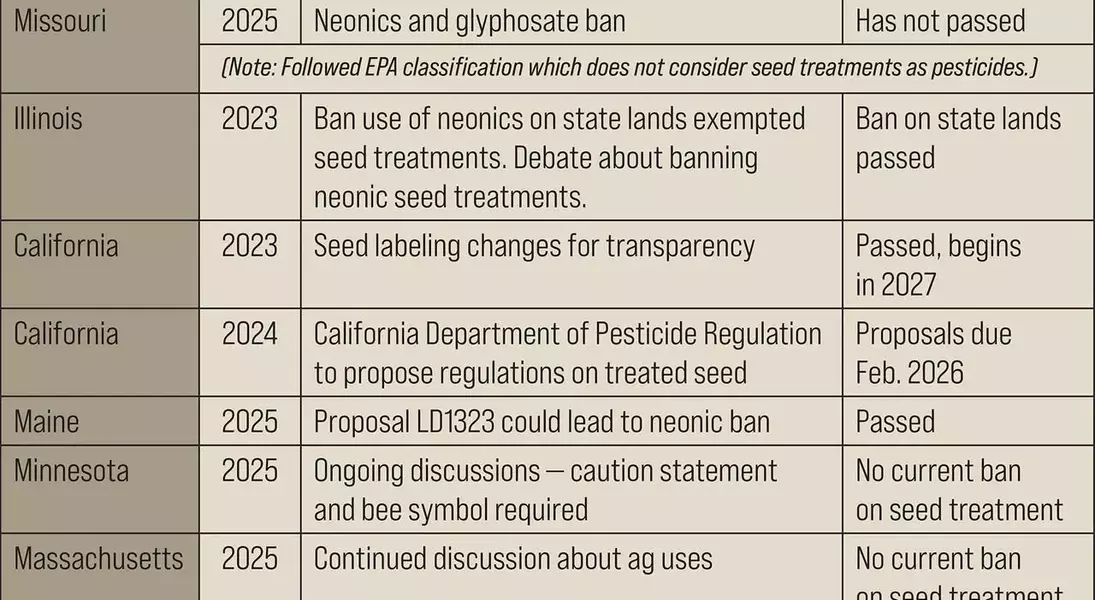

The agricultural sector is currently grappling with increasing legislative pressure concerning the use of neonicotinoid insecticide seed treatments, a critical component for modern farming practices. Historically, states in New England and California have been at the forefront of these debates, with Vermont and New York already enacting legislation to limit their use, albeit with delayed implementation until 2029. This trend is now extending into the Midwest, a significant agricultural region, where similar legislative proposals are emerging. This shift indicates a broader, more widespread challenge to the continued use of these essential farming tools.
A primary concern for farmers and agricultural organizations revolves around the misinformation and lack of understanding surrounding these products. Industry experts emphasize that neonicotinoid seed treatments offer targeted pest control by coating the seeds directly, minimizing environmental exposure compared to traditional spraying methods. These products undergo rigorous review and approval processes by regulatory bodies like the Environmental Protection Agency, ensuring their safe and responsible application. Furthermore, agricultural groups are actively promoting stewardship practices, such as modifications to planting equipment to reduce dust drift, demonstrating a commitment to environmental protection. Despite these efforts and the proven efficacy of seed treatments in safeguarding early-season crops and maximizing yields, the debate persists, highlighting a communication gap between agricultural stakeholders and environmental advocates.
The continued access to neonicotinoid seed treatments is paramount for the profitability and sustainability of American agriculture. Research consistently shows that a vast majority of acres are planted with treated seeds, underscoring their vital role in protecting crops from pests, reducing the need for broader pesticide applications, and ensuring optimal yields. Without these treatments, farmers face increased costs, potential equipment damage, and significant yield losses, further narrowing already tight profit margins. Therefore, it is imperative for farmers to proactively engage in educational initiatives, informing consumers and policymakers about the benefits of these treatments and their adherence to responsible environmental practices.
The future of agriculture relies on innovative solutions and the judicious use of resources, including crop protection tools. Farmers, through their daily practices, demonstrate a deep commitment to environmental stewardship and sustainable food production. By advocating for science-based policymaking and fostering open dialogue, the agricultural community can ensure that critical tools, like neonicotinoid seed treatments, remain available, safeguarding both agricultural productivity and environmental well-being for generations to come. This collaborative approach fosters a stronger, more resilient agricultural landscape that can meet the demands of a growing world while upholding ecological integrity.
