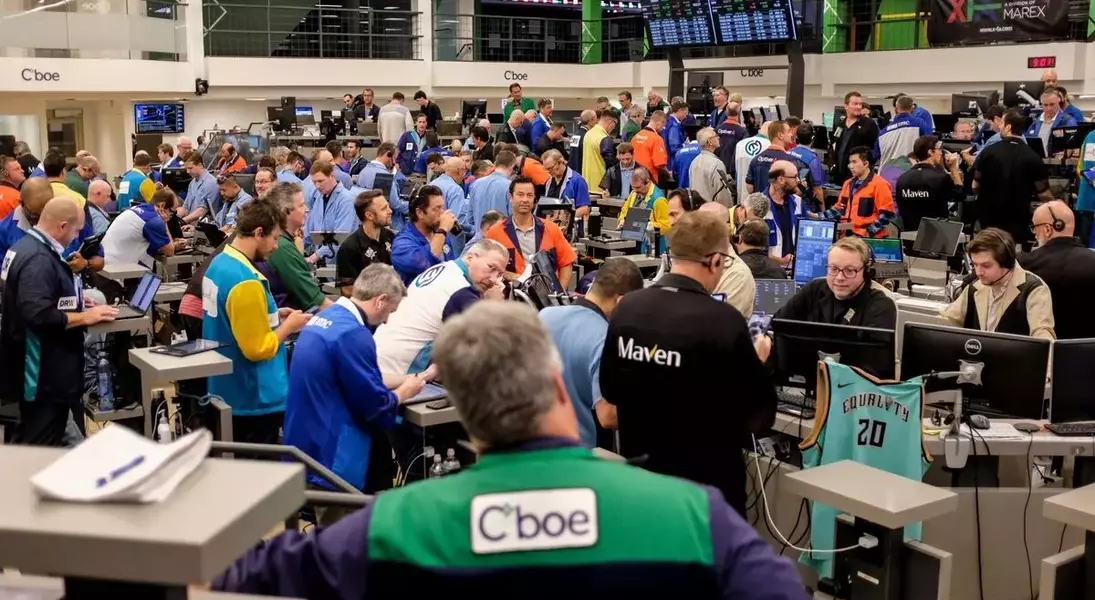
The Federal Reserve's actions on Wednesday had a significant impact on US stocks and the volatility index. This decision led to a tumble in US stocks and a surge in the key index of volatility, reaching its highest level since August. However, markets are suggesting that the concern might be confined to the short term.
Unraveling the Effects of the Federal Reserve's Hawkish Stance
Section 1: The Federal Reserve's Decision and Its Immediate Impact
The Federal Reserve's hawkish signaling on Wednesday sent shockwaves through the US stock market. As a result, US stocks witnessed a significant decline, with investors growing increasingly cautious. This downturn was mirrored in the Cboe Volatility Index, which spiked from Tuesday's close of about 16 to 28 points on Wednesday. The sudden change in sentiment reflected the market's reaction to the Fed's decision and its implications for the future. Many analysts believe that this increase in volatility is a sign that the market is adjusting to the new economic reality. It also highlights the uncertainty that investors are facing in the current economic climate.The hawkish stance taken by the Federal Reserve indicates that they are concerned about inflation and are taking steps to address it. This has led to a tightening of monetary policy, which in turn has affected the stock market. However, it is important to note that the market's reaction is not always immediate or predictable. In some cases, the market may overreact to certain events, only to correct itself in the long run.Section 2: Market Sentiment and the Near-Term Outlook
Despite the initial sell-off in US stocks and the surge in volatility, markets are indicating that the concern may be limited to the near-term. This suggests that investors are not overly worried about the long-term implications of the Federal Reserve's decision. Instead, they are focusing on the short-term market movements and trying to anticipate how the Fed will continue to adjust its policy in the coming months.There is a sense of optimism among some market participants that the Fed will be able to manage the economic recovery without causing too much damage to the stock market. They believe that the Fed will be able to strike a balance between controlling inflation and supporting economic growth. However, others are more cautious and believe that the market could face further volatility in the coming weeks and months.Section 3: Implications for Investors and the Economy
For investors, the increase in volatility presents both opportunities and risks. On one hand, it provides an opportunity to buy stocks at discounted prices. However, it also increases the risk of losses if the market continues to be volatile. Investors need to be careful and make informed decisions based on their risk tolerance and investment goals.From an economic perspective, the Federal Reserve's hawkish stance could have a significant impact on the economy. It could lead to higher interest rates, which in turn could slow down economic growth. However, it is important to note that the Fed's actions are designed to prevent inflation from getting out of control and to ensure the long-term stability of the economy.In conclusion, the Federal Reserve's hawkish signaling on Wednesday has had a significant impact on US stocks and volatility. While the initial reaction was negative, markets are indicating that the concern may be limited to the near-term. Investors need to be cautious and monitor the market closely to make informed decisions. The Fed's actions will continue to shape the economic landscape and the performance of the stock market in the coming months. You May Like