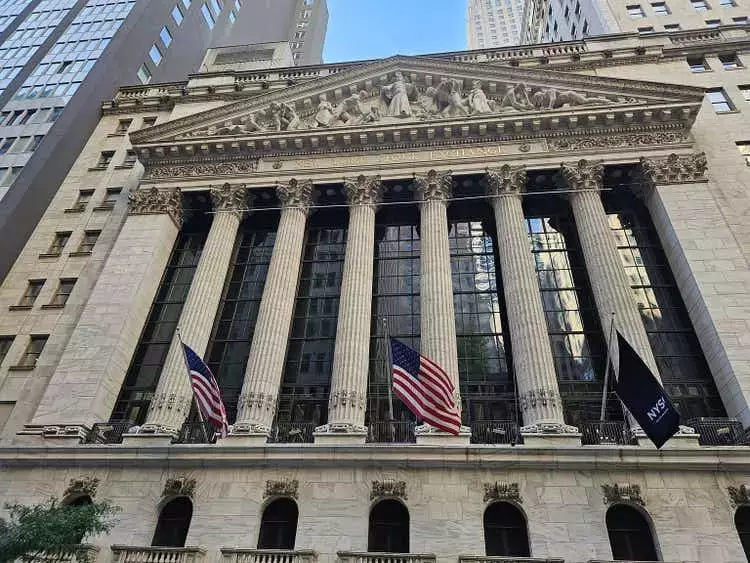
On Thursday, the major averages witnessed a notable upward movement. This came a day after Wall Street experienced a significant tumble due to the Federal Reserve's projection of fewer rate cuts in 2025. Early in the trading session, the benchmark S&P 500 futures (SP500) showed a positive gain of 0.2%, while the tech-heavy Nasdaq Composite also showed signs of stability. These market fluctuations highlight the crucial role that the Federal Reserve's monetary policy decisions play in shaping the performance of Wall Street. The Fed's stance on rate cuts has a direct impact on various sectors and investors, influencing their investment strategies and market sentiment. Understanding these dynamics is essential for both seasoned investors and those new to the market.
Unraveling the Link between Fed Rate Cuts and Wall Street's Performance
Section 1: The Fed's Rate Cut Projections and Their Implications
The Federal Reserve's decision regarding rate cuts is a highly anticipated event in the financial world. By projecting fewer rate cuts in 2025, the Fed sends a signal that may have far-reaching consequences. This could potentially lead to changes in borrowing costs for businesses and consumers, affecting their spending and investment decisions. For example, if interest rates remain higher for longer, it may become more expensive for companies to borrow money for expansion or to fund their operations. This could slow down economic growth and impact the performance of various sectors such as real estate and manufacturing. On the other hand, higher interest rates can also attract foreign investors seeking higher returns, which can have a positive impact on the currency and stock markets. However, the overall effect is complex and depends on a variety of factors such as inflation, economic growth, and global market conditions.Section 2: How Wall Street Reacted to the Fed's Decision
The reaction of Wall Street to the Fed's rate cut projections was immediate and significant. As the news of fewer rate cuts spread, stocks initially experienced a sell-off as investors adjusted their expectations. However, over time, the market showed signs of recovery as some investors began to anticipate that the Fed may still take action to support the economy if needed. The performance of different sectors also varied, with some benefiting from the Fed's stance and others facing challenges. For instance, defensive sectors such as utilities and consumer staples tend to perform well in a low-interest-rate environment but may face headwinds if rates remain high. On the other hand, growth-oriented sectors like technology and healthcare may continue to attract investor interest even in a higher-rate environment if they can demonstrate strong growth prospects. The volatility in the market highlights the need for investors to carefully analyze the implications of the Fed's decisions and adjust their portfolios accordingly.Section 3: The Future Outlook for Wall Street and the Fed
Looking ahead, the future outlook for Wall Street and the Fed remains uncertain. While the Fed's current stance on rate cuts may have an immediate impact on the market, there are many factors that could influence its future decisions. For example, changes in inflation rates, economic data, and global market conditions could lead the Fed to revise its projections. Additionally, political developments and geopolitical tensions can also have an impact on the economy and the financial markets. Investors will need to closely monitor these factors and stay informed about the latest developments to make informed investment decisions. In the meantime, it is important to remember that the stock market is inherently volatile and that past performance is not indicative of future results. By diversifying their portfolios and maintaining a long-term perspective, investors can better navigate the uncertainties of the market and potentially achieve their financial goals.You May Like