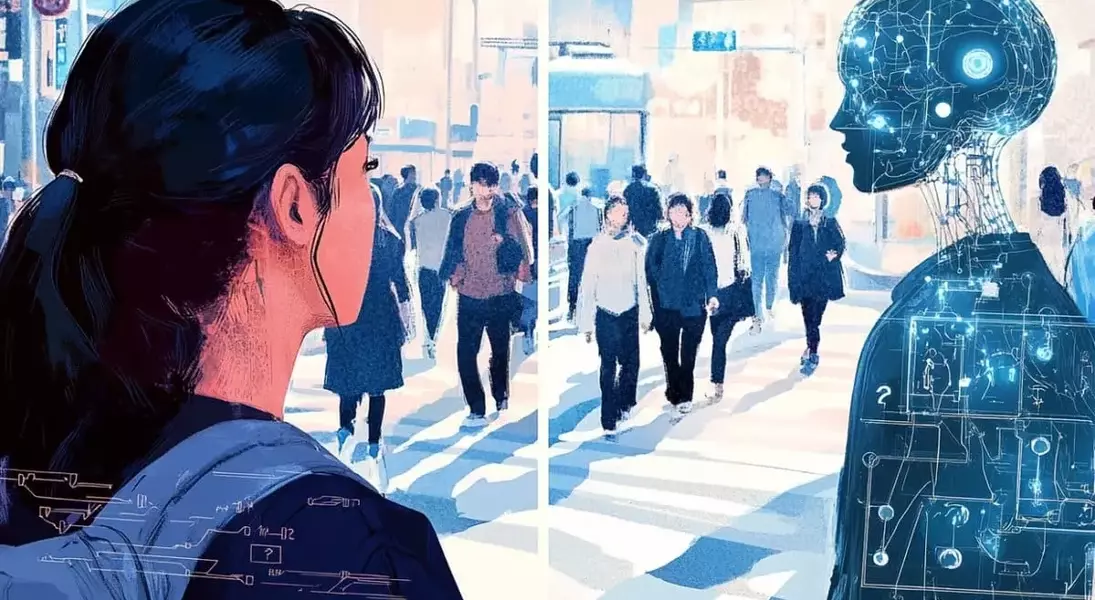
While artificial intelligence has made remarkable strides in recognizing static images, a groundbreaking study from Johns Hopkins University reveals that humans still hold the upper hand when it comes to interpreting dynamic social interactions. This critical skill is essential for advanced technologies like autonomous vehicles and assistive robots. The research highlights significant limitations in current AI systems, particularly their inability to match human accuracy in predicting both behavioral responses and brain activity during complex social scenarios.
Unlocking the Secrets of Human Social Perception: A Leap Forward for AI
The quest to bridge the gap between human intuition and machine learning hinges on understanding the intricate dynamics of social cognition.Advancing Beyond Static Recognition
Despite excelling at identifying objects within still images, artificial intelligence struggles profoundly with comprehending the evolving narratives embedded in moving visuals. This disparity becomes glaringly apparent when considering the demands placed upon self-driving cars or interactive robotic systems. Such technologies require an acute awareness not only of individual actions but also of interpersonal connections and intentions. For instance, anticipating whether two pedestrians are conversing or preparing to cross a street involves decoding subtle cues that remain elusive to contemporary AI frameworks.The challenge extends beyond mere recognition into realms where context and relationship play pivotal roles. Humans possess innate abilities to discern these elements swiftly and accurately, whereas even sophisticated neural networks falter under similar conditions. This limitation points toward structural inadequacies within existing AI architectures which predominantly mimic regions of the brain associated with processing fixed imagery rather than fluid, socially charged environments.In addressing this shortfall, researchers emphasize the necessity for overhauling traditional approaches by integrating mechanisms more closely aligned with how our brains handle dynamic situations. By doing so, future iterations may achieve parity—or perhaps surpass—the perceptual prowess demonstrated by people today.Redefining Success Metrics in AI Development
Present evaluation methods often overlook crucial aspects related to temporal and relational comprehension inherent in social scenes. Traditional benchmarks primarily focus on object detection and classification tasks derived from single-frame analyses. However, as evidenced by recent studies, such criteria fail to capture the full spectrum of competencies required for effective real-world applications involving continuous interaction among multiple entities.To rectify this imbalance, new standards must be established that incorporate multi-dimensional assessments capable of gauging both instantaneous reactions and sustained engagement across varying timeframes. Implementing these enhanced metrics would enable developers to better gauge progress toward creating truly adaptive systems adept at navigating complex social landscapes.For example, consider scenarios requiring simultaneous interpretation of several overlapping conversations occurring simultaneously within crowded urban settings. Current models might correctly identify speakers yet fall short in determining who addresses whom, what topics dominate discussions, or how participants transition between subjects—all vital components necessary for meaningful participation in such environments.Moreover, incorporating feedback loops based on actual human performance data could further refine training processes leading to improved outcomes. Leveraging insights gained through direct comparisons against live test cases allows for incremental adjustments aimed at closing identified gaps while fostering innovation along previously unexplored avenues.Unveiling Neural Pathways Behind Superior Human Judgment
Delving deeper into physiological underpinnings reveals fascinating distinctions between human cognitive processes and those emulated by current AI constructs. Our brains employ specialized areas dedicated exclusively to analyzing motion patterns alongside emotional expressions, thereby enabling superior judgment calls regarding intent and behavior exhibited during various encounters. These integrated functionalities allow us to rapidly assimilate vast amounts of information culled from fleeting glances or brief exchanges, forming comprehensive understandings far exceeding capabilities displayed by even state-of-the-art algorithms.Furthermore, evidence suggests that certain neural pathways activate exclusively during observation of genuine social interplay versus artificial representations thereof. Such findings underscore potential deficiencies within simulation techniques utilized during model development stages, necessitating reevaluation of prevailing methodologies employed thus far. Encouraging cross-disciplinary collaborations combining expertise from neuroscience, psychology, computer science, and engineering fields promises fruitful explorations paving way towards revolutionary advancements poised to redefine boundaries separating man and machine.By prioritizing holistic approaches encompassing diverse perspectives, innovators stand poised to unlock unprecedented opportunities propelling humanity forward into uncharted territories bridging biological and technological frontiers alike.You May Like