
GOG, a prominent digital game retailer, recently underwent a significant change in ownership. In December, the platform was acquired for around $25 million by its original co-founder, Michał Kiciński. This acquisition, though modest in comparison to other industry buyouts, carries profound implications for GOG's identity and future trajectory. Kiciński's stated intention is to safeguard the company's foundational principles, which emphasize DRM-free titles, game preservation, and genuine ownership for players. This strategic move aims to protect GOG from potential dilution of its values under a larger, more profit-driven corporate structure, a concern that had been growing among its dedicated user base.
Michał Kiciński expressed a deep personal connection to GOG, viewing himself as a 'parent' of the company he helped create in 2005. His decision to reacquire GOG stemmed from a desire to prevent it from being sold to a 'random company' that might disregard its core tenets of game preservation and DRM-free distribution in favor of maximizing profits. Kiciński highlighted GOG's strong market position, respected brand, and clear values as key motivators for the acquisition, emphasizing that customers deeply appreciate these aspects.
The acquisition process itself was remarkably swift, transpiring over just a few months. Kiciński learned of CD Projekt's intent to sell GOG around September and quickly joined the competitive bidding process. His concern was rooted in observing past mergers and acquisitions where smaller companies were absorbed by larger entities, often leading to the dismantling of teams, the appropriation of customer and product databases, and the eventual disappearance of the acquired brand. He was determined to prevent a similar fate for GOG.
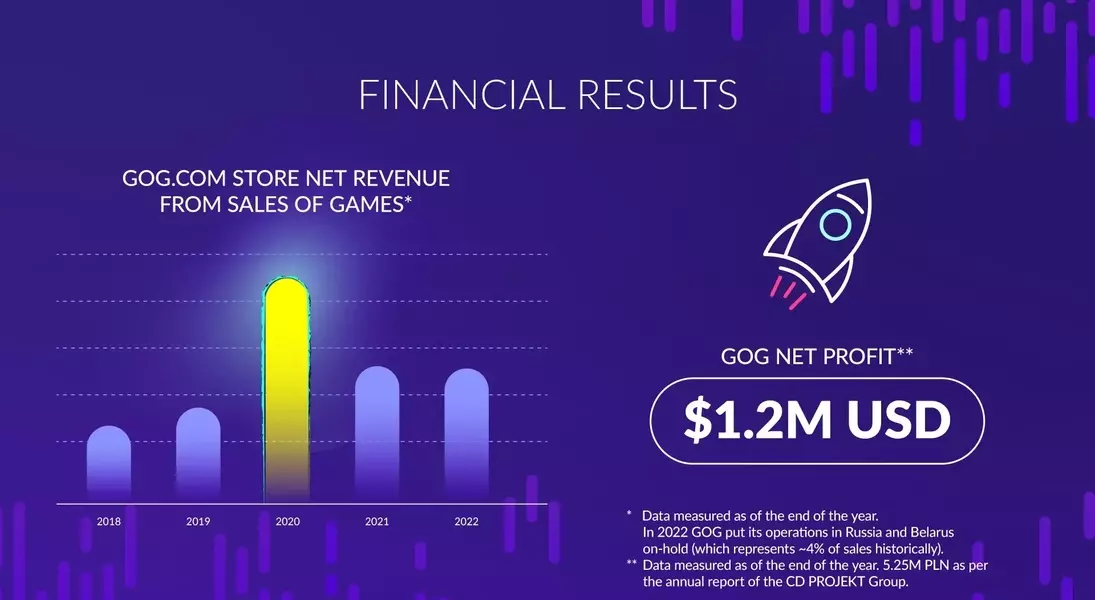
CD Projekt's decision to divest GOG, after 17 years of ownership, was influenced by strategic and financial considerations. While GOG's net profit of $1.2 million in 2022 was respectable, it paled in comparison to CD Projekt's overall profits exceeding $120 million in 2024. This stark difference in economic scale meant that GOG often found itself overshadowed within the larger corporate family. Maciej Gołębiewski, GOG's managing director, explained that CD Projekt's focus on developing AAA games and building franchises diverged significantly from GOG's mission of curating and preserving classic games. Both parties recognized that maintaining separate strategies would be more beneficial in the long run.
The separation provides GOG with unprecedented autonomy. Kiciński noted that being part of a large public company like CD Projekt often restricts risk-taking and agility. Now, GOG is free to explore new ventures, particularly in game publishing. Kiciński, already involved in publishing through Retrovibe, sees this as a natural extension for GOG, believing that with skilled personnel and industry knowledge, publishing risks can be effectively managed. The company also eyes an expansion of its preservation efforts, potentially moving beyond simply hosting old games to actively remastering and updating them, akin to Nightdive Studios' work.
GOG's renewed independence marks a pivotal moment for the platform, allowing it to fully concentrate on its unique mission. This strategic realignment aims to bolster its identity as a champion of game ownership and preservation, distinguishing it in a market dominated by larger, more conventional digital storefronts. By leveraging its established values and exploring new avenues like enhanced game preservation and publishing, GOG endeavors to attract and retain users who prioritize enduring access to their beloved classic titles, even if it means offering an alternative rather than directly challenging industry giants like Steam.
