
This article explores a peculiar gameplay mechanic in 'Arc Raiders' where a higher frame rate unexpectedly amplifies the effectiveness of aim assist for controller users. This discovery has sparked considerable discussion within the gaming community, as it grants a distinct advantage to players with more powerful hardware. Through detailed testing and observation, the article delves into how this intensified aim assist manifests in different scenarios, from subtle reticle guidance to aggressive target locking, and its implications for competitive balance.
Unlocking Precision: The FPS-Driven Aim Assist Phenomenon
Unraveling the 'Arc Raiders' Aim Assist Mystery
Early reports from the 'Arc Raiders' community, initially met with skepticism, suggested an unusual connection between a player's frame rate and the efficacy of aim assist. What began as anecdotal observations of a streamer's uncanny accuracy evolved into a widespread discussion, culminating in the revelation that higher frame rates significantly bolster the game's aim assist feature for controller users. This unexpected interaction has since been independently verified, confirming its tangible impact on gameplay.
The Genesis of an Advantage: High FPS and Enhanced Targeting
The journey to uncover this mechanic started with a viewer noticing a streamer's precise aim, particularly when engaging the game's robotic adversaries, known as Arcs. This observation led to accusations of foul play, which were later reframed as a deeper inquiry into the game's core mechanics. It was then that players began to pinpoint the direct correlation: the smoother the game ran, the stickier and more forgiving the aim assist became for those playing with a controller.
Rigorous Testing: Confirming the Frame Rate's Influence
To definitively prove this theory, a high-performance PC was configured to run 'Arc Raiders' at varying frame rates, specifically 30 FPS and 300 FPS, by adjusting graphical settings and resolution. The results were conclusive: the aim assist functionality exhibited a stark difference across these settings. This empirical evidence validated the community's suspicions, highlighting a significant imbalance in the game's design.
The Stark Contrast: Aim Assist at 30 FPS vs. 300 FPS
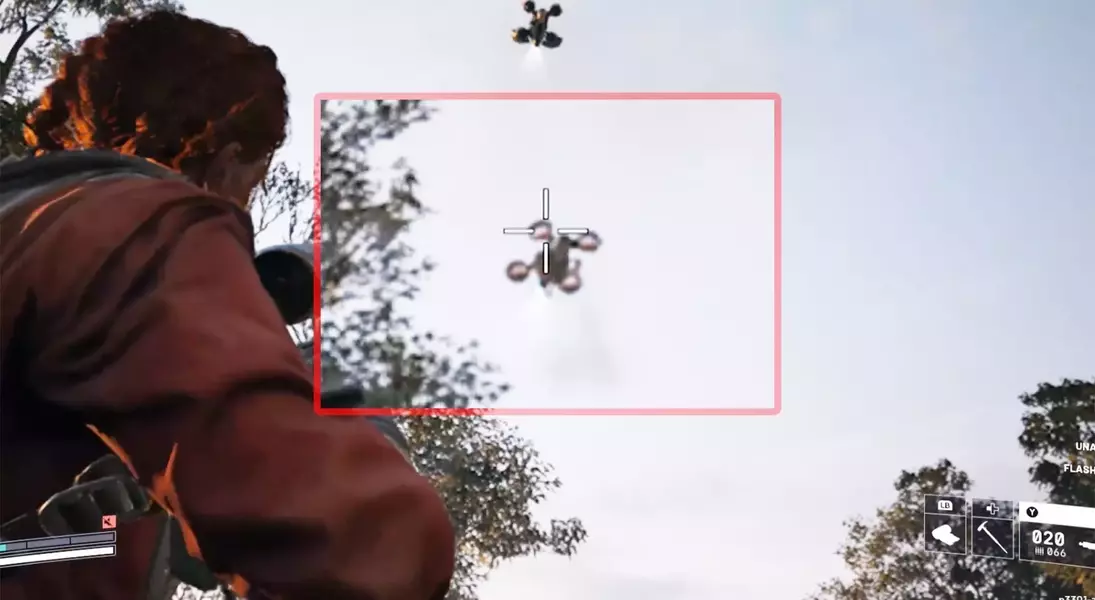
At an impressive 300 frames per second, the aim assist demonstrated an almost autonomous capability, locking onto targets with minimal player input and maintaining tracking even when the controller was disengaged. This 'sticky' behavior allowed the reticle to follow targets across substantial in-game distances, drawing gasps of disbelief from observers. In stark contrast, at 30 FPS, the aim assist offered only fleeting and inconsistent support, requiring constant manual adjustment from the player to keep targets in sight.
Beyond the Reticle: Persistent Tracking Through Obstacles
Further investigation revealed that the high-FPS aim assist wasn't merely about target acquisition but also about persistent tracking. In live matches, the enhanced assist allowed the reticle to maintain a lock on Arcs even as they moved behind environmental elements like trees. This capability provided a clear and undeniable advantage over players relying on traditional mouse and keyboard inputs, who lack such a sophisticated automated tracking system.
Strategic Movement and Optimal Range for Aim Assist
Activating this potent aim assist proved most effective when players maintained a short to mid-range distance from their targets and subtly manipulated their reticle or character movement. While less potent at lower frame rates (e.g., 60 FPS), the assist still offered a measurable benefit, albeit requiring more deliberate player engagement. Mastering this nuanced interaction allowed players to strategically leverage the game's assistance, regardless of their system's full capabilities.
Balancing Aesthetics and Performance: A Player's Dilemma
Achieving consistently high frame rates in 'Arc Raiders' often necessitates significant compromises in visual fidelity, forcing players to choose between a visually immersive experience and a mechanically advantageous one. Additionally, features like frame generation, designed to boost performance, paradoxically diminished the effectiveness of aim assist. This trade-off underscores a critical design challenge: how to balance visual quality with gameplay mechanics, especially when hardware capabilities can introduce such significant performance disparities.
Hardware Superiority: The Foundation of Unfair Advantage
The core of this issue lies in the disparity of gaming hardware. Players equipped with top-tier systems, like those boasting high-end GPUs and CPUs, can effortlessly achieve the high frame rates that unlock 'Arc Raiders''s most aggressive aim assist. This creates a scenario where hardware specifications, rather than player skill alone, become a decisive factor in competitive success, raising concerns about fair competition and accessibility for all players.
