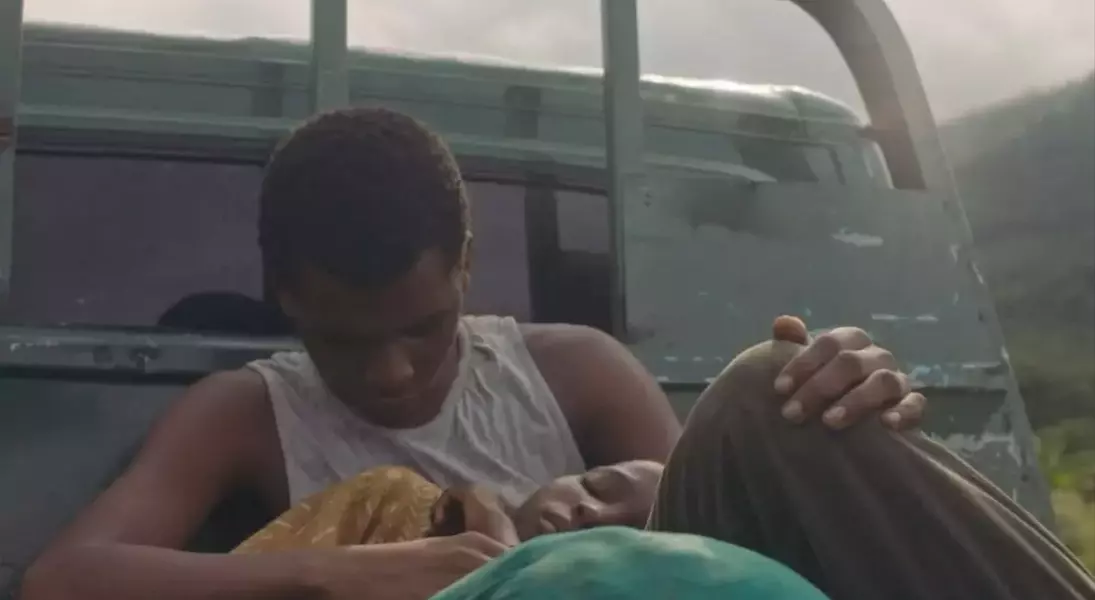
Amartei Armar's directorial debut, "Our Time Will Come," offers a profound and moving exploration of resilience and unconventional family ties within the challenging landscape of modern Ghana. The film, which premiered to critical acclaim at the Locarno Film Festival, skillfully blends elements of a classic road trip narrative with a poignant social commentary, capturing the arduous journey of two young orphans seeking belonging and connection in a society grappling with rapid economic and social shifts.
Ghanaian Orphans' Quest for Kinship Explores Societal Fractures and Enduring Bonds
In a compelling narrative unfolding in contemporary Ghana, Amartei Armar’s debut feature, “Our Time Will Come,” introduces audiences to the resilient spirits of 15-year-old Owusu, portrayed with striking maturity by Idrissu Tontie Jr., and his seven-year-old charge, Adobea, brought to life by Dorothy Adobea Tandoh. Their story, reminiscent of Dickensian themes reimagined for a West African context, begins with a desperate escape from an orphanage. Driven by Owusu's unwavering hope to reunite with his estranged mother in the bustling city of Accra, the siblings embark on a perilous journey. Owusu’s only tangible link to his past is a faded photograph, a meager guide in a land where societal structures are fractured by rapid economic development and a waning sense of national unity.
As they navigate the sun-drenched, open landscapes of the Ghanaian countryside, a stark contrast to the dense, often menacing urban environment of Accra, their bond deepens. The film masterfully portrays the hazards of their journey, including an encounter in a vibrant but unforgiving open-air market where their few possessions are stolen by Obolo, a street-smart youth played by O’Bryan Nana Kwame Enyan. This pivotal incident leads them into the heart of Accra's slums, where they encounter Ziggy, charismatic leader of a group of street children, expertly played by Emmanuel Wilberforce. Ziggy’s unexpected protection offers the siblings a semblance of safety and a new, unconventional family unit, redefining kinship beyond traditional bloodlines.
Amidst the children's struggle for survival, the film subtly weaves in a powerful critique of Ghana’s societal challenges, particularly the impact of “catch-up capitalism” on family structures. A telling scene features a billboard referencing the 2024 “Family Values” bill, highlighting the government’s focus on contentious social issues over addressing the deeper systemic problems plaguing the nation. This nuanced political undertone, though not explicit, enriches the narrative, underscoring Armar’s intention for the film to resonate deeply with both local and international audiences. The director's keen eye for detail, coupled with John Kwame Markin's evocative cinematography, effectively captures the emotional depth and varying moods of each location, from the expansive rural plains to the claustrophobic city alleys. The film, a co-production between Ghana, France, and Saudi Arabia, with Yemoh Ike as producer, stands as a testament to the power of human connection in the face of adversity, proving that family can be found and forged in the most unexpected places.
"Our Time Will Come" powerfully illustrates how the quest for belonging and the formation of alternative family units can emerge from the depths of adversity. The film's nuanced exploration of societal issues, combined with its deeply empathetic portrayal of its young protagonists, serves as a poignant reminder of the universal human need for connection and the profound impact of collective resilience in a world often marked by fragmentation and hardship.
