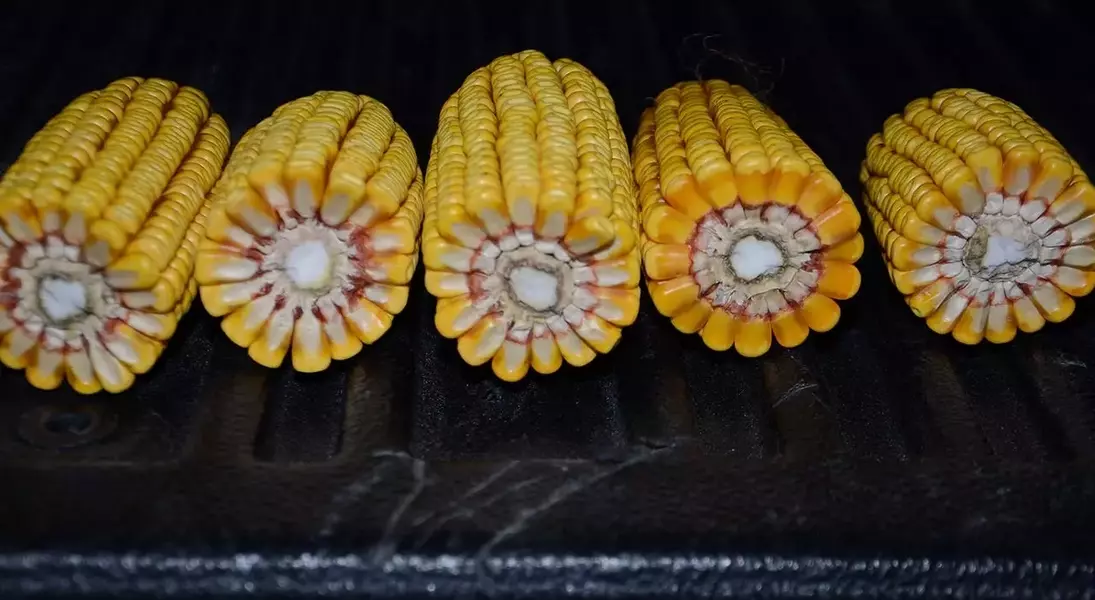
Optimizing corn yields involves a critical understanding of the grain-filling process, a period extending much longer than commonly perceived by many growers. Dr. Dan Quinn, a corn specialist at Purdue University, emphasizes that the full potential of corn ears isn't realized until the formation of the black layer, marking the end of dry matter accumulation. Even in the late dent stage (R5), approximately 5% of the final kernel dry matter, which directly correlates with yield, remains to be developed. This ongoing development means that agricultural management practices during this crucial phase can significantly impact the ultimate harvest.
The significance of kernel weight in overall yield is paramount, often outweighing kernel count alone. Dr. Quinn illustrates this with a comparison between two hybrid types: one with fewer kernel rows but greater depth, and another with more rows but shallower kernels. The hybrid with deeper kernels, despite having fewer per ear, can ultimately achieve higher yields due to increased starch accumulation and resulting kernel weight. Stress factors during the R5 stage and leading up to black layer formation can reduce yield, whereas favorable growing conditions and healthy plants facilitate greater starch deposition, leading to heavier kernels and enhanced productivity.
Recent studies conducted by Dr. Quinn and his team in 2022 and 2023 demonstrated the direct impact of disease management on extending the grain-fill period and boosting kernel weight. By applying fungicide, they successfully mitigated diseases like tar spot, gray leaf spot, and northern corn leaf blight. This intervention prolonged the grain-fill duration by several days in both years, leading to noticeably higher average final kernel weights. The treated plots consistently showed increased yields, ranging from 10 to 20 bushels per acre, directly attributable to the extended grain-fill period. These findings underscore that actively preserving the health of corn plants, particularly the ear leaf and upper canopy, through strategic interventions like fungicide application, is a powerful method for enhancing overall corn output.
The pursuit of agricultural excellence and sustainable farming practices empowers us to continuously innovate and adapt. By delving deeper into the intricate biological processes of crops, such as the extended grain-filling period in corn, we unlock new avenues for enhancing productivity and resource efficiency. This forward-thinking approach not only contributes to the economic prosperity of farmers but also strengthens global food security, reminding us that diligence and scientific inquiry can lead to remarkable advancements in cultivating a more bountiful future.
