


Arsenal Football Club faces a persistent challenge in generating substantial revenue from player sales, a critical component for balancing their significant transfer expenditures. Despite investing nearly £250 million this summer, the club has yet to secure a major sale, contrasting sharply with rivals like Chelsea and Liverpool, who have each recouped over £200 million. This situation raises pertinent questions about Arsenal's player trading strategy and its adherence to increasingly stringent financial regulations set by the Premier League and UEFA. The club's historical struggles in this area are not new, but with rising outlays and the need for financial fair play compliance, improving player sales has become a top priority. Various factors contribute to this dilemma, including the difficulty of finding suitable buyers outside the Premier League due to high wage demands, the strategic decisions of the coaching staff regarding player valuation, and the inconsistent success of player loans in boosting transfer interest. Navigating these complexities is essential for Arsenal to maintain financial health and continue investing in their squad within the stipulated financial frameworks.
Arsenal's Financial Tightrope: A Detailed Look at Player Sales and Compliance Challenges
In the vibrant summer transfer window, Arsenal Football Club finds itself at a pivotal juncture, grappling with the intricate economics of football. As of late August 2025, with the transfer deadline fast approaching, the Gunners have committed approximately £250 million to new acquisitions. However, a stark imbalance persists: significant player departures that generate substantial income are conspicuously absent. This situation stands in stark contrast to other top-tier clubs, such as Chelsea and Liverpool, who have adeptly navigated the market, each bringing in over £200 million from player sales.
Historically, Arsenal has faced hurdles in effectively monetizing their playing assets. While the previous summer saw a promising recoup of over £80 million from sales like Emile Smith Rowe, Aaron Ramsdale, and Eddie Nketiah – a crop of high-value, English-capped talents – the current window has not mirrored this success. The club’s recent outgoing transactions primarily involve players leaving on free transfers, such as Thomas Partey and Jorginho, whose contracts expired in June, and Kieran Tierney and Takehiro Tomiyasu, who departed via mutual termination. Modest fees were generated from the permanent transfer of Nuno Tavares to Lazio (around €7m-€8m) and the sale of young Brazilian winger Marquinhos to Cruzeiro (approximately £3 million).
A primary challenge for Arsenal lies in the global football market itself. The elevated salaries offered within the English Premier League often deter European clubs from acquiring Arsenal players, as potential transferees are generally unwilling to accept a pay cut. This creates a supply-demand imbalance where foreign clubs, if they do express interest, invariably seek considerable discounts. Jakub Kiwior, for instance, is a current target for Porto, but his preference for a return to continental Europe could limit Arsenal's potential fee.
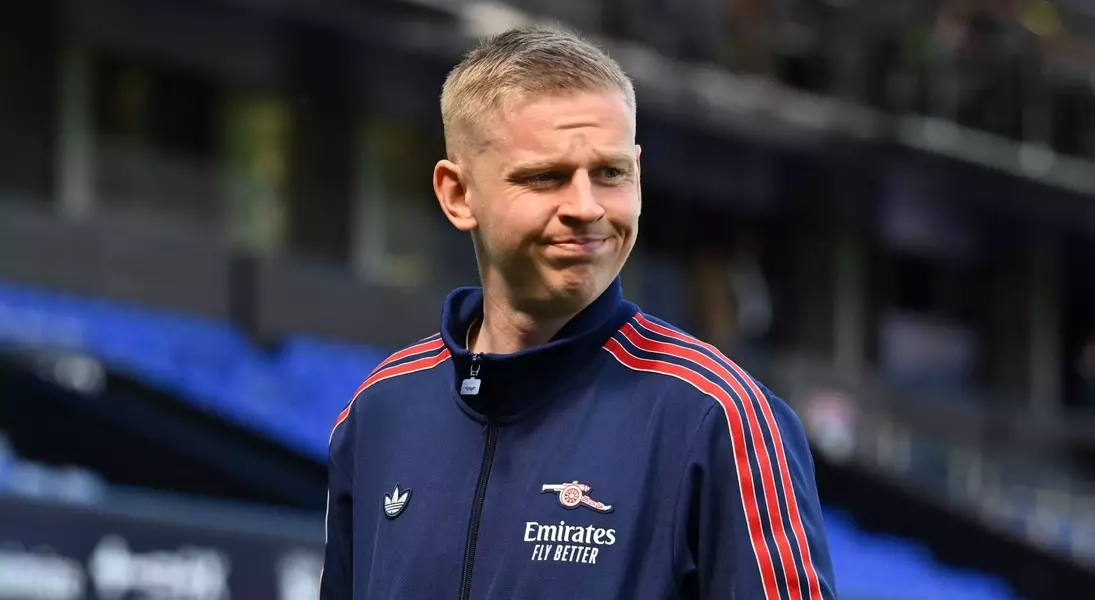
Furthermore, managerial philosophy plays a role. Mikel Arteta's swift assessment and, at times, rapid sidelining of players he deems surplus to requirements can inadvertently diminish their market value. When a player falls out of favor, their reduced match time and perceived lack of managerial trust can make them less attractive to prospective buyers. Oleksandr Zinchenko, for example, started only five Premier League games last season, complicating any potential sale. This raises a strategic question for the club: how to balance the manager's tactical decisions with the imperative of maintaining player value for future sales.
Another area where Arsenal lags behind peers like Liverpool is in leveraging their academy for profitable sales. While Arsenal’s youth system continues to produce promising talents such as Myles Lewis-Skelly and Ethan Nwaneri, the consistent generation of high-value, readily marketable players has been less robust. Loans for players like Fabio Vieira, Reiss Nelson, and Albert Sambi Lokonga have often failed to sufficiently showcase their abilities, partly due to injury issues, further hindering their market appeal.
Financially, Arsenal remains in a relatively robust position, bolstered by increased commercial revenues and Champions League participation, which contributed to a turnover of roughly £610 million in 2023-24. However, the club operates under strict financial regulations, including the Premier League’s Profitability and Sustainability Rules (PSR) and UEFA’s Financial Fair Play (FFP) rules, notably the 'football earnings rule' and 'squad cost rule'. Despite reporting losses for the past six years, Arsenal is projected to remain compliant with PSR, with an estimated buffer for losses up to £97 million in 2024-25. However, UEFA’s rules are more stringent, capping adjusted losses at €60 million over three years, with potential increases under specific conditions.
The 'squad cost rule', which limits spending on player wages and amortization to 70 percent of football-related revenue, poses a more significant challenge. While player sales contribute to the income side of this calculation, only a third of the profit from a given year's sales is counted annually, spreading the financial benefit over time. Arsenal’s player amortization figure has surged from £109 million in 2019-20 to £171 million in 2023-24, with this summer’s £250 million outlay further escalating it. While the departure of high-earners like Partey and Jorginho has provided some wage bill relief, new contracts for young talents like Lewis-Skelly and Nwaneri represent future cost considerations. Projections for 2025 suggest Arsenal could approach UEFA’s 70 percent squad cost limit, underscoring the critical need for profitable player sales to balance the books and ensure continued investment capacity without breaching regulations.
As the transfer window nears its closure, Arsenal's immediate objective is to offload players like Kiwior, Zinchenko, Nelson, Vieira, and Lokonga. Should Kiwior be sold, the club is keen on acquiring Bayer Leverkusen’s left-sided defender Piero Hincapie, whose release clause is €60 million. The structure of such deals—whether straight purchases, loan-with-obligation, or loan-with-option—becomes paramount for financial reporting. A loan-with-obligation would count toward the current year's accounts, whereas a loan-with-option defers the financial impact, providing more flexibility within the FFP framework. Conditional obligations, which trigger a permanent transfer upon certain criteria being met, also offer a mechanism to push financial accounting into future periods. These intricate financial maneuvers highlight the delicate balance Arsenal must strike between reinforcing their squad and adhering to complex regulatory demands, ensuring both competitive strength and financial stability.
From a journalist's vantage point, Arsenal's current transfer predicament is a microcosm of the evolving financial landscape in elite football. The days when clubs could spend with relative abandon are fading, replaced by an era of meticulous financial planning and stringent compliance. Arsenal's struggle to sell, despite a clear strategic intent to do so, underscores a broader challenge for many established clubs: the difficulty of offloading players whose market value may have depreciated due to form, injuries, or tactical irrelevance within the squad. This situation also highlights the critical importance of a cohesive player management strategy that integrates recruitment, development, and timely sales. Clubs must not only identify talent but also cultivate an environment where players can consistently perform, thus maintaining their market appeal. The increasing emphasis on financial fair play means that player trading is no longer merely about squad turnover; it is a fundamental pillar of a club's long-term financial sustainability and competitive viability. Arsenal's journey through this transfer window serves as a compelling case study for how modern football's financial rules are reshaping club strategies, forcing them to be as astute in the boardroom as they are on the pitch.
