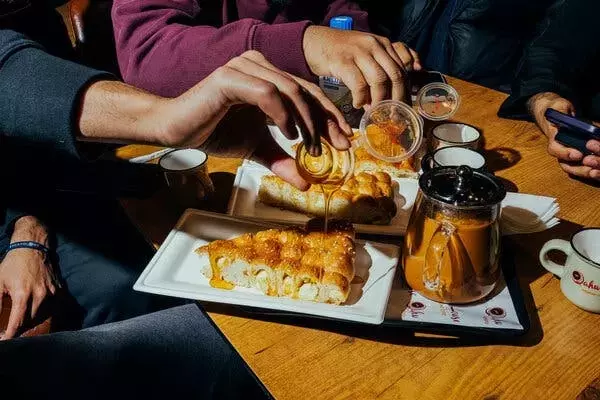
The rise of Yemeni coffeehouses, particularly Qahwah House, has transformed the nightlife scene in various U.S. cities. These establishments offer a unique cultural experience that extends well into the evening, catering to diverse groups including students, professionals, and families. The phenomenon began in Michigan and has since spread across states like Texas, New York, and California. Founder Ibrahim Alhasbani emphasizes that these cafes provide more than just beverages; they offer a communal space for socializing and relaxation, especially for those who prefer non-alcoholic alternatives.
A Unique Social Hub for Late-Night Gatherings
Yemeni coffeehouses have become bustling hubs where people gather long after traditional cafes close. In Brooklyn's Williamsburg, finding an empty seat at Qahwah House can be challenging even late at night. Students engage in study sessions while enjoying spiced coffee, and groups celebrate special occasions with tea and conversation. This vibrant atmosphere continues past regular dining hours, creating a lively environment for all visitors.
These venues serve as vital social spaces, especially for communities seeking alcohol-free alternatives. The founder of Qahwah House, Ibrahim Alhasbani, aimed to create a welcoming place for Muslims who do not consume alcohol. By offering a late-night option, he filled a gap in the market and provided a safe, inclusive environment for everyone. The success of this concept is evident in the growing number of locations and the enthusiastic patronage from diverse demographics.
More Than Just a Beverage: A Cultural Experience
Qahwah House and other Yemeni coffeehouses are not merely places to grab a quick drink. They offer an immersive cultural experience that goes beyond the menu. Patrons find themselves surrounded by rich traditions and flavors, making each visit memorable. The extended hours cater to those who enjoy staying out later, providing a relaxed setting for social interactions.
Ibrahim Alhasbani envisioned these cafes as spaces where people could connect over shared experiences. He wanted to recreate the warmth and hospitality found in Yemeni homes, translating it into a modern café setting. The result is a blend of tradition and innovation, where customers can savor authentic Yemeni coffee while enjoying contemporary amenities. This fusion has attracted a wide range of visitors, contributing to the growing popularity of Yemeni coffeehouses across the country.
