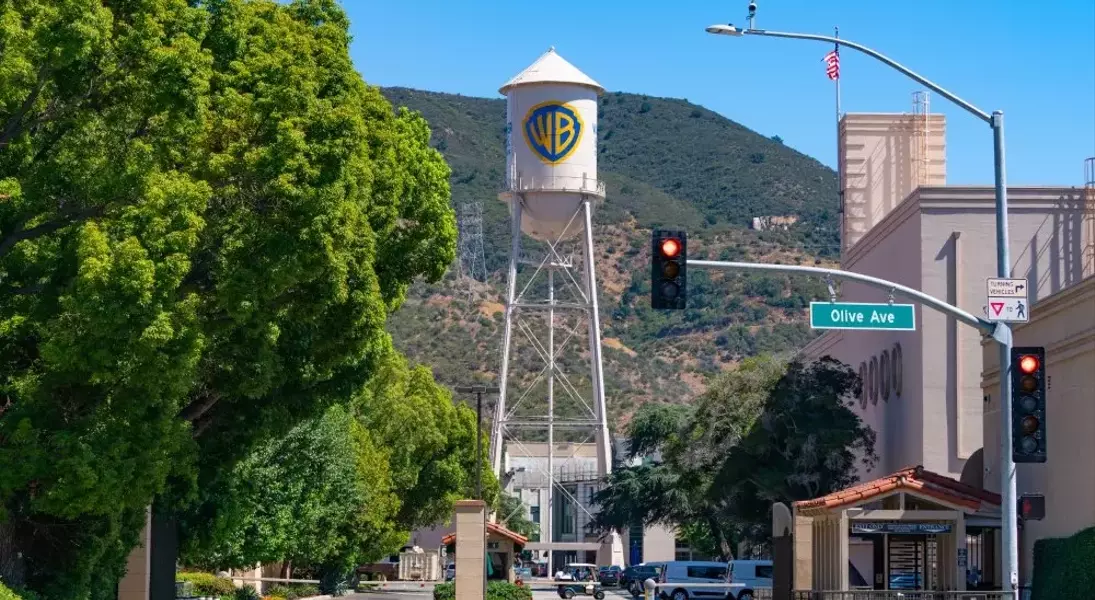
The Writers Guild of America has escalated its opposition to the proposed merger between Paramount and Warner Bros. Discovery, initiating legal proceedings to halt the deal. This action follows a recent judicial decision to temporarily pause the consolidation, reflecting growing concerns across various sectors about the potential repercussions of such a significant industry integration. The union contends that this merger poses substantial risks to the creative labor market, particularly for screenwriters, by further concentrating power and diminishing competitive opportunities.
WGA Takes Legal Action to Prevent Paramount-Warner Bros. Discovery Merger Amidst Growing Opposition
On Wednesday, July 22, 2026, the Writers Guild of America (WGA) filed a motion for a preliminary injunction, aiming to prevent Paramount and Warner Bros. Discovery from proceeding with their planned merger. This legal maneuver seeks to block the companies from finalizing the deal or integrating their operations. The WGA's action comes on the heels of a temporary restraining order issued on Monday, August 3, by Judge Araceli Martinez-Olguin. This initial order, requested by a coalition of 12 Democratic state attorneys general, temporarily paused the merger, citing concerns about its potential adverse effects on competition within the basic cable and theatrical distribution markets.
The states, led by California, are also pursuing a preliminary injunction to indefinitely postpone the merger until the merits of their case can be fully heard in court. The WGA’s lawsuit distinguishes itself by focusing specifically on the labor market impacts of the merger, particularly concerning screenwriters. The union asserts that the consolidation will lead to reduced compensation for writers and undermine competition across three key labor markets: blockbuster script development, episodic television writing, and overall talent deals. This perspective highlights the unique concerns of creative professionals in an increasingly consolidated industry landscape.
Supporting the WGA’s motion are declarations from prominent television and film writers, including David Koepp, Adam McKay, and Mike Schur. These veteran writers shared firsthand accounts of how industry consolidation has already impacted their careers. Koepp and McKay recounted a vibrant, competitive environment for scripts two decades ago, where multiple studios would actively bid for projects like Koepp’s “Panic Room.” They lament that such intense bidding wars are now a relic of the past, with significantly fewer options available for writers today. McKay noted that contemporary studios, often divisions of larger conglomerates, prioritize political and financial relationships over independent creative ventures, making it unlikely that a script like his “Anchorman” would even be produced in the current climate.
Schur echoed these sentiments, describing a failed attempt in 2017 to sell a TV show starring Aubrey Plaza. Despite interest from several streaming platforms, the project stalled due to pressure on these platforms to finance projects exclusively from their in-house studios, a shift Schur identifies as a fundamental breakdown in the market. He also pointed out the substantial decline in overall deals for writers, arguing that the competitive pressure that once incentivized studios to offer exclusivity has been replaced by a market where consolidation effectively guarantees it, regardless of the intrinsic value of writers' contributions. The writers also referenced Disney’s acquisition of 21st Century Fox assets as an example of how independent creative voices can be subsumed by corporate imperatives following consolidation.
The WGA’s legal argument draws parallels to the blocked merger between Penguin Random House and Simon & Schuster, where concerns over reduced advances for book authors ultimately led to the deal's collapse. The union's attorneys contend that the same logic applies here: the proposed merger would stifle competition among buyers of film and television writing services, leading to suppressed compensation, less favorable deal terms, and a reduction in the volume and diversity of programming available to audiences. Ultimately, the WGA posits that the merger threatens to create a “cultural monolith,” limiting the marketplace of ideas by concentrating economic and cultural power in the hands of a few executives.
Conversely, Paramount has argued that the merger would benefit writers by enabling the combined entity to produce more films and television series. The company has also assured that both brands will maintain independent creative leadership, aiming to alleviate concerns about diminished creative autonomy and market diversity.
This ongoing legal battle underscores the complex interplay between corporate ambition, regulatory oversight, and the livelihoods of creative professionals. The WGA’s proactive stance reflects a broader push within the entertainment industry to safeguard artistic integrity and fair compensation against the backdrop of increasing corporate consolidation. The outcome of this injunction, and the subsequent legal proceedings, will undoubtedly set a significant precedent for future mergers and acquisitions within the media landscape, potentially reshaping how content is created, distributed, and valued for years to come. It serves as a vital reminder that economic decisions in the creative industries extend far beyond financial spreadsheets, directly impacting the diverse voices and stories that enrich our cultural fabric.
