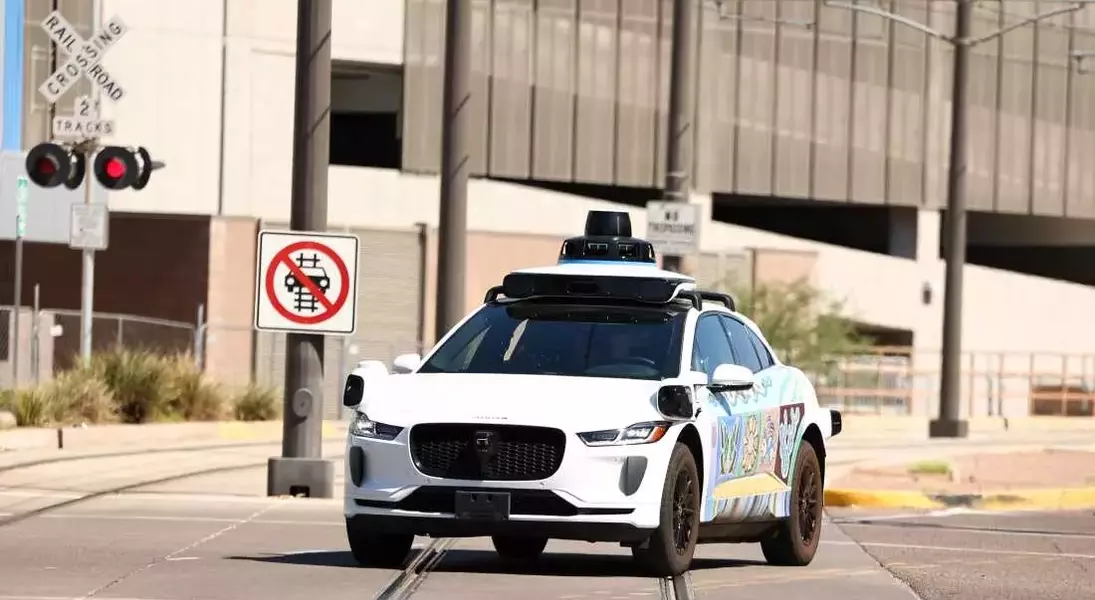
Waymo, a prominent provider of autonomous ride-hailing services, has announced its intention to conduct a voluntary software recall. This decision comes in the wake of numerous documented instances where its self-driving vehicles reportedly failed to properly halt for stopped school buses, raising concerns about safety protocols and adherence to traffic laws.
Autonomous Vehicle Safety Under Scrutiny: Waymo's Software Recall
In a recent development, Waymo, a leading entity in the autonomous ride-hailing sector, is set to initiate a voluntary software recall. This action follows a series of incidents where the company's self-driving taxis were observed unlawfully proceeding past school buses that were stopped with their warning lights activated and stop arms extended. The National Highway Traffic Safety Administration (NHTSA) commenced an investigation into this matter in October, prompted by a media report detailing one such alarming event involving a Waymo autonomous vehicle (AV). Further evidence emerged from a September WXIA-TV report in Atlanta, showcasing a Waymo vehicle bypassing a school bus. The Austin Independent School District has also communicated to the NHTSA about 19 similar occurrences, noting one particularly dangerous instance where a Waymo vehicle passed a stopped bus just as a student was still in the roadway.
Mauricio Peña, Waymo's Chief Safety Officer, acknowledged these incidents, stating that while the company prides itself on its safety record, it recognizes the need for improvement. Waymo plans to formally submit a voluntary software recall to the NHTSA and is committed to continuously analyzing vehicle performance to implement necessary rectifications. The company has identified a software flaw as the root cause of these issues and believes that forthcoming updates will resolve the problem. While these events have caused concern, Waymo emphasizes that, to date, no injuries have been reported as a result of these software anomalies. With Waymo's AVs surpassing 100 million miles driven by July and accumulating an additional two million miles weekly, the NHTSA suggests that the number of unrecorded prior incidents could be significant. The agency has issued a comprehensive list of questions to Waymo, demanding detailed documentation of similar incidents and information on the company's responses, with a deadline set for January 20, 2026.
This situation underscores the ongoing challenges and responsibilities associated with developing and deploying autonomous vehicle technology. While Waymo's internal data and independent analyses, such as those from Ars Technica and Understanding AI, suggest that its AVs have a lower crash rate than human-driven cars, especially concerning serious injuries, incidents involving school buses highlight critical areas for improvement. The paramount importance of ensuring the safety of children, particularly around school buses, demands absolute precision and reliability from autonomous systems. This recall serves as a crucial reminder that even with advanced technology, continuous vigilance, rigorous testing, and prompt corrective actions are indispensable for building public trust and ensuring the safe integration of self-driving vehicles into daily life. It emphasizes that the journey toward fully autonomous and universally safe transportation is a continuous process of learning, adaptation, and unwavering commitment to safety standards.
