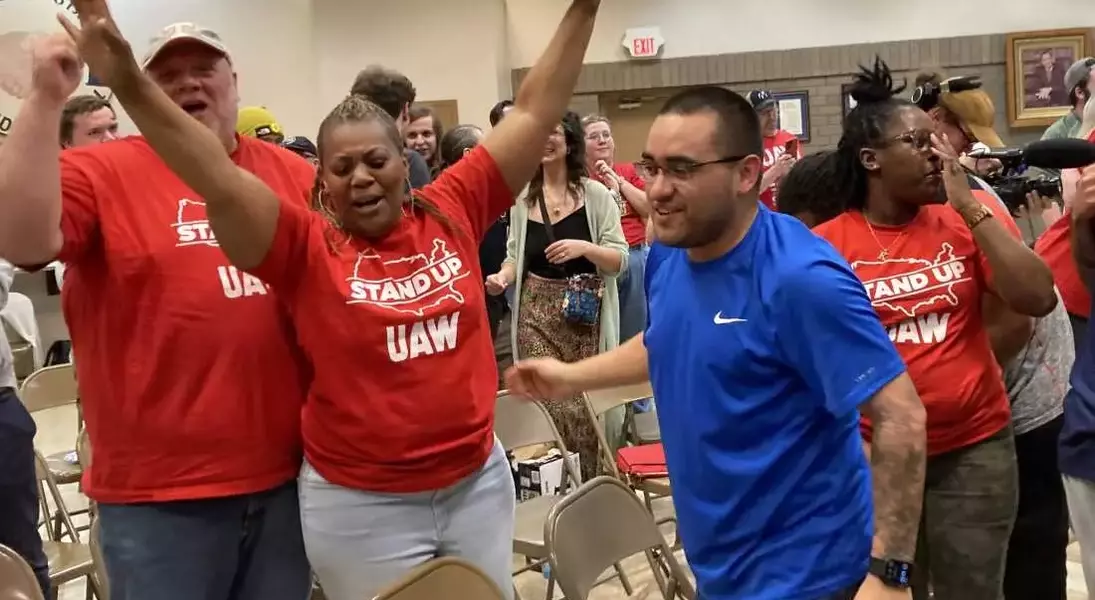
Employees at the Volkswagen assembly plant in Chattanooga, Tennessee, have resoundingly endorsed their inaugural collective bargaining agreement, ushering in a new era of improved compensation, robust employment safeguards, and better working conditions. This pivotal decision, following years of concerted effort, signals a remarkable achievement for organized labor in a region historically resistant to unionization.
The path to this agreement was protracted, with workers having previously rejected union representation twice before ultimately voting to join in 2024. This success positions the Chattanooga facility as a rare unionized site among non-Big Three automakers in the South. Negotiations, which commenced nearly two years ago, culminated in a tentative agreement in early February, subsequently approved by an impressive 96% of the workforce. UAW President Shawn Fain lauded the outcome, emphasizing its potential to inspire other non-union auto workers in the Southern states. Volkswagen officials also acknowledged the agreement, stating it appropriately recognizes the dedication and hard work of their team members. The new contract, effective immediately, grants a $6,550 bonus, a 20% wage increase by February 2030, reduced healthcare premiums, additional paid leave, and strong job security clauses, including mandatory union discussions prior to any layoffs.
This landmark victory for the UAW in Tennessee stands as a significant step towards expanding union influence in the South, an area increasingly vital to the automotive manufacturing sector due to substantial investments by foreign automakers. Despite a recent setback in Alabama, where Mercedes-Benz workers voted against unionization, the Volkswagen agreement provides a compelling blueprint for future organizing efforts. The UAW's renewed momentum, spurred by successful strikes against major automakers and a substantial investment in Southern organizing, highlights the evolving landscape of labor relations. The contract’s comprehensive benefits and protections offer a strong incentive for workers at other facilities to consider union membership, reflecting a growing recognition of the value of collective bargaining in securing fair treatment and equitable compensation.
This outcome underscores the transformative power of collective action and the unwavering pursuit of fairness in the workplace. It serves as a beacon of hope, demonstrating that through perseverance and solidarity, workers can achieve substantial improvements in their livelihoods and contribute to a more just and equitable industrial landscape. The commitment shown by both the union and Volkswagen to reach a mutually beneficial agreement exemplifies a progressive approach to labor relations, fostering an environment where employees feel valued and secure, ultimately leading to greater productivity and prosperity for all.
