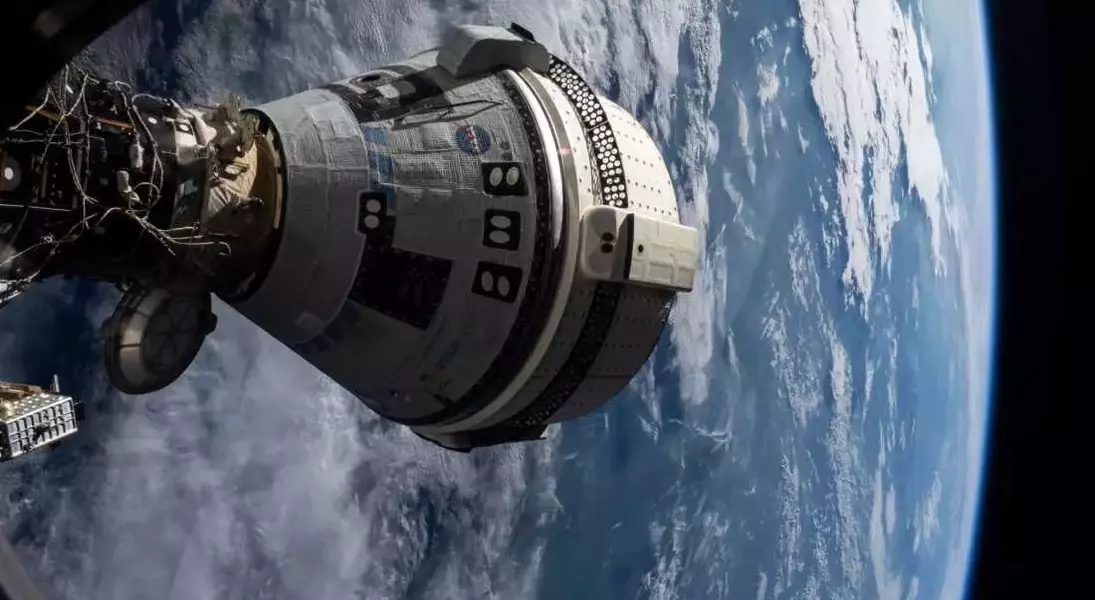
NASA Administrator Jared Isaacman has issued a stern rebuke to both Boeing and his own agency, citing profound organizational and technical lapses that led to the unsuccessful crewed test flight of the Starliner spacecraft. A detailed 311-page report classified the incident as a Type A Mishap, the most severe category, underscoring critical issues in both the design and the management of the mission. This unprecedented public criticism from a NASA chief signals a potential shift towards greater accountability and rigorous oversight in future space exploration programs, despite the continued commitment to Starliner as a vital component of NASA's strategy to maintain diverse commercial crew transportation options to the International Space Station.
Starliner Mission: Technical Failures and Critical Assessment
The Starliner spacecraft's first crewed test flight encountered significant difficulties, prompting a thorough investigation by NASA. The mission, intended to transport astronauts Butch Willmore and Suni Williams to the International Space Station, faced multiple thruster malfunctions as it neared its destination. These technical failures severely hampered the crew's ability to maneuver and dock the spacecraft, leading to a pivotal decision by NASA and Boeing to return Starliner without the astronauts. The crew instead remained aboard the ISS for an extended period, ultimately returning to Earth via SpaceX's Crew Dragon capsule nine months later. This incident highlighted critical design and engineering deficiencies within the Starliner system that demand immediate rectification.
The comprehensive report detailed that while the initial launch of the Starliner was successful, the subsequent failure of several thrusters during its approach to the International Space Station was a major technical setback. This malfunction made it impossible for astronauts Willmore and Williams to safely dock the capsule, necessitating their prolonged stay on the ISS. The classification of this event as a Type A Mishap, a designation reserved for the most severe mission failures, underscores the gravity of the situation, even though crew safety was ultimately maintained. The ongoing investigation aims to pinpoint the precise root cause of these thruster problems, reinforcing the need for substantial design and engineering improvements before Starliner can proceed with future crewed missions, ensuring the reliability and safety of space travel.
Organizational Deficiencies and Leadership Accountability
Beyond the technical issues, NASA Administrator Jared Isaacman highlighted deep-seated organizational and leadership problems within both Boeing and NASA itself. The investigation revealed a troubling erosion of trust between the two entities and a leadership culture that was "overly risk-tolerant." Isaacman noted that the protracted development timeline, marked by over 30 launch attempts, contributed to "cumulative schedule pressure and decision fatigue." These systemic issues, he argued, created an environment potentially incompatible with the stringent demands of human spaceflight, necessitating a critical reevaluation of operational protocols and leadership structures to prevent future incidents of this nature.
Isaacman's assessment pointed to a critical flaw not in hardware alone, but in the decision-making processes and leadership dynamics at both Boeing and NASA. He emphasized that the disagreements surrounding the options for returning the crew became unprofessional, further exposing the strained relationship between the organizations. This candid critique from the NASA chief suggests a proactive stance towards fostering a culture of accountability and transparent oversight. Experts like Don Platt from the Florida Institute of Technology noted the rarity of such public reprimands from a NASA leader, indicating a potential new era of increased scrutiny for contractors. Despite these challenges, NASA remains committed to the Starliner program, viewing it as essential for maintaining a resilient and diversified commercial crew transportation capability, with 61 recommendations outlined for future missions.
