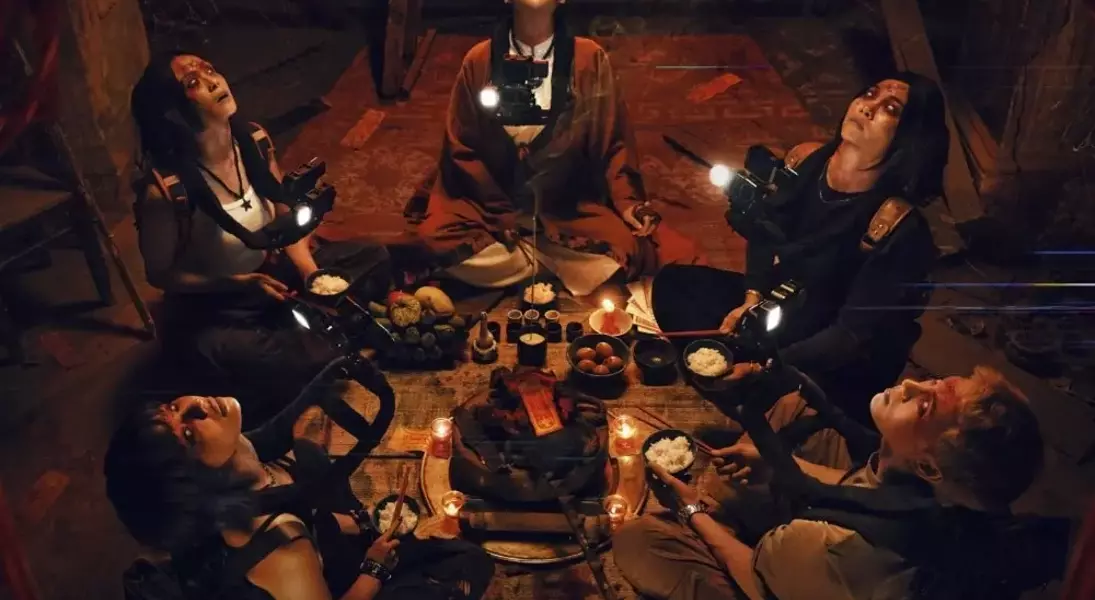
"Lau Chu Hoa: The Deadliest Mansion," a Vietnamese horror film utilizing the found-footage technique, has achieved significant success in its domestic market, topping box office charts and attracting a large audience. Now, it is poised to captivate North American audiences, marking a notable step for Vietnamese cinema on the international stage. This theatrical release, managed by Mockingbird Pictures, aims to deliver a unique and intense horror experience rooted in a local urban legend.
Vietnamese Horror Sensation "Lau Chu Hoa: The Deadliest Mansion" Arrives in North American Theaters
On September 4th, 2026, the acclaimed Vietnamese found-footage horror film, "Lau Chu Hoa: The Deadliest Mansion," is scheduled to debut in North American cinemas. Directed by the visionary Hùng Trần, this cinematic creation previously shattered box office records in Vietnam following its June premiere, drawing an impressive audience exceeding one million and accumulating revenues upwards of VND78 billion (approximately $3 million). The North American distribution will be spearheaded by Mockingbird Pictures, ensuring the film's presence in prominent theater chains such as AMC, Regal, and Cinemark.
The narrative of "Lau Chu Hoa: The Deadliest Mansion" delves into a deeply unsettling Vietnamese urban legend. It chronicles the chilling saga of young online streamers who, in their quest for internet fame and financial gain, trespass into the fabled and notoriously haunted Hứa family estate. Their ill-fated live broadcast inadvertently awakens a long-dormant, malevolent presence, drawing them into the century-old, terrifying tale of the "Ghost of the Hứa Family." The entire production is meticulously crafted in the found-footage style, enhancing the immersive and visceral horror experience.
The film is a collaborative production between Runup Vietnam and South Korea's Hive Media Corp. This venture signifies Hive Media Corp's inaugural investment in a film production outside its home country. Hive Media Corp has an established reputation for backing major South Korean cinematic hits, including "12.12: The Day," "Inside Men," "The Man Standing Next," and "Harbin." Notably, they were also involved in the found-footage horror success "Gonjiam: Haunted Asylum," which garnered over 2.6 million admissions in South Korea.
Producer Lee Jin Sung shared insights into the genre's appeal, stating, "Found footage possesses an inherent capability to immerse viewers, making them feel as though they are directly living through the unfolding terror." He further elaborated on the collaboration, "Our partnership with Hive Media Corp enabled us to transplant this immersive experience onto a distinctly Vietnamese legend, all while meticulously preserving the unique identity and chilling atmosphere that define the story."
Mockingbird Pictures' involvement extends beyond distribution; the company is committed to broadening the global reach of Vietnamese commercial cinema. Phong Duong, the business director of Mockingbird Pictures and an executive producer at its affiliate, Bluebells Studios, expressed confidence in the film's international appeal. "'Lau Chu Hoa: The Deadliest Mansion' offers one of the most intense Vietnamese horror encounters of recent times," Duong remarked. "We firmly believe this film has the potential to resonate globally, and we are eager for audiences worldwide to confront this fear firsthand." Mockingbird Pictures boasts a robust distribution network, managing over 60 theatrical releases annually in Vietnam and more than 100 titles across post-theatrical platforms, underscoring its expanding commitment to showcasing Southeast Asian films to a global audience.
The successful North American release of "Lau Chu Hoa: The Deadliest Mansion" could signify a significant moment for Vietnamese cinema, opening doors for more diverse international exposure. The film's achievement in captivating a domestic audience, coupled with the strategic collaboration with a reputable South Korean production company, underscores a growing potential for Asian horror films to transcend cultural boundaries. For North American audiences, this presents an exciting opportunity to explore unique storytelling and cultural elements within the horror genre, moving beyond conventional Western narratives. It highlights the power of universal themes like fear and the unknown, even when presented through a distinct cultural lens, and could foster a greater appreciation for global cinematic offerings.
