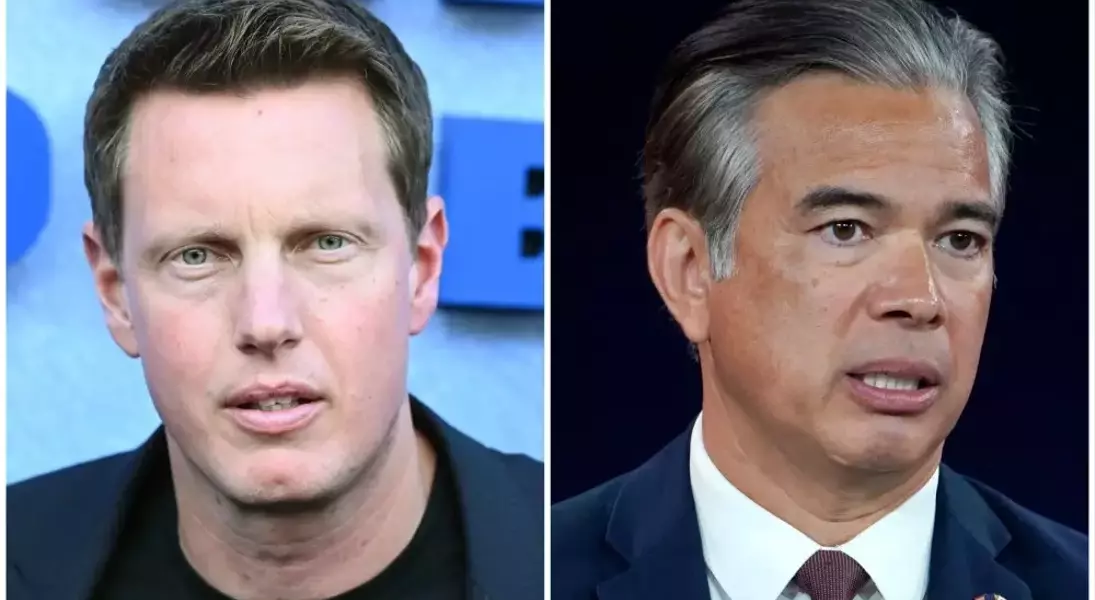
California Attorney General Rob Bonta has halted all discussions aimed at a potential settlement with Paramount concerning the company's proposed acquisition of Warner Bros. Discovery, a deal valued at $111 billion. This decision comes as Bonta accuses Paramount of acting in bad faith by misrepresenting earlier private discussions. The Attorney General, who leads a coalition of 12 states opposing the merger, insists that future meetings will only occur when Paramount demonstrates a genuine commitment to good-faith negotiations. This development further complicates the path to finalization for the significant media merger, placing increased pressure on Paramount as an antitrust trial looms in March, with substantial daily financial penalties awaiting if the transaction is not completed by early October.
California Attorney General Cancels Paramount Settlement Talks Over Warner Bros. Discovery Deal
California Attorney General Rob Bonta has abruptly called off settlement discussions with Paramount concerning the proposed acquisition of Warner Bros. Discovery, citing a significant breakdown in trust. Bonta alleges that Paramount misrepresented the content of previous settlement talks, an action he views as a critical breach of good faith. This cancellation underscores the deep divisions between the state's legal representatives and the media giant over the $111 billion merger, which Bonta's office and a coalition of 11 other states are actively challenging in court. The Attorney General emphasized that future negotiations would only resume if Paramount demonstrates a sincere and transparent approach, departing from what he described as 'playing games.'
The suspended talks were initially seen as a potential avenue to avert a protracted legal battle, especially after Paramount hinted at a possible withdrawal from California, a move that would carry considerable economic implications for the state. Bonta has consistently pushed for 'structural remedies,' which likely include asset divestitures by Paramount, a condition the company has shown reluctance to accept. With an antitrust trial set for March, time is running out for a resolution. Paramount faces a daily 'ticking fee' of approximately $7 million, payable to shareholders, if the merger does not conclude by October 1. This mounting financial pressure significantly raises the stakes in the ongoing legal dispute, making a timely and agreeable settlement all the more critical, yet increasingly elusive.
Legal and Financial Ramifications of the Stalled Merger
The decision by California Attorney General Rob Bonta to suspend settlement discussions with Paramount has amplified the legal and financial uncertainties surrounding the proposed $111 billion acquisition of Warner Bros. Discovery. Bonta's accusations of bad faith and misrepresentation against Paramount during preliminary talks have created a more contentious environment for reaching an out-of-court agreement. The legal challenge, spearheaded by California and supported by 11 other states, focuses on concerns that the merger could grant the combined entity undue market power in both cable television and movie production, potentially harming consumers and competition within the entertainment industry. The Attorney General's firm stance suggests that any eventual settlement would necessitate significant concessions from Paramount, likely involving the divestiture of certain assets to mitigate antitrust concerns, a measure the company has yet to embrace.
The immediate consequence of Bonta's move is a heightened risk of the dispute proceeding to a full-blown antitrust trial, scheduled for March. This scenario carries substantial implications for both parties, particularly for Paramount, which is now facing a looming financial deadline. If the merger is not finalized by October 1, Paramount will incur a 'ticking fee' of roughly $7 million per day, owed to its shareholders. This escalating financial penalty serves as a powerful incentive for Paramount to find a resolution, yet the current breakdown in communication suggests that a swift and amicable agreement is far from guaranteed. The stalled negotiations underscore the intricate balance between regulatory oversight and corporate ambition, as the California Attorney General maintains a stringent position to protect public interest against potential monopolistic practices in the media landscape.
