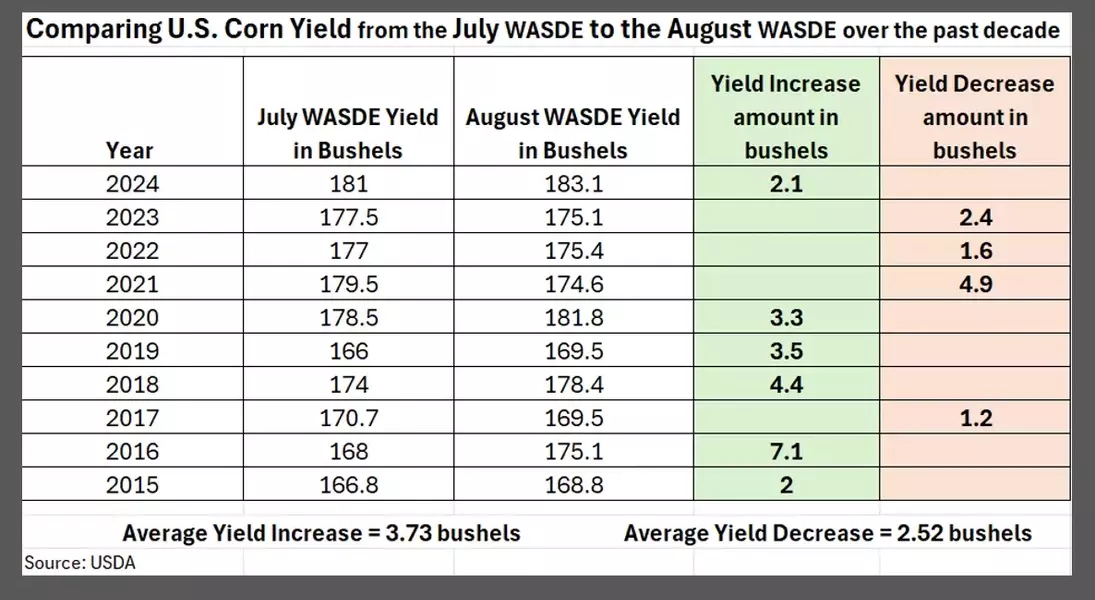

The anticipation builds within the agricultural sector as the market awaits the release of the U.S. Department of Agriculture's World Agricultural Supply and Demand Estimates (WASDE) report on August 12. This report is poised to either confirm or challenge the prevailing corn yield forecasts, which have kept corn futures prices relatively stable despite a favorable growing season. The USDA's previous estimate in July projected a yield of 181 bushels per acre for the 2025-26 crop year, translating to a total production of 15.75 billion bushels. This figure represented an increase from the prior season, signaling a robust outlook for the domestic corn supply.
As the August report approaches, attention is focused on potential adjustments to these yield figures. Historical data reveals a fluctuating pattern in USDA's yield revisions from July to August over the past decade; six times the estimates were raised, while four times they were lowered. The average upward revision stood at 3.73 bushels, contrasting with an average decrease of 2.52 bushels. With current crop progress reports indicating 73% of corn in good to excellent condition as of late July, many industry participants believe a record yield is attainable. However, if the final yield falls closer to the initial 181 bushels per acre estimate, corn prices might see support due to strong demand leading to a manageable carryout. Conversely, a yield closer to 185 bushels per acre, as some traders anticipate, could lead to a surplus, potentially exerting downward pressure on prices.
The upcoming WASDE report carries significant weight for market participants. It is crucial for stakeholders to remain prepared for various scenarios, whether the USDA announces a modest or substantial adjustment to yield, or even an unexpected reduction. The decision will not only impact current prices but also shape expectations for ending stocks, which could influence corn prices well into the harvest season. Vigilance and adaptability will be key for navigating the evolving market landscape.
In a world increasingly driven by data and predictive analytics, the accuracy and implications of agricultural reports like WASDE underscore the intricate balance between natural factors and economic forces. A transparent and responsive market, equipped with reliable information, empowers producers and consumers alike to make informed decisions, fostering stability and growth in the vital agricultural sector. Embracing foresight and strategic planning based on comprehensive data is not merely a commercial advantage but a foundational element for a resilient and thriving global food system, encouraging innovation and responsible stewardship of resources.
