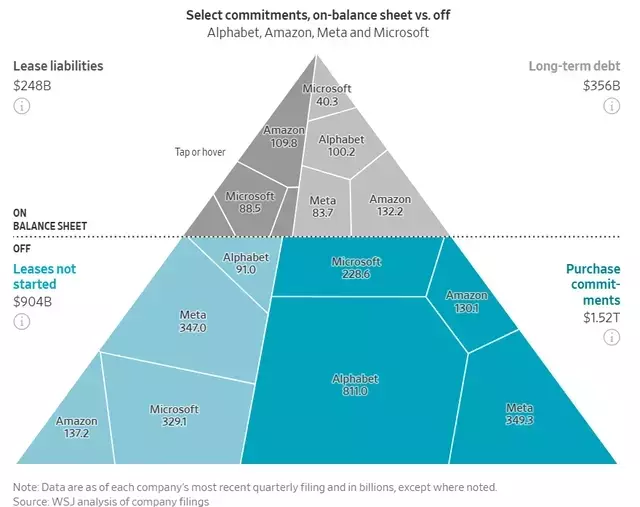

A significant change in accounting standards is on the horizon for major AI companies, mirroring a past shift that impacted the retail and office sectors. The ASC 842 lease accounting rules are set to mandate that long-term lease obligations, currently off-balance sheet, be recognized as liabilities. This will lead to a substantial increase in reported financial leverage for AI hyperscalers such as Microsoft, Meta, Amazon, and Alphabet, potentially altering their financial profiles and challenging their present high valuations. The impending recognition of trillions in lease and purchase commitments is expected to reveal a more accurate picture of their financial health, signaling a potential recalibration for the AI industry.
The Impact of ASC 842 on Corporate Balance Sheets
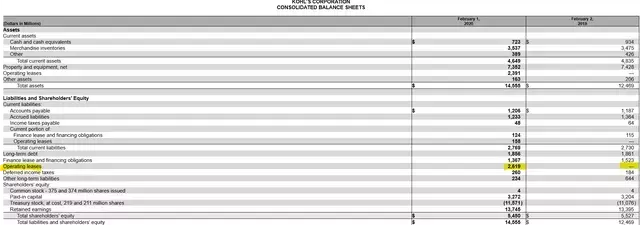
In 2018, the Financial Accounting Standards Board (FASB) introduced ASC 842, replacing the previous ASC 840 standard. This revision fundamentally changed how lease obligations are reported: previously, companies could keep certain leases off their balance sheets, but under ASC 842, all lease obligations must be recorded as liabilities. This change has a profound impact, particularly for long-term leases, where the present value of all future rent payments becomes a line item on the balance sheet. For example, a 20-year lease would result in a substantial liability, dramatically altering a company's leverage profile. In the retail sector, companies like Kohl's Corporation saw their balance sheets shift significantly, with billions in operating lease liabilities appearing, changing how their financial health was perceived. This led to a general shortening of lease terms across industries, as businesses sought to mitigate the impact of these new liabilities, affecting REITs through increased renewal frequencies and reduced visibility of future cash flows.
The AI industry is now facing a similar accounting shift with ASC 842, which will bring trillions of dollars in lease obligations onto balance sheets. Unlike previous implementations, these liabilities have largely remained off the books because many AI-related leases—particularly for data centers and power providers—do not commence until construction is complete. This timing subtlety means that while hyperscalers have signed long-term contracts, the associated liabilities are not yet visible. Reports indicate that contractual obligations for major AI players exceed $3 trillion, with only a fraction currently reflected in their financial statements. Specifically, Microsoft, Meta, Amazon, and Alphabet are poised to recognize hundreds of billions in lease obligations each, alongside even larger purchase commitments. This influx of liabilities will substantially increase their reported leverage, potentially impacting investor perceptions and valuations as the true scale of their financial commitments becomes transparent.
Financial Performance and Future Outlook for AI Companies
The AI industry is currently benefiting from several accounting nuances that make it appear more profitable than it might be in reality. These practices, while legal and compliant with GAAP, create timing mismatches that generally favor a positive financial outlook for AI companies. Key issues include the timing of capital expenditure recognition through depreciation, revenue recognition, and, crucially, the delayed recognition of lease expenses under ASC 842. For instance, when Nvidia sells processors to hyperscalers, Nvidia recognizes the full profit immediately. However, the hyperscalers treat these purchases as capital investments, depreciating them over several years. This creates a significant gap where revenue is recognized quickly, but corresponding expenses are deferred, particularly problematic given the exponential growth in AI spending.
Looking ahead, several significant factors are expected to negatively impact the reported profitability of AI providers. As leases commence, rent expenses will be recorded in real-time, and the full present value of long-term contracts will appear as liabilities. Additionally, escalating depreciation expenses from massive chip capital expenditures will begin to catch up, alongside direct cash outflows from purchase commitments that will be recognized as expenses. These combined effects will lead to a substantial increase in the leverage of hyperscalers' balance sheets. With long-term rental contracts and purchase obligations already signed, these companies face massive, largely unavoidable expenses. As accounting standards eventually reflect these real costs, the AI industry will need to demonstrate genuinely strong returns on invested capital. This raises questions about current valuations, which may have been inflated by accounting practices that pulled earnings forward, suggesting significant headwinds for future earnings growth as trillions of dollars in expenses are finally recognized.
