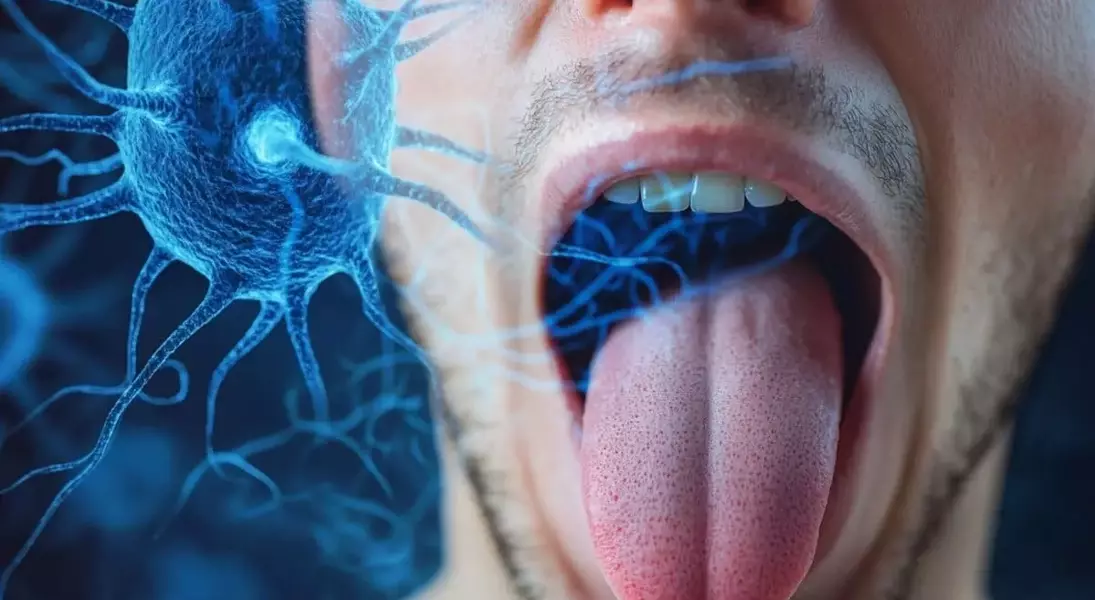
A groundbreaking study conducted on marmosets has uncovered the pivotal role of Purkinje cells within the cerebellar vermis in regulating tongue movements. These specialized neurons signal to halt protrusion as the tongue nears its target, a process crucial for precision tasks such as inserting the tongue into narrow openings. The research highlights that these cells are highly active during intricate maneuvers but remain inactive during routine activities like grooming. By suppressing Purkinje cells, scientists observed significant disruptions in tongue control, including overshooting targets or delayed retraction. This discovery not only deepens our understanding of motor coordination mechanisms but also holds potential implications for therapies addressing speech and swallowing disorders.
In an innovative approach, researchers utilized marmosets, primates known for their exceptional dexterity in manipulating their tongues. These creatures possess a 21mm-long tongue capable of navigating small crevices to retrieve food. During experiments, the animals demonstrated remarkable skill in bending and twisting their tongues to reach tubes positioned at acute angles relative to their mouths. To quantify the cerebellum's contribution to this control, the team monitored the activity of Purkinje cells located in the vermis structure. When these cells were suppressed during tongue protrusion, trajectories became exaggerated, leading to overreach past intended targets. Conversely, suppression during retraction slowed down the tongue's return to the mouth. Simultaneous suppression of multiple cells amplified these effects significantly.
The findings suggest that Purkinje cells transmit signals to downstream neural structures, instructing them to decelerate and stop the tongue's movement upon nearing a target. This mechanism is particularly evident when performing precise actions, contrasting with casual behaviors where such engagement diminishes. For instance, while aiming for a narrow tube necessitates high accuracy, grooming does not elicit comparable levels of cell activity. The research underscores the importance of comprehending how the cerebellum governs and learns tongue movements, which could lead to advancements in treating symptoms associated with cerebellar dysfunction, such as vocal muscle spasms or difficulties in swallowing.
As we delve deeper into the intricacies of motor control, it becomes apparent that understanding the interplay between different neural components is essential. Marmosets serve as an ideal model organism due to their ability to manipulate their tongues with finger-like precision, making them invaluable subjects for studying the neural regulation of body parts critical to human existence. The authors emphasize that treatments targeting cerebellar dysfunctions require enhanced insights into these processes. Their observations reveal that climbing fiber-induced suppression of Purkinje cells disrupts forces responsible for tongue retraction, resulting in hypermetric protraction and sluggish retraction. Furthermore, they propose a general computational framework applicable to both lingual and oculomotor regions of the cerebellum, suggesting universal principles underlying targeted movement control.
This investigation provides profound insights into the neural mechanisms governing complex motor skills, specifically focusing on tongue movements. By elucidating the role of Purkinje cells in ensuring accurate and coordinated actions, it opens avenues for developing novel therapeutic strategies aimed at alleviating conditions linked to cerebellar impairments. Understanding how these cells contribute to stopping motions precisely could revolutionize approaches towards managing disorders affecting speech and swallowing capabilities, ultimately enhancing quality of life for affected individuals.
