
OpenAI has introduced a series of revolutionary enhancements to ChatGPT, driven by the highly anticipated GPT-5 model. These updates are poised to transform user interaction with the AI, offering unprecedented levels of personalization and functionality. From refined conversational styles to sophisticated coding assistance and seamless integration with everyday productivity tools, ChatGPT is evolving into an even more indispensable digital companion. This new era of AI promises a more intuitive, adaptable, and efficient user experience, pushing the boundaries of what conversational artificial intelligence can achieve.
Revolutionizing Interaction: Deep Dive into ChatGPT's New Capabilities
In a groundbreaking announcement on August 7, 2025, OpenAI unveiled a suite of transformative features for its flagship AI, ChatGPT, powered by the newly launched GPT-5 model. These significant upgrades, presented by OpenAI at an event, are set to redefine how users engage with artificial intelligence.
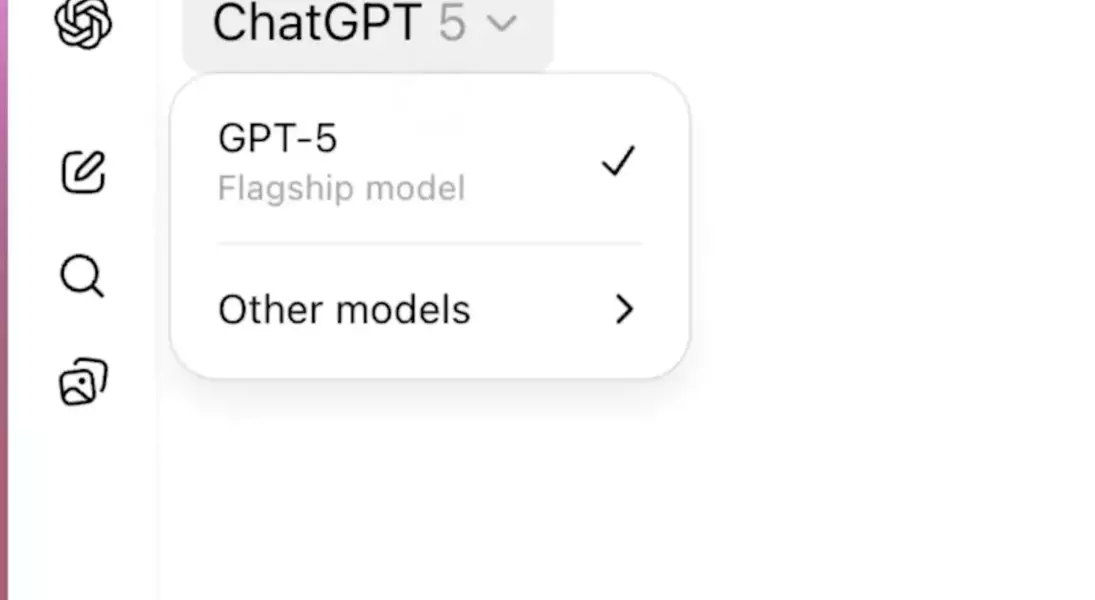
A major overhaul involves the simplification of the underlying AI architecture. With the introduction of GPT-5, the previous model picker, which allowed users to switch between GPT-4o, GPT-4.1, and GPT-4.5, has been phased out. ChatGPT now operates on a unified, auto-switching system, intelligently combining the strengths of its predecessors into a singular, more robust and responsive model. However, for ChatGPT Plus, Pro, and Team subscribers, a model selection option remains, offering a choice between GPT-5 and the specialized GPT-5 Thinking, with Pro and Team users also gaining access to GPT-Thinking Pro.
Adding a touch of human-like nuance, OpenAI has introduced four distinct "personalities" for ChatGPT's text-based responses. Users can now choose between 'Cynic' (sarcastic and blunt), 'Robot' (precise and emotionless), 'Listener' (warm and reflective), and 'Nerd' (playful and explanatory). This innovative feature allows for a more tailored conversational experience, catering to diverse user preferences and interaction styles. For those who prefer the familiar, a 'default' style remains available.
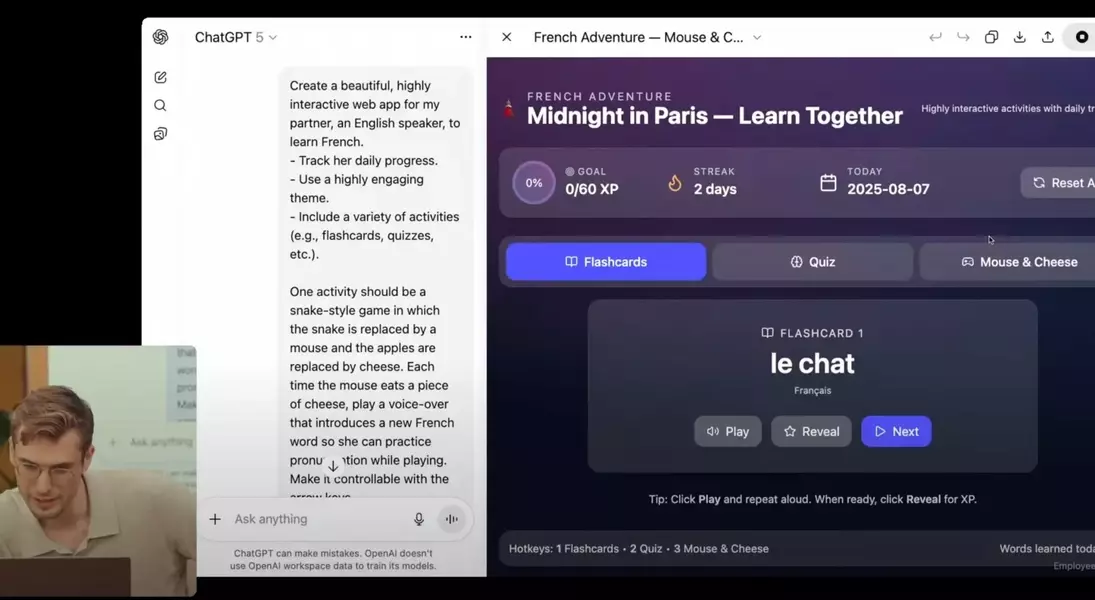
The platform's coding prowess has also received a substantial boost. ChatGPT's "vibe coding" capabilities, which enable AI to generate code from natural language prompts, are now significantly more advanced. GPT-5 demonstrates enhanced proficiency in interpreting intricate and descriptive requests for application or website creation. Users can now visualize and interact with AI-generated projects directly within a new interface called Canvas, marking a leap in user-friendly development tools.
Furthermore, app customization options have been expanded. Users can now personalize ChatGPT's interface by selecting an accent color for conversation bubbles, the voice button, and highlighted text. This can be done via the 'Settings' and 'General' menus on the web platform, or through 'Personalization' and 'Color Scheme' on mobile devices.
ChatGPT's advanced voice mode, lauded for its natural-sounding conversations, has been refined for paid subscribers. This upgraded mode is now more adept at understanding complex instructions and allows users to fine-tune its speaking style. OpenAI has also announced the retirement of the standard voice mode, compensating users with virtually unlimited access to the advanced mode for paid subscribers, and extended usage hours for free users. Crucially, this advanced voice functionality is now compatible with custom GPTs, broadening its utility.
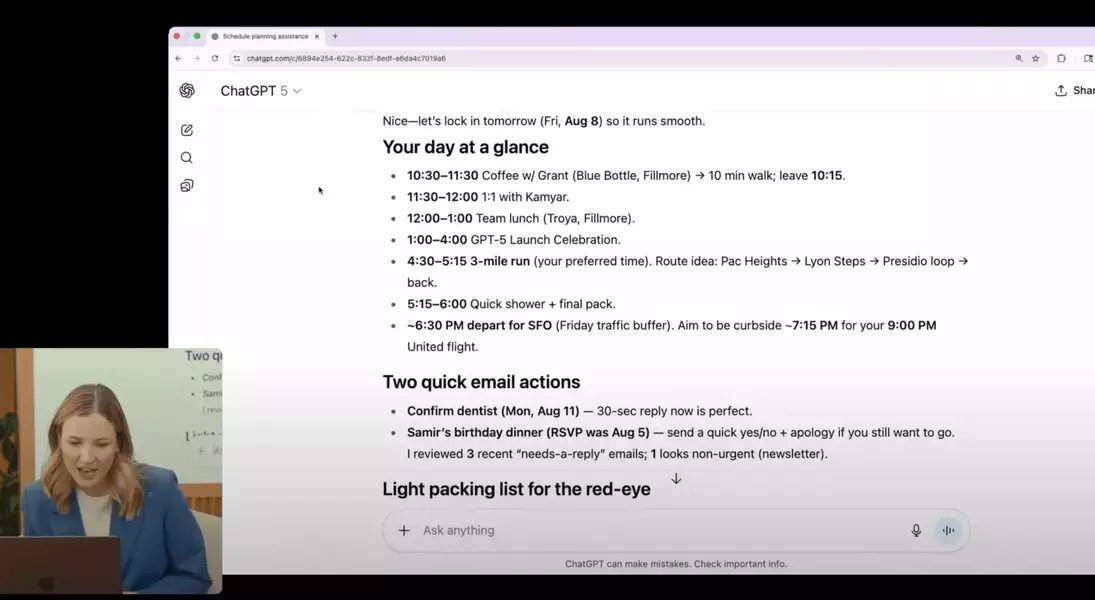
Finally, a highly anticipated integration feature is being rolled out: seamless connectivity with Gmail and Google Calendar. As demonstrated by OpenAI, ChatGPT can now proactively prompt users to link their accounts when a relevant request is made, such as "help me plan my schedule tomorrow." Once connected, ChatGPT can leverage calendar events and email content to assist in daily planning, provide updates on missed emails, and much more, ushering in a new era of proactive digital assistance. This integration will be available to Pro users next week, with other subscription tiers to follow.
The recent wave of updates to ChatGPT, especially the seamless integration with tools like Google Calendar and Gmail, truly highlights the evolving landscape of artificial intelligence. From a user's perspective, this isn't just about incremental improvements; it's about AI becoming an even more deeply ingrained and indispensable part of our daily digital lives. The introduction of distinct "personalities" also speaks volumes about the industry's shift towards making AI not just functional, but also relatable and adaptable to individual preferences. It prompts us to consider the future implications of such sophisticated AI. How will this increased personalization and integration shape our digital habits and work efficiency? The prospect of an AI that truly 'understands' and proactively assists with our schedule, communication, and creative endeavors opens up exciting avenues, yet also necessitates a careful consideration of privacy and ethical boundaries. As these technologies continue to advance, striking a balance between innovation and responsible deployment will be paramount to ensuring a beneficial future for all users.
