OpenAI's latest iteration of its large language model, GPT-5, introduces transformative capabilities that promise to redefine software development. The most remarkable of these innovations is 'vibe coding,' a paradigm shift where natural language supplants conventional programming languages. This means individuals can now articulate their desired application functionalities in plain English, and the AI will autonomously generate the underlying code. This breakthrough not only democratizes access to software creation but also significantly accelerates the development process, transforming abstract ideas into tangible applications with unprecedented ease.
This advanced AI model serves as a personal developer, capable of translating conceptual outlines into fully functional software, ranging from educational tools to complex interactive simulations. The enhanced 'agentic coding' feature further amplifies this, allowing GPT-5 to independently execute multi-step coding tasks in the background. While not flawless, as observed in preliminary testing, GPT-5's ability to interpret and fulfill nuanced requests surpasses its predecessors, signifying a monumental step towards a future where programming literacy is less about syntax and more about imaginative communication.
The Dawn of Natural Language Programming
The concept of 'vibe coding,' where AI interprets natural language to generate software, is rapidly gaining traction, particularly with the advent of OpenAI's GPT-5. This groundbreaking development eliminates the need for users to possess traditional programming expertise, enabling them to simply articulate their software requirements in conversational terms. The AI then takes charge, producing the necessary code. This approach empowers a broader demographic to engage in software creation, making it an invaluable asset for educational purposes, professional endeavors, and personal projects alike. GPT-5's capacity to transform descriptive inputs into functional applications within minutes signals a profound shift in how software is conceived and developed, making sophisticated tools accessible to all.
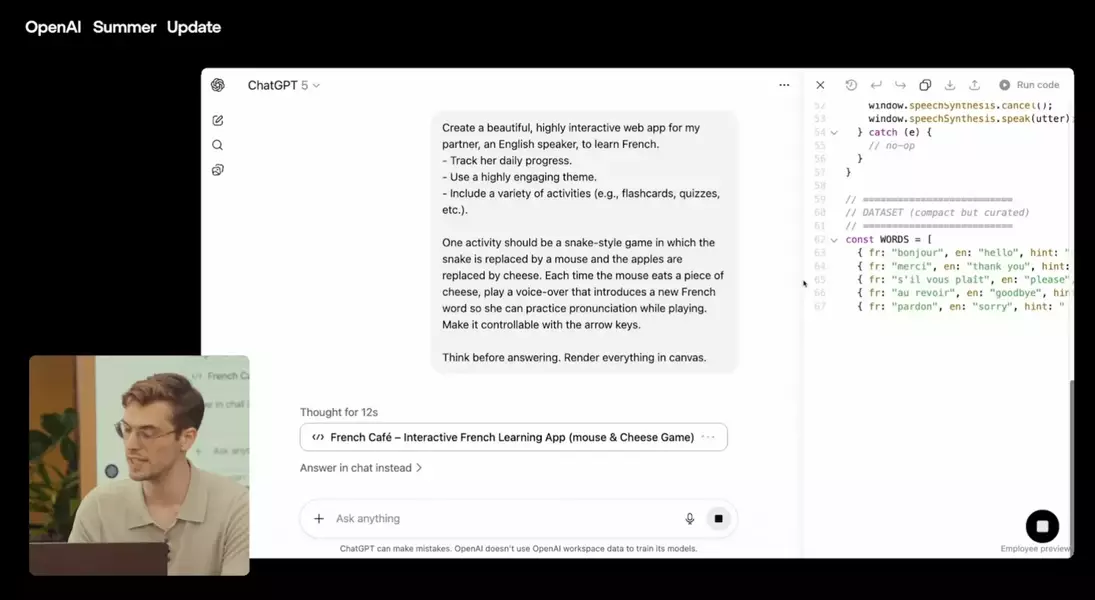
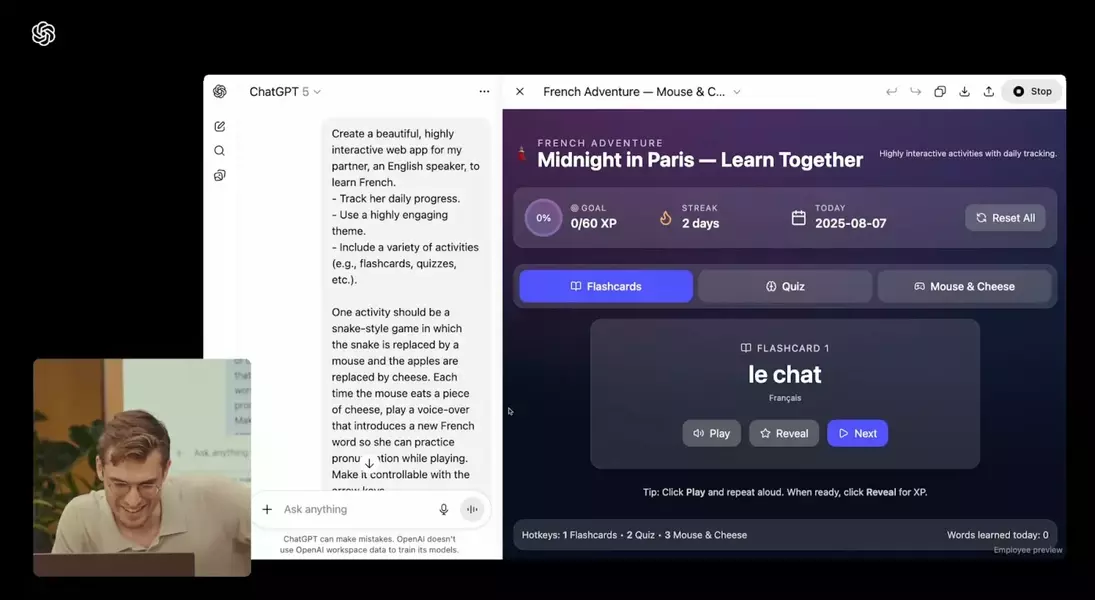
OpenAI's demonstrations vividly showcased GPT-5's prowess in translating complex natural language requests into intricate applications. For example, a detailed description of a French language learning application, complete with a unique game mechanic and progress tracking features, was seamlessly converted into a functional program by GPT-5. The system's ability to generate hundreds of lines of code accurately and efficiently from a simple prompt underscores its potential to revolutionize custom software development. This signifies a move towards an era where personal coding assistants, powered by advanced AI, can bring bespoke application ideas to life, dramatically reducing the barriers to entry for software innovation.
Transforming Development Workflows
GPT-5 introduces an innovative 'agentic coding' capability, signifying a major leap in autonomous software development. This feature allows the AI to undertake and complete coding projects independently over extended periods, freeing users from direct oversight. While still in its nascent stages, the ability of GPT-5 to autonomously generate functional software based on high-level natural language commands marks a significant evolution from previous models. This capacity promises to streamline development workflows, allowing individuals and teams to focus on conceptual design and refinement rather than the intricacies of code implementation, thereby fostering greater creativity and efficiency in the development cycle.
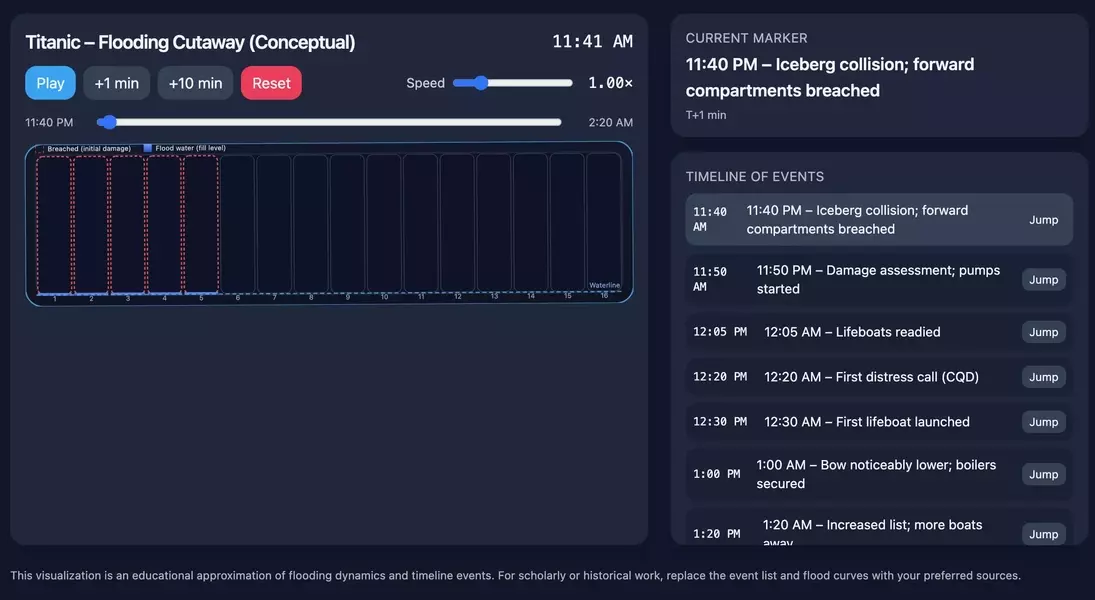
Practical tests reveal GPT-5's remarkable improvement over its predecessors, such as GPT-4o, in terms of code generation and interactive application creation. A challenging request to visualize the Titanic's sinking, complete with an interactive timeline and internal ship details, was handled with notable precision by GPT-5. Although minor refinements may still be necessary, the generated visualization was highly functional and rich in detail, demonstrating the model's advanced understanding and execution capabilities. This performance underscores GPT-5's potential to become an indispensable tool for rapid prototyping and complex application development, solidifying the idea that effective communication of ideas, rather than coding proficiency, will define the future of software creation.
