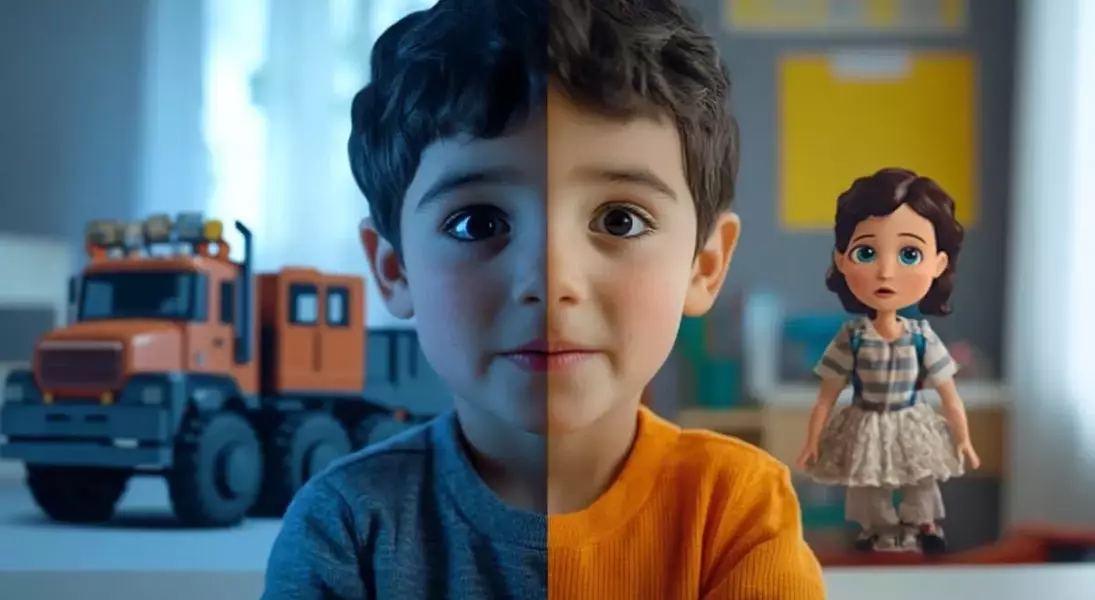
A groundbreaking international study sheds light on how children's perceptions of gender norms are not only expressed through words but also through their emotional responses. Researchers from Canada and Hong Kong collaborated to analyze the facial expressions of over 600 children aged 4–9 as they watched narratives involving peers who either adhered to or defied traditional gender roles. This research reveals that children exhibit heightened fear when observing boys engaging in activities typically associated with femininity, such as playing with dolls or wearing pink. The findings underscore the early internalization of societal expectations and highlight potential pathways for these reactions being learned from family, peers, or media.
Exploring the Depths of Gender Bias Among Children
In today’s world, understanding the nuances of gender perception among young minds is crucial. A recent investigation published in Archives of Sexual Behavior uncovers a fascinating dimension of this phenomenon by focusing on the emotional cues children display when confronted with gender nonconformity. The results emphasize the importance of addressing implicit biases at an early age to foster inclusive environments.
Emotional Reactions to Gender Nonconformity
Children often express emotions without conscious awareness, making their facial expressions valuable indicators of underlying attitudes. In this study, researchers observed a notable increase in fear responses when participants viewed male peers exhibiting behaviors traditionally labeled as feminine. For instance, a boy choosing to play with dolls or opting for colorful attire elicited stronger fear reactions compared to those conforming strictly to masculine norms.
This emotional disparity was consistent across cultural boundaries, suggesting universal patterns in how children process gender-related information. By analyzing facial cues, the study provides deeper insights into the subconscious mechanisms driving these reactions, which may stem from learned behaviors influenced by societal norms.
Cultural Consistency in Gender Perception
The consistency of results between Canadian and Hong Kong participants highlights the global nature of gender bias among children. Despite differing cultural contexts, both groups demonstrated similar levels of fear when encountering gender-nonconforming behavior in boys. This finding challenges the notion that such biases are solely shaped by localized customs, pointing instead to broader human tendencies influenced by shared social structures.
Moreover, the cross-cultural similarities suggest that media portrayals and familial interactions might play pivotal roles in shaping these perceptions. As children absorb messages from various sources, they unconsciously adopt certain stereotypes, which manifest in their emotional responses during peer interactions.
Social Learning and Emotional Development
Developmental psychologists have long theorized that children mimic the behaviors and attitudes of those around them. This study reinforces this idea by demonstrating how fear responses to gender nonconformity could be learned through observation and imitation. Whether it’s witnessing disapproval from adults or absorbing negative portrayals in media, children internalize these lessons, influencing their emotional reactions toward others.
For example, if a child frequently sees caregivers expressing discomfort or criticism toward individuals who defy traditional gender roles, they are likely to replicate these feelings in their own interactions. Such learning processes occur subtly yet profoundly, shaping the emotional landscape of young minds and reinforcing existing biases.
Implications for Future Research and Practice
The implications of this study extend beyond academic interest, offering practical guidance for educators, parents, and policymakers. Understanding the emotional underpinnings of gender bias can inform strategies aimed at reducing prejudice and fostering acceptance among children. Programs designed to challenge rigid gender norms and promote empathy could prove instrumental in reshaping societal attitudes.
Additionally, incorporating diverse representations in educational materials and media content can help counteract harmful stereotypes. By exposing children to varied role models and encouraging open discussions about gender diversity, we empower them to develop more inclusive perspectives. These efforts hold the potential to create a generation less constrained by outdated notions of masculinity and femininity.
