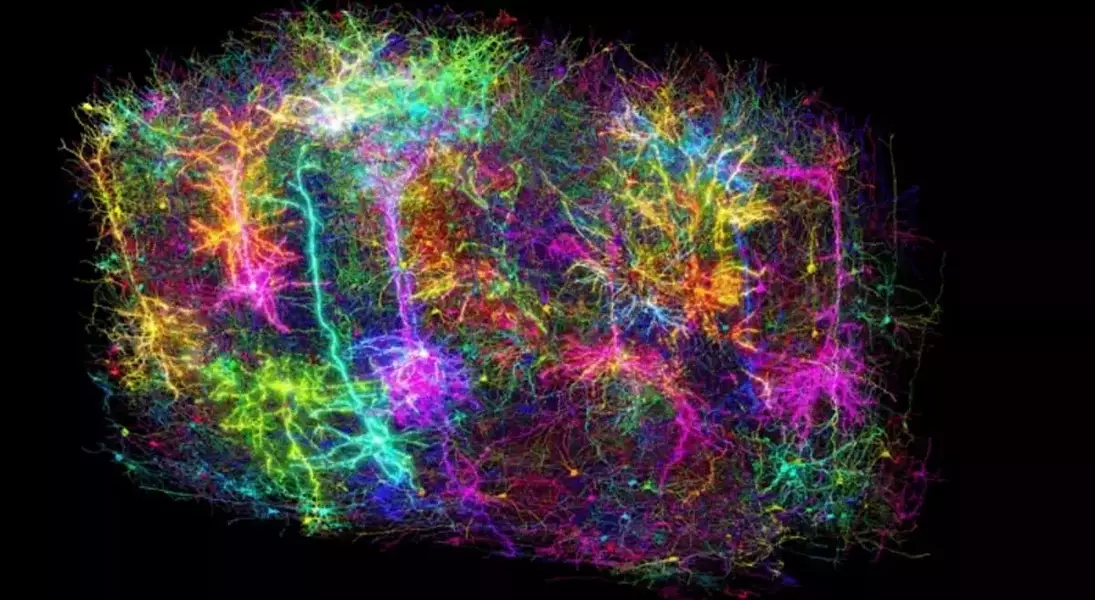
In a groundbreaking scientific achievement, researchers have successfully created the most intricate wiring diagram of a mammalian brain to date. By analyzing every cell and synapse within a cubic millimeter of a mouse’s visual cortex, this project has unveiled new principles of brain organization. Utilizing state-of-the-art microscopy techniques, artificial intelligence, and 3D reconstruction, scientists captured over 200,000 cells and more than 500 million connections. This remarkable accomplishment not only deepens our understanding of brain function and intelligence but also offers valuable insights into neurological disorders.
A Detailed Exploration of the Mouse Visual Cortex
In the golden era of neuroscience research, an international team embarked on an ambitious journey to map the complex architecture of the brain. Conducted in a minute sample of tissue no larger than a grain of sand, this study focused on the visual cortex of a mouse. The endeavor involved several stages: recording brain activity using specialized microscopes at Baylor College of Medicine, slicing the brain tissue into ultra-thin layers at the Allen Institute, and reconstructing these slices into a comprehensive 3D model at Princeton University. These efforts culminated in the largest functional map of the brain ever produced, encompassing over 200,000 neurons, four kilometers of axons, and 523 million synapses.
Among the most fascinating revelations was the discovery of a sophisticated principle of inhibition within the brain. Contrary to previous assumptions that inhibitory cells merely suppress neural activity indiscriminately, researchers found that these cells exhibit selective behavior, coordinating with specific excitatory cells to create a network-wide system of cooperation. This finding challenges existing theories and opens new avenues for understanding brain diseases such as Alzheimer’s and schizophrenia.
This monumental project, supported by IARPA and The BRAIN Initiative®, brought together over 150 scientists from institutions worldwide, including the Allen Institute, Princeton, Harvard, and Stanford. Their collaborative efforts have set a new standard for large-scale scientific research and demonstrated the power of interdisciplinary teamwork.
From a journalist's perspective, this achievement marks a pivotal moment in neuroscience, akin to the Human Genome Project. It underscores the importance of detailed anatomical reconstructions in advancing our comprehension of the brain's form and function. As we delve deeper into the mysteries of thought, emotion, and consciousness, this "Google map" of the brain provides a crucial foundation for future studies. By comparing healthy brains to those affected by disease, researchers can uncover the underlying causes of neurological disorders and develop effective treatments. This initiative not only fulfills Francis Crick's vision of mapping the brain but also propels us closer to unraveling the enigmatic origins of human cognition.
