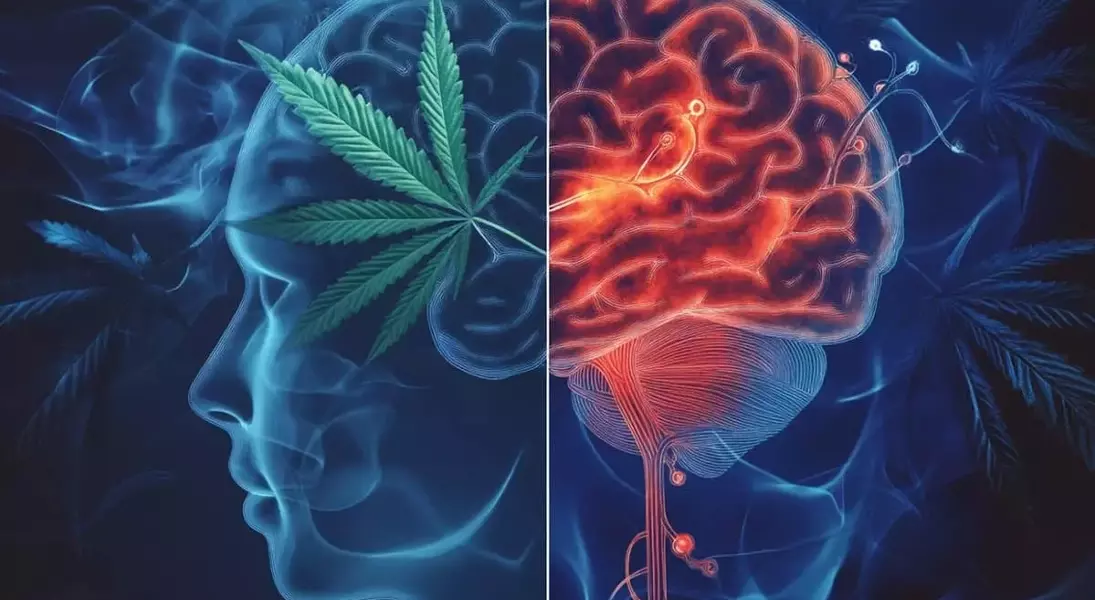
Recent scientific exploration has uncovered a significant connection between cannabis use disorder (CUD) and heightened dopamine levels in a brain area linked to psychosis. This revelation may elucidate the increased likelihood of hallucinations and delusions among frequent cannabis users. The study highlights that individuals with CUD exhibit stronger dopamine-related brain signals, correlating with the extent of their cannabis consumption. These findings could assist healthcare professionals in informing at-risk populations, particularly young people, about the mental health implications of chronic cannabis use.
The research also underscores the need for further investigation into whether long-term cannabis use results in permanent alterations in dopamine activity and if these changes can be reversed upon cessation. Moreover, the study emphasizes the importance of educating youth regarding the potential risks associated with frequent cannabis use, especially for those predisposed to psychosis.
Understanding Dopamine's Role in Cannabis-Induced Psychosis
This groundbreaking study reveals that individuals suffering from cannabis use disorder demonstrate elevated dopamine signaling in specific regions of the brain traditionally connected to psychosis. Researchers employed neuromelanin-sensitive MRI technology to measure dopamine activity, discovering significantly higher levels in CUD sufferers compared to non-users. Importantly, this increase correlates directly with the intensity of cannabis usage, irrespective of any schizophrenia diagnosis.
By pinpointing a shared dopamine pathway as the underlying mechanism linking cannabis use and psychosis, the researchers have provided valuable insight into why frequent cannabis consumption increases the risk of experiencing hallucinations and delusions. Dopamine, a neurotransmitter responsible for regulating mood and motivation, plays a crucial role in this process. Excessive dopamine production is closely tied to the development of psychotic symptoms. This finding not only clarifies where in the brain these changes occur but also offers a clearer understanding of how cannabis influences dopamine function. It was previously known that cannabis affects dopamine, but this study delineates the precise areas within the brain where these modifications take place, advancing our comprehension of the relationship between cannabis use and psychosis.
Educational Implications for Youth and High-Risk Groups
Given the widespread prevalence of cannabis use among Canadian youth—approximately one in five consume it daily or almost daily—the need for comprehensive public education on its mental health impacts becomes increasingly apparent. Understanding the biological basis connecting cannabis use to psychosis allows medical practitioners to more effectively communicate these risks to patients, particularly those with a family history of psychotic disorders.
Historically, the absence of definitive biological evidence linking cannabis to psychosis hindered efforts to persuade young individuals exhibiting psychotic symptoms to reduce their cannabis intake. However, with this new information, doctors and mental health professionals are better equipped to educate patients about the potential dangers of regular cannabis use. Future research aims to explore whether prolonged cannabis consumption leads to lasting alterations in dopamine function and whether these effects diminish after quitting. Such studies will be instrumental in shaping future prevention strategies and treatment approaches, ensuring that both youth and high-risk groups are fully informed of the possible consequences of habitual cannabis use.
