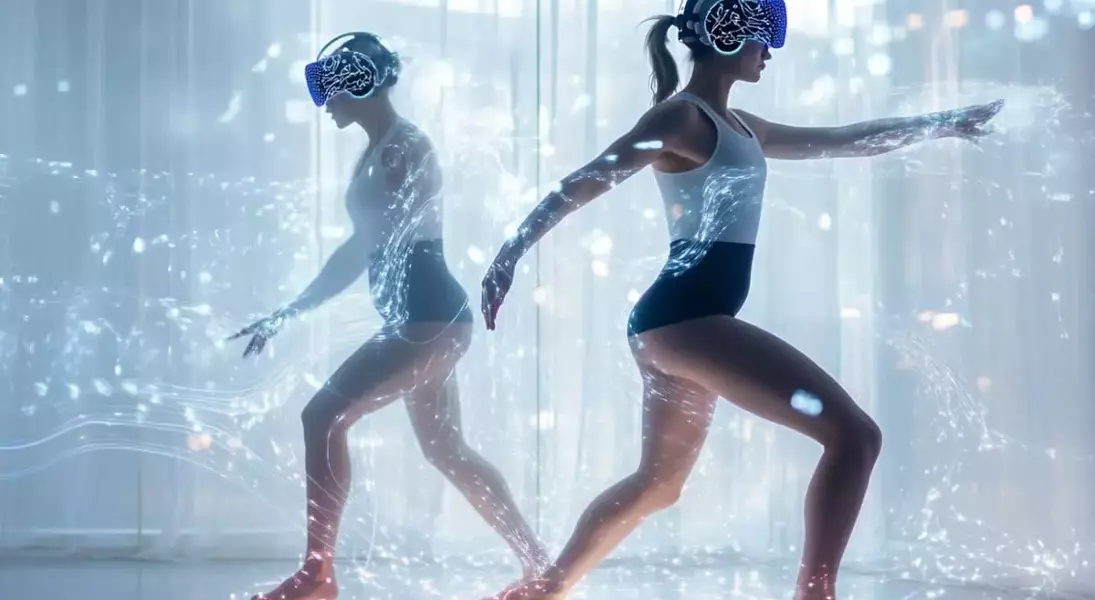
Recent scientific exploration has unveiled how our brains interact with others during dance, emphasizing the importance of shared rhythm and visual cues. Researchers discovered that unique neural signals emerge when dancers move to the same tune and maintain eye contact. Surprisingly, subtle knee movements play a crucial role in synchronizing individuals, despite their minimal physical amplitude. This study provides deeper insights into social engagement through coordinated motion and sensory input, extending far beyond the realm of dance.
The investigation also revealed distinct neural patterns for self-movement, partner-following, and social coordination. By examining inexperienced dancers' brain activity while dancing to the same or different songs, scientists identified specific neural responses tied to music processing and social interaction. These findings enhance our understanding of social interaction mechanisms, offering valuable implications for neuroscience research.
Neural Mechanisms Behind Social Coordination
In exploring the intricacies of social synchronization, researchers identified key neural processes that facilitate coordinated movement between partners. When dancers moved in sync to the same melody and had visual access to one another, their brains exhibited unique signals supporting this harmonious interaction. These signals represent an advanced level of cognitive engagement, where auditory and visual stimuli converge to create a unified experience.
Through careful analysis, the study differentiated between various types of neural activity. The brain's response to self-generated movement, observing a partner's actions, and engaging in joint coordination were all carefully dissected. This separation of neural functions reveals how the brain processes complex social interactions. The emergence of specific markers for social coordination underscores the significance of visual observation and rhythmic alignment in creating meaningful connections between individuals. The results suggest that these neural pathways are not only essential for dance but also play a critical role in broader social engagements.
The Unique Role of Subtle Movements in Synchronization
Beyond identifying general neural patterns, the study highlighted the surprising influence of minor physical gestures on social coordination. Among the fifteen movements analyzed, subtle knee bounces emerged as particularly potent triggers for neural responses. Despite their limited physical impact, these movements elicited strong reactions from the brain, suggesting their unique importance in fostering synchronization. This finding challenges previous assumptions about which motions most effectively stimulate social interaction.
The prominence of knee bouncing in activating neural coordination signals raises intriguing questions about human evolution and social behavior. It implies that certain movements may have developed over time to serve specialized roles in facilitating group harmony. Furthermore, the study's methodology offers new possibilities for future research by demonstrating effective techniques for isolating and analyzing distinct neural signals related to sensory information processing. This approach could significantly enhance our ability to understand and replicate real-world social interactions in experimental settings, paving the way for groundbreaking discoveries in social neuroscience.
