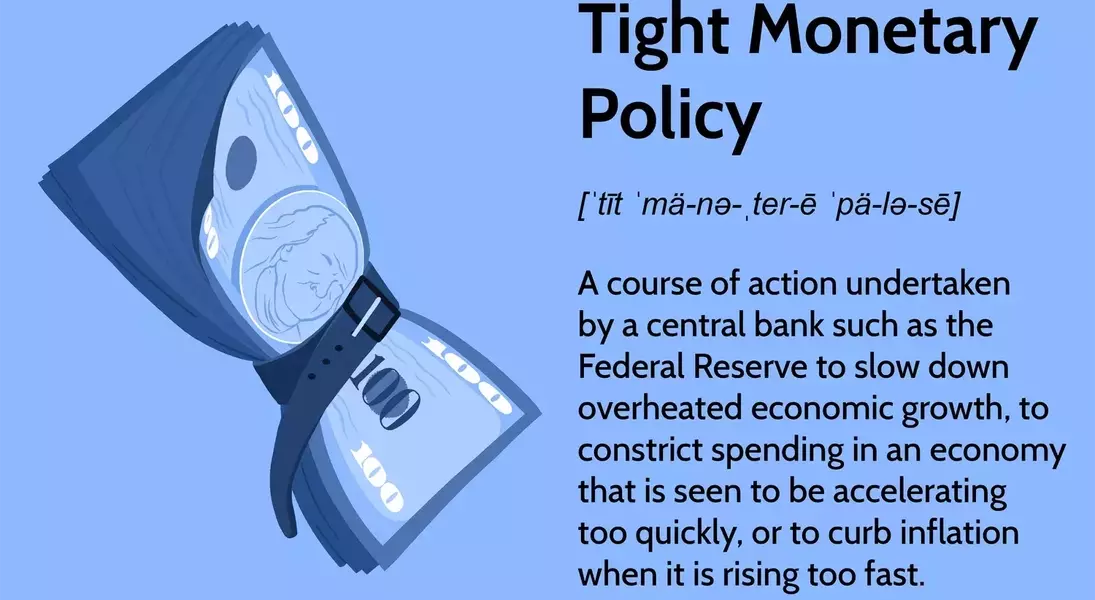
Central banks worldwide utilize tight monetary policy as a crucial tool to manage economic growth and combat inflation. This approach involves deliberate actions to reduce the money supply and increase the cost of borrowing, thereby influencing economic activity. By understanding the mechanics and implications of tight monetary policy, individuals and businesses can make more informed financial decisions, especially regarding loans and savings.
Central Banks Implement Tight Monetary Policy to Stabilize Economies
In the financial realm, central banks like the Federal Reserve frequently adopt a tight or contractionary monetary policy to manage an economy that is expanding too rapidly or to counteract rising inflation. The primary objective is to decelerate economic growth and stabilize prices when they are increasing excessively. This policy can also be distinguished from fiscal policy, which involves government actions such as tax adjustments or spending cuts.
Central banks typically execute this policy by adjusting short-term interest rates. For instance, an increase in the discount rate or the federal funds rate makes borrowing more expensive, which discourages both consumers and businesses from taking on new debt. This directly impacts various financial products, including loans, mortgages, and credit card rates, making them less attractive. Conversely, higher interest rates enhance the appeal of saving, as returns on deposits become more lucrative. A key instrument for central banks to implement tight monetary policy is through open market operations. This involves selling government securities, such as U.S. Treasuries, to major investors in the market. Such sales effectively withdraw capital from the financial system, reducing the overall money supply. The outcome is a decrease in asset prices and an increase in yields, benefiting those who hold savings and bonds.
The impact of a tight monetary policy is evident globally. The federal funds rate, serving as a benchmark, influences borrowing costs across economies. This strategic approach during periods of robust economic growth helps to control the money supply and prevent the domestic currency from experiencing excessive inflation. Conversely, during economic downturns, central banks may opt for an easing monetary policy, reducing interest rates to stimulate borrowing and spending, thus boosting economic activity. This highlights the delicate balance central banks must maintain to foster sustainable economic environments.
From a citizen's perspective, understanding how these policies work is essential. When central banks tighten policy, it affects everything from the interest rates on personal loans to the returns on savings accounts. This awareness empowers individuals to strategize their financial planning more effectively, adapting to the changing economic landscape shaped by these powerful monetary decisions.
