This article explores the EBITDA-to-interest coverage ratio, a key financial metric used to evaluate a company's ability to manage its debt obligations. We'll break down its definition, formula, and how to interpret the results, offering a comprehensive understanding for investors and financial professionals.
Unlock Financial Insight: Master the EBITDA-to-Interest Coverage Ratio!
What is the EBITDA-to-Interest Coverage Ratio?
The EBITDA-to-interest coverage ratio serves as a critical financial indicator, revealing a company's proficiency in fulfilling its interest payment obligations through its pre-tax income. Unlike the conventional interest coverage ratio, which relies on earnings before interest and taxes (EBIT), this metric uniquely utilizes earnings before interest, taxes, depreciation, and amortization (EBITDA). This distinction places a stronger emphasis on cash earnings, providing a clearer picture of a company's operational cash flow available for debt servicing. A higher ratio signifies a more robust capability to meet interest payments, making it a valuable tool for assessing financial stability. Historically, leveraged buyout bankers frequently employed this ratio to rapidly gauge a company's short-term debt-paying capacity following restructuring efforts.
Formula for Calculating the EBITDA-to-Interest Coverage Ratio
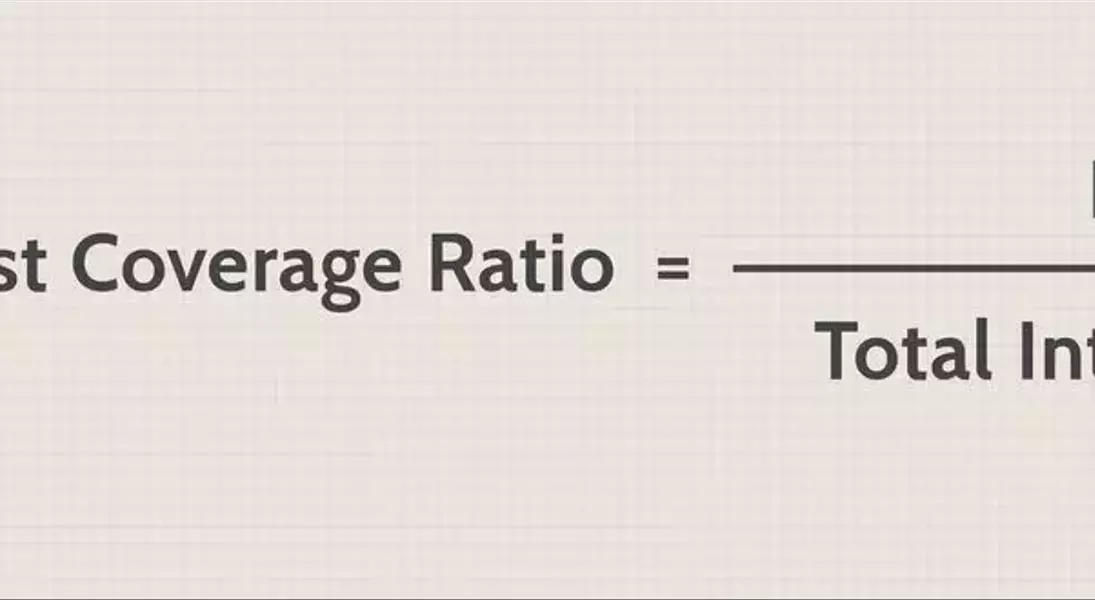
The EBITDA-to-interest coverage ratio is calculated by dividing a company's Earnings Before Interest, Taxes, Depreciation, and Amortization (EBITDA) by its total interest expenses. This formula offers a direct measure of how many times a company can cover its interest payments with its operational earnings. The simplified version of the formula is: EBITDA / Interest Expense. This calculation provides a quick and effective way to assess a company's ability to service its debt from its core operations, making it a favorite among financial analysts for initial assessments of financial health.
Deciphering the EBITDA-to-Interest Coverage Ratio
Initially championed by leveraged buyout bankers, the EBITDA-to-interest coverage ratio quickly became a go-to metric for evaluating a restructured company's immediate ability to manage its short-term debt. While this ratio provides a straightforward snapshot of a company's capacity to meet interest-related expenses, its practical applications are limited by the nuanced relevance of using EBITDA as a stand-in for various financial figures. For instance, a company boasting an EBITDA-to-interest coverage ratio of 1.25 might still struggle to cover its interest payments if a significant portion of its profits is allocated to replacing essential equipment. Since EBITDA omits depreciation expenses, a ratio of 1.25 may not always paint an accurate picture of the company's true financial resilience.
A Practical Example of Calculating the EBITDA-to-Interest Coverage Ratio
Let's walk through a practical example to illustrate how to calculate the EBITDA-to-interest coverage ratio. First, gather all necessary financial data, including sales revenue, salaries, utilities, lease payments, depreciation, and interest expenses. Next, calculate the company's Earnings Before Interest and Taxes (EBIT). This is done by subtracting operating expenses (salaries, utilities, lease payments) and depreciation from the total revenue. For instance, if revenue is $1,000,000 and operating expenses plus depreciation total $420,000 ($250,000 + $20,000 + $100,000 + $50,000), then EBIT would be $580,000. Subsequently, compute EBITDA by adding back depreciation to EBIT; in this case, $580,000 (EBIT) + $50,000 (depreciation) equals $630,000 (EBITDA). Finally, to determine the EBITDA-to-interest coverage ratio including lease payments, use the formula: (EBITDA + Lease Payments) ÷ (Interest + Lease Payments). If lease payments are $100,000 and interest is $120,000, the calculation would be ($630,000 + $100,000) ÷ ($120,000 + $100,000), resulting in a ratio of 3.32.
The Critical Takeaway
The EBITDA-to-interest coverage ratio stands as a crucial financial measure, offering insights into a company's capacity to service its interest payments utilizing its pre-tax income. This metric specifically leverages earnings before accounting for interest, taxes, depreciation, and amortization, thereby highlighting the operational profitability available for debt obligations. A higher ratio is generally favored, as it signifies a company's strong ability to meet its interest commitments. This ratio was particularly favored by leveraged buyout bankers for its effectiveness in quickly assessing a company's short-term debt servicing capability. However, it is essential to acknowledge that relying solely on EBITDA for this ratio might not always present a complete or accurate representation of a company's overall financial health, as it omits certain non-cash expenses that can impact long-term financial stability.
