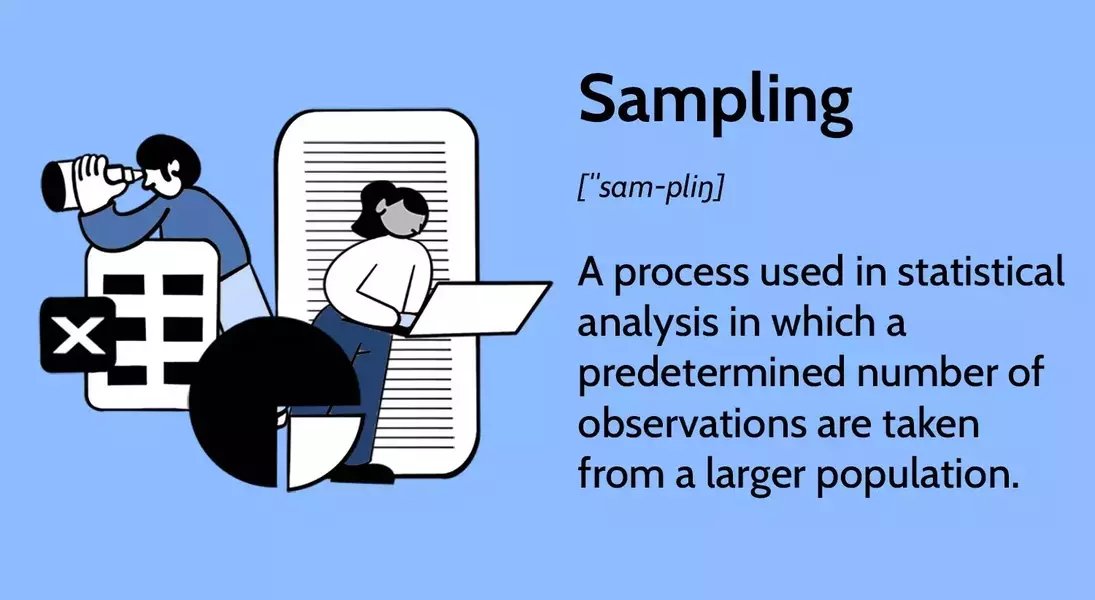
Sampling serves as a foundational statistical technique, allowing for insights into vast populations through the meticulous examination of smaller, carefully chosen segments. This approach is invaluable in situations where gathering and analyzing every single data point would be impractical or excessively time-consuming. By leveraging sampling, organizations can achieve accurate insights, make well-informed decisions, and allocate resources more effectively across various domains such as market analysis, financial scrutiny, and the study of labor trends.
The efficacy of sampling is rooted in its capacity to generate dependable conclusions with reduced effort, provided that the subset accurately mirrors the larger group. The process typically encompasses defining the target population, selecting an appropriate sampling strategy, determining the optimal sample size for statistical validity, collecting the necessary data, and finally, analyzing and interpreting the findings using established statistical methodologies. This systematic procedure ensures that the derived conclusions are robust and actionable, thereby facilitating strategic planning and operational enhancements in both business and finance.
The Essence and Mechanisms of Data Sampling
Data sampling is a fundamental statistical technique employed to make inferences about extensive datasets by scrutinizing a more manageable, representative portion. This methodology is particularly vital for organizations and researchers facing the challenge of analyzing large volumes of information where a complete census is unfeasible. By focusing on a carefully selected subset, sampling allows for the efficient derivation of conclusions about a broader population, thereby enabling agile and informed decision-making without the prohibitive costs and time associated with exhaustive data collection. Its application spans diverse fields, including market research, financial audits, and the compilation of employment statistics.
The operational framework of sampling is built upon the principle that a judiciously chosen smaller group can effectively mirror the characteristics of the entire population. Executed correctly, this approach significantly curtails the necessity for comprehensive data gathering while still yielding reliable insights. The procedure involves several key stages: first, meticulously defining the population that the sample will represent; second, selecting a suitable sampling technique from a range of options, each designed for specific study goals; third, calculating a sample size that is both practical and statistically adequate; fourth, collecting relevant data from the chosen sample through various means; and finally, interpreting these data using statistical tools to formulate meaningful conclusions.
Diverse Applications and Methodologies of Statistical Sampling
The utility of statistical sampling extends across numerous sectors, proving indispensable for critical decision-making in both commerce and financial operations. Government bodies, for instance, frequently utilize sampling to track economic indicators and labor market dynamics. Rather than attempting to gather data from every single entity, agencies rely on samples to efficiently monitor trends, influencing policy formulation and business strategies. This widespread adoption underscores sampling's role in facilitating insights that are not only accurate but also cost-effective and timely, enabling a dynamic response to changing market and societal conditions.
Various sampling methodologies are available, each suited to different research contexts and objectives. Random sampling, for example, ensures that every member of a population has an equal chance of selection, thereby minimizing bias and yielding generalized findings. Stratified sampling, conversely, involves dividing a population into distinct subgroups based on shared traits before drawing samples from each, guaranteeing accurate representation of diverse segments. Cluster sampling simplifies data collection by selecting entire groups, a method distinct from stratified sampling where individual members are selected from predefined strata. Systematic sampling involves selecting elements at regular intervals from an ordered list, offering structured coverage but requiring careful consideration to avoid inherent biases. Lastly, convenience sampling, while straightforward, carries a higher risk of bias due to its non-random selection process, potentially misrepresenting the broader population. The selection of an appropriate method is crucial for ensuring the integrity and applicability of the research findings.
