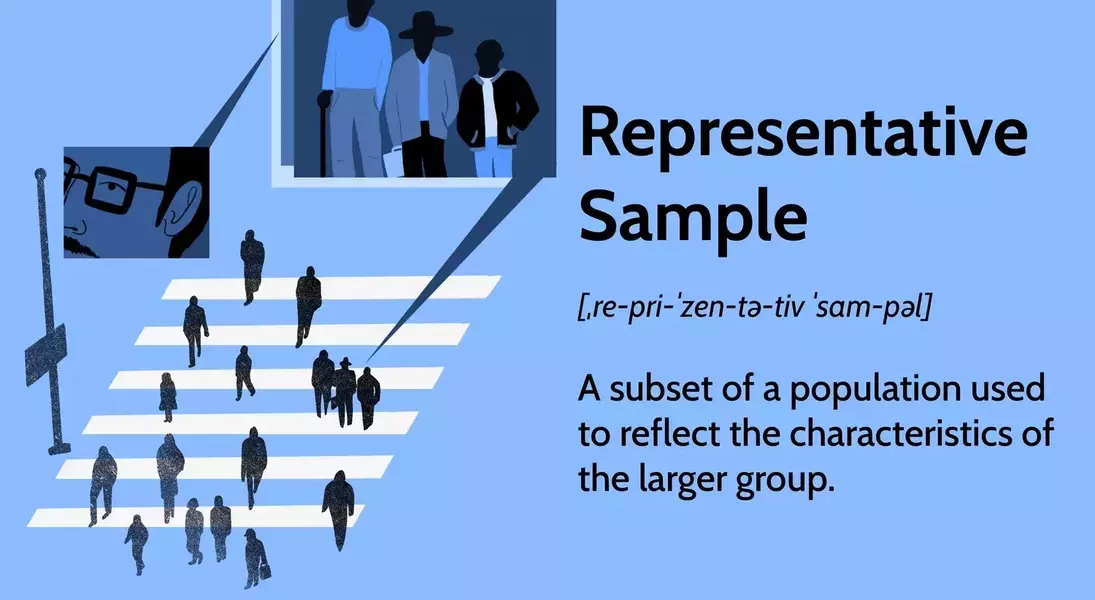
In data analysis, a representative sample is a carefully chosen subset of a larger population that accurately reflects the characteristics of the entire group. This method is essential in statistics, marketing, public policy, and scientific research. It enables researchers to draw reliable conclusions about a population without the need to survey every single individual, offering significant advantages in terms of time and cost efficiency. For example, if a classroom has 60% girls and 40% boys, a representative sample would maintain this ratio to ensure the research findings are reliable. Understanding how to select such a sample, its importance, and how to verify its representativeness is crucial for sound decision-making.
The process of selecting a representative sample often involves various sampling methods. While simple random sampling and systematic sampling are common, stratified random sampling plays a pivotal role in creating truly representative samples. This method divides the population into distinct subgroups, or 'strata,' based on relevant characteristics, and then randomly selects individuals from each stratum in proportion to their presence in the overall population. This meticulous approach ensures that the sample accurately reflects the diversity and composition of the larger group, thereby enhancing the quality and reliability of the research findings. However, this precision comes with its own set of challenges, including increased time and cost.
The Core of Representative Samples
A representative sample is a smaller group that accurately mirrors the key characteristics of a larger population. This mirroring allows researchers to draw conclusions about the entire group by studying only a portion of it, saving time and money. For instance, if a target demographic consists of various age groups, income levels, and educational backgrounds, a representative sample would include individuals from each category in the same proportions as they exist in the broader population. This fidelity to the original population's composition is what makes the sample 'representative' and its insights valuable across fields like market research, social sciences, and electoral polling. Without this accuracy, findings from a sample could be misleading.
The fundamental principle behind a representative sample is to ensure that every segment of the larger population is proportionally included in the subset being studied. This involves a deep understanding of the population's demographic and other relevant features. Statisticians identify these key characteristics, such as gender, age, income, and education, and use them as criteria for selecting participants. By systematically constructing the sample to reflect these proportions, researchers minimize the risk of bias and increase the reliability of their findings. This meticulous process, especially important in large-scale studies, allows for efficient data collection and robust analytical outcomes that are confidently applicable to the entire population.
Navigating Sampling Methods and Their Trade-offs
Choosing the right sampling method is crucial for the validity of research findings, with representative samples often being the preferred choice due to their ability to accurately reflect a larger population. However, achieving this accuracy can be complex and resource-intensive. Other methods, such as simple random sampling, offer a less complicated approach by giving every member of a population an equal chance of selection, which, while straightforward, carries a higher risk of not being truly representative and potentially leading to biased results. Systematic sampling, which selects individuals at regular intervals from a list, also aims for an unbiased selection but can still inadvertently produce a non-representative sample if the list has a hidden pattern aligning with the sampling interval.
Stratified random sampling stands out as a sophisticated method that enhances the representativeness of a sample by first dividing the population into distinct subgroups, or 'strata,' based on shared characteristics. Researchers then randomly select individuals from each stratum, ensuring that each subgroup is represented in the sample in proportion to its size within the overall population. This method, while more time-consuming and potentially more expensive due to the need for extensive preliminary data, yields higher-quality information by minimizing sampling error and bias. An excellent example is the American Community Survey, which stratifies the population by various demographic features to ensure its sample is a precise reflection of the nation. Understanding the strengths and weaknesses of these different sampling approaches is essential for researchers to select the most appropriate strategy for their specific study goals, balancing the need for accuracy with practical constraints.
