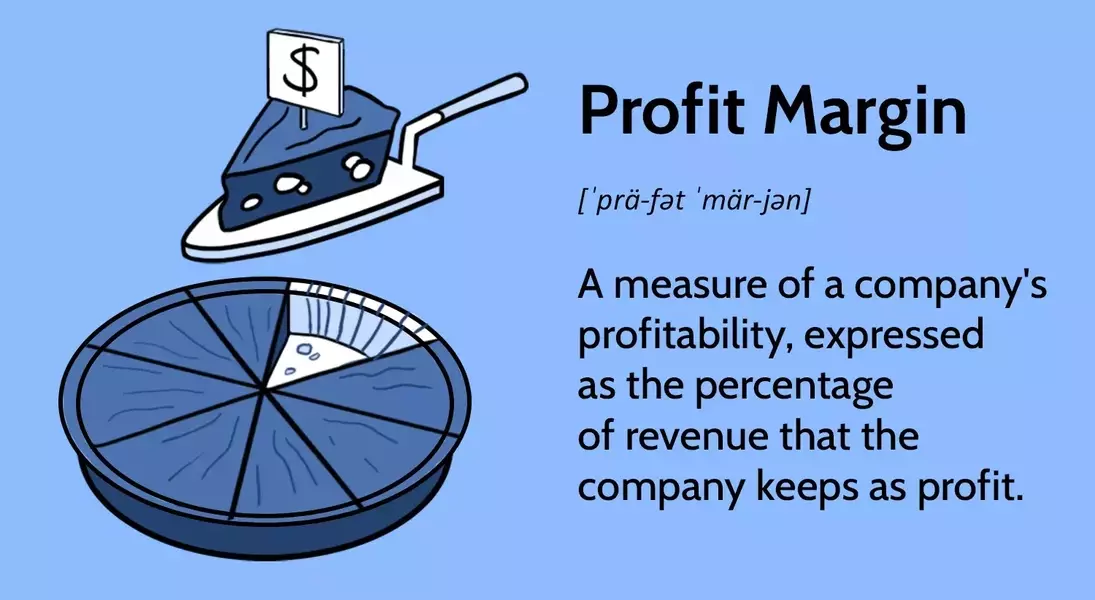
Profit margins are fundamental indicators of a company's financial performance, reflecting its efficiency in converting revenue into profit after accounting for various costs. This metric is crucial for both internal business management and external investment analysis, providing insights into a company's operational effectiveness and overall financial health. Understanding and analyzing profit margins allows businesses to identify areas for improvement and helps investors make informed decisions.
The concept of profit margin extends beyond a single calculation, encompassing different types that offer varying perspectives on a company's financial results. From gross profit, which considers only direct costs, to net profit, which accounts for all expenses including taxes, each margin type provides a unique lens through which to evaluate profitability. These metrics are essential for comparing performance across different periods, benchmarking against competitors, and making strategic choices that drive sustainable growth and value for shareholders.
The Significance of Profitability Metrics
Profitability metrics, particularly profit margins, serve as crucial tools for evaluating the financial success and operational efficiency of businesses. These measures provide a standardized way to understand how effectively a company manages its costs relative to its revenue, moving beyond simple revenue figures to reveal the true earning power. For companies, tracking profit margins helps in identifying areas of high expenditure, assessing the impact of pricing strategies, and informing decisions related to resource allocation and operational improvements. Internally, these metrics guide management in optimizing business processes and addressing potential inefficiencies that could erode profitability.
For investors, profit margins are a cornerstone of financial analysis, offering insights into a company's financial stability and competitive advantage. A strong profit margin often signals a well-managed company with a sustainable business model, capable of generating consistent returns. When considering investment opportunities, comparing profit margins allows investors to gauge a company's performance relative to its peers and industry benchmarks. This comparative analysis helps in distinguishing between companies with effective cost controls and pricing power versus those that might be struggling to maintain profitability, thereby influencing investment decisions and portfolio construction.
Types of Profit Margins and Their Applications
Profit margins are categorized into several types, each offering a distinct view of a company's financial health by progressively accounting for different layers of costs. The most commonly recognized are gross, operating, pretax, and net profit margins. Gross profit margin, derived by subtracting the cost of goods sold from revenue, indicates the profitability of a company's core products or services before considering overheads. It's a fundamental measure of production efficiency and pricing strategy. Operating profit margin goes a step further, deducting operating expenses like administrative and selling costs, revealing how much profit a company makes from its normal business operations, excluding interest and taxes.
Pretax profit margin accounts for all expenses except income taxes, providing a clear picture of profitability before the impact of tax obligations. Finally, net profit margin, often considered the ultimate measure of profitability, reflects the percentage of revenue left after all expenses, including taxes, have been deducted. This "bottom line" figure represents the true profit available to shareholders. Each type of profit margin serves a unique purpose in financial analysis; gross margin highlights production efficiency, operating margin focuses on core operational performance, and net margin provides an all-encompassing view of overall profitability. These diverse metrics enable a comprehensive evaluation of a company's financial strategies and performance across different operational levels.
