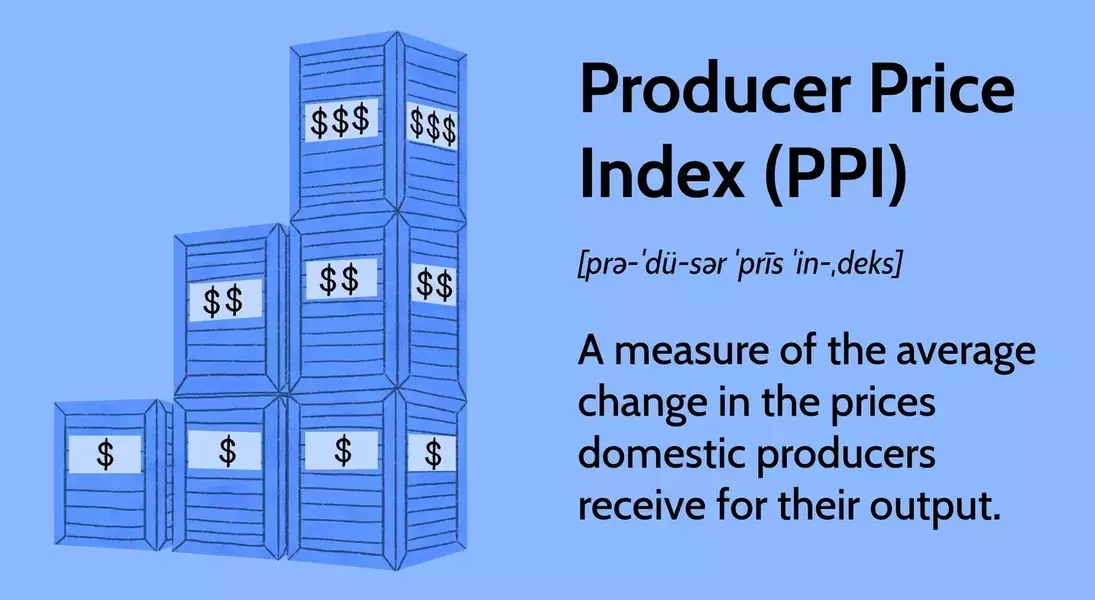
The Producer Price Index (PPI) is a critical economic metric that tracks variations in the average selling prices obtained by domestic manufacturers for their goods and services. This index specifically focuses on wholesale inflation, offering valuable foresight into pricing shifts occurring at the production stage. Produced monthly by the U.S. Bureau of Labor Statistics, the PPI is instrumental for predicting future inflation and impacts escalator clauses in private sector agreements, thus standing as an essential instrument for economic assessment.
Overview of the Producer Price Index
The Producer Price Index, or PPI, acts as a barometer for inflation at the wholesale level. It is derived from a vast array of indexes that gauge producer prices across various industries and product categories. Each month, the U.S. Bureau of Labor Statistics releases this comprehensive index. Distinct from the Consumer Price Index (CPI), which tracks price fluctuations for goods and services purchased by consumers, the PPI offers a unique perspective on inflationary pressures from the producers' vantage point. These two indices, though measuring different aspects of pricing, are interconnected, as changes in producer prices inevitably influence the prices paid by consumers.
The PPI quantifies inflationary or deflationary trends from the perspective of the product manufacturer or service provider. Price movements at the producer and consumer levels typically align over time, given that producer prices directly impact consumer costs. However, short-term discrepancies may arise due to variations in distribution expenses, governmental taxes, and subsidies. The Bureau of Labor Statistics issues the PPI alongside its component industry and product indices during the second week of each month, following the survey's reference date. This data is collected from approximately 100,000 monthly price quotes, voluntarily submitted online by over 25,000 systematically selected producer establishments. The survey encompasses the entire U.S. output of goods and roughly 69% of services by value. These individual product and service index components are weighted based on their output value to determine the overall change in producer prices. The PPI is also utilized to project inflation and to formulate escalator clauses in private contracts, based on the costs of essential inputs. Furthermore, it is indispensable for monitoring price changes within specific industries and for comparing wholesale and retail price trajectories.
PPI vs. CPI: Key Differences and Presentation of Data
Both the Producer Price Index (PPI) and the Consumer Price Index (CPI) are pivotal economic indicators, reflecting monthly shifts in pricing. However, they capture these changes from distinct economic vantage points. The PPI focuses on prices at the initial commercial transaction stage for a product or service, providing an early insight into potential inflationary pressures. Conversely, the CPI tracks price changes as experienced by the end consumer, reflecting the cost of a defined basket of goods and services. These indices not only differ in their measurement perspective but also in their compositional elements, encompassing what is included and excluded from each calculation, thereby offering unique views into the economy's pricing dynamics.
The PPI and CPI both serve as crucial economic barometers, indicating monthly price changes, yet they differ significantly in their focus. The PPI specifically measures prices at the initial commercial transaction stage for products and services, reflecting the costs faced by producers. In contrast, the CPI assesses price alterations experienced by consumers. Beyond this fundamental distinction, important compositional differences exist. For example, the PPI excludes aggregate housing costs, which represent a substantial portion—one-third—of the overall CPI through its shelter category, including imputed owners' equivalent rents. Another notable divergence is the PPI's exclusion of imported goods, which are part of the CPI, while the PPI includes export prices, which the CPI does not. The BLS generates over 10,000 product and industry price indexes monthly, which are then aggregated to compute the overall PPI. These indexes are presented with and without seasonal adjustments and are categorized into industry-level classification, commodity classification, and final demand-intermediate demand. Industry-level classifications provide indexes for producer prices across more than 500 industry categories, based on output sold outside the specific industry, aligning with data on production, employment, earnings, and productivity. Commodity classification disregards the producer's industry, instead grouping output by product or service nature, publishing over 3,800 commodity price indexes for goods and roughly 900 for services. Finally, final demand-intermediate demand indexes utilize commodity indexes organized by product to measure producer prices based on the economic identity of buyers and whether goods require further processing. More than 600 FD-ID indexes are published, with the final demand indexes contributing to the headline PPI number, which represents the PPI for final demand.
