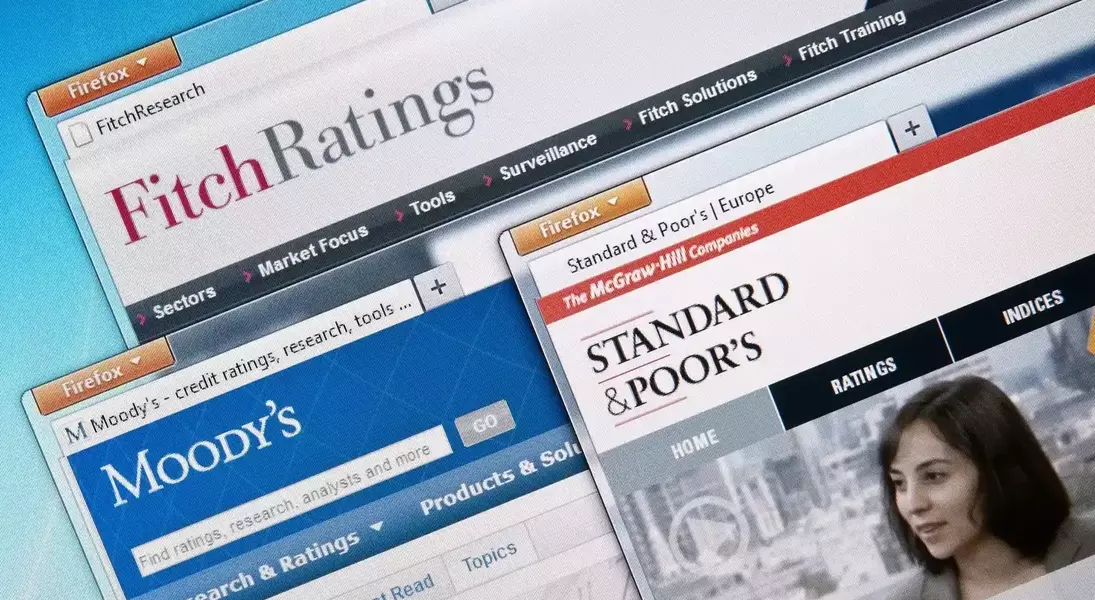
Moody's Corporation stands as a significant entity in the global financial landscape, renowned for its comprehensive risk assessment services. The firm's activities encompass providing detailed credit ratings for various entities, including corporations, governmental bodies, and diverse debt instruments. Additionally, Moody's offers advanced research and analytical tools that assist in economic forecasting and risk management. These services are vital for investors seeking to navigate the complexities of financial markets, enabling them to make well-informed decisions regarding their portfolios.
The company's journey, from its inception with John Moody's pioneering financial publications to its current status as one of the preeminent credit rating agencies, underscores its enduring influence. Despite facing scrutiny, particularly during financial crises, Moody's continues to adapt and play a critical role in shaping global investment strategies and financial regulations.
The Evolution and Core Functions of Moody's
Moody's Corporation, a prominent New York-based firm, is globally recognized for its credit ratings and sophisticated risk management solutions. Through Moody's Ratings, it meticulously assesses the creditworthiness of various entities such as corporations, government bodies, and fixed-income securities. These evaluations are crucial for determining the investment risk associated with different financial instruments, with ratings ranging from the highest quality (Aaa) for entities with minimal risk to the lowest (C) for those in default. Furthermore, Moody's offers specialized software and research tools designed for in-depth economic analysis and effective risk management, which are indispensable for market participants worldwide.
Established in 1900 by John Moody, the company initially gained prominence through "Moody's Manual of Industrial and Miscellaneous Securities." This publication provided essential financial data and statistics, evolving later to include analytical insights and a proprietary letter-grade rating system. Over the decades, Moody's expanded its services, becoming a nationally recognized statistical rating organization (NRSRO) alongside industry peers. This designation by the U.S. Securities and Exchange Commission (SEC) solidified its role in financial markets, where its ratings are critical for investment decisions, loan terms, and regulatory compliance, influencing financial institutions and regulatory bodies globally.
Navigating the Financial Landscape: Impact and Methodology
Moody's plays a critical role in the financial ecosystem, with its ratings influencing a broad spectrum of market activities and regulatory frameworks. The methodologies employed by Moody's involve rigorous analysis of an entity's financial health, management strategies, industry dynamics, and prevailing economic conditions. This comprehensive approach allows Moody's to assign ratings that reflect the probability of default or failure to meet financial obligations. The detailed rating scale, from Aaa to Caa1, Ca, and C, provides a clear indicator of credit quality, assisting both institutional and individual investors in evaluating investment risk and making strategic allocation decisions. These ratings enable investors to gauge how a particular entity's credit risk compares within its sector, allowing for tailored investment strategies.
However, Moody's has also faced significant criticism, notably for its role in the 2007–2008 financial crisis. The firm, along with other major rating agencies, was faulted for assigning high ratings to complex mortgage-backed securities that later proved to be highly risky, contributing to the financial meltdown. This episode highlighted potential conflicts of interest, as issuers often pay for the ratings, leading to heightened regulatory scrutiny. In response, the Dodd-Frank Wall Street Reform and Consumer Protection Act established the Office of Credit Ratings (OCR) within the SEC to enhance oversight and ensure the accuracy and independence of credit ratings. Despite these challenges, Moody's remains a pivotal organization, constantly evolving its practices to uphold its influence in global financial markets and risk assessment.
