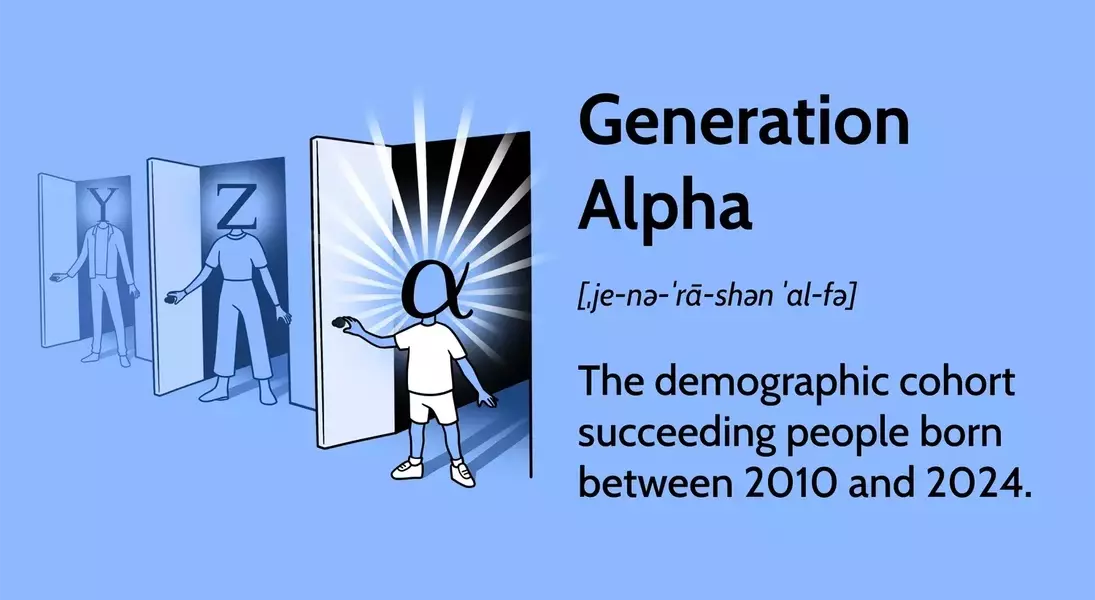
Generation Alpha encompasses individuals born between 2010 and 2024, marking them as the inaugural cohort to grow up exclusively within the 21st century. This demographic is notable for being the largest in human history, comprising over two billion people worldwide. From their earliest days, members of Generation Alpha have been immersed in a technologically advanced environment, spending unprecedented amounts of time engaging with digital devices such as computers, smartphones, and tablets. This continuous exposure is expected to shape their cognitive development and societal interactions in unique ways. Furthermore, given global trends in increased life expectancy, a significant portion of this generation is anticipated to witness the dawn of the 22nd century, facing distinct educational, economic, and environmental challenges and opportunities.
The concept of "Generation Alpha" was initially introduced by demographer Mark McCrindle in 2005. McCrindle, the founder of the Australian consultancy firm McCrindle, articulated his choice of name by stating that, following Generations X, Y, and Z, the next cohort would be labeled "Generation Alpha" to signify not a return to previous patterns but rather the commencement of a new era. This generation succeeds Generation Z (born between 1997 and 2012) and predominantly consists of the offspring of Millennials (born between 1981 and 1996). The transition from the Latin alphabet to the Greek, as explained by McCrindle, underscores a forward-looking perspective, emphasizing novelty and a departure from past generational classifications.
The pervasive influence of technology on Generation Alpha is a defining characteristic. They are anticipated to be the most technologically proficient and digitally adept generation to date. Their extensive digital engagement, while offering numerous advantages, also presents potential drawbacks, such as concerns regarding reduced attention spans and challenges in developing traditional social interaction skills. Medical guidelines, like those from the Mayo Clinic, suggest limiting screen time for children under five to one hour daily; however, studies indicate that Generation Alpha often surpasses this recommendation. The COVID-19 pandemic further accelerated their adaptation to digital learning environments, offering them a distinctive experience with virtual classrooms and reshaping their interactions with educators and peers.
Several significant trends are emerging that will define Generation Alpha's future. In terms of education, they are poised to have unparalleled access to information and data. McCrindle predicts that their formal education will be unmatched in human history, with approximately half of Generation Alpha expected to earn a university degree. Environmentally, this generation will confront challenges of a magnitude not experienced by previous cohorts. Scientific research indicates that children born in 2020 will experience a two to seven-fold increase in extreme weather events compared to those born in 1960, fostering a heightened environmental awareness even greater than that of Generation Z. Economically, it is projected that by 2029, when the oldest members of Generation Alpha reach adulthood, their collective economic influence will exceed $5.46 trillion, driven by their participation in emerging industries such as nanotechnology, blockchain, and virtual reality, which will create entirely new job sectors.
The members of Generation Alpha, totaling over two billion globally, are set to live longer lives, with many expected to reach the 22nd century. This extended lifespan will mean they share the planet with a projected population exceeding 11 billion people. This unprecedented demographic shift will bring about unique societal, economic, and environmental dynamics, emphasizing the profound impact this generation will have on the future of humanity and the planet. Their inherent technological fluency, combined with an acute awareness of global issues, positions them as a generation with the potential to drive significant change and innovation.
