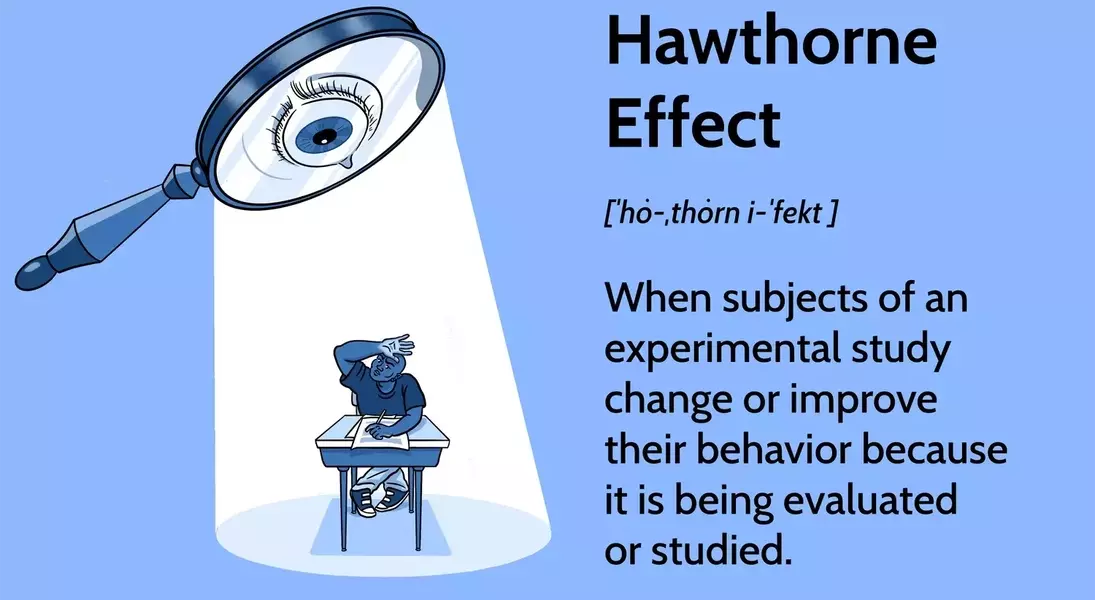
The Hawthorne Effect, a concept suggesting that individuals adjust their behavior when conscious of being observed during a study, has been a significant topic in organizational and social psychology since its inception in the 1920s. Despite its widespread recognition and inclusion in academic curricula, contemporary research has increasingly scrutinized its original findings and overall validity. This ongoing debate highlights the complexities inherent in conducting studies involving human subjects and the persistent challenge of isolating true causal factors from the influence of observation itself.
Understanding the dynamics of the Hawthorne Effect is crucial for researchers across various disciplines, particularly in fields such as healthcare where human behavior significantly impacts outcomes. The potential for participants to unconsciously or consciously modify their actions due to awareness of observation can introduce substantial bias, leading to skewed results that may not accurately reflect the efficacy of interventions or the true nature of the phenomena under investigation. Therefore, rigorous methodological approaches and a critical re-evaluation of past and present studies are essential to navigate this pervasive psychological phenomenon and ensure the robustness of scientific inquiry.
Understanding the Hawthorne Phenomenon
The Hawthorne Effect describes the tendency for study participants to modify their behavior simply because they are aware of being observed. This phenomenon gained prominence from experiments conducted in the late 1920s and early 1930s at Western Electric's Hawthorne Works. Initially, researchers believed that changes in working conditions, such as improved lighting or rest breaks, directly impacted worker productivity. However, subsequent analysis suggested that productivity increased regardless of the specific changes made, leading to the conclusion that the workers' awareness of being part of a study, rather than the environmental alterations themselves, was the primary driver of their improved performance. This recognition of observation-induced behavioral change has profound implications for the design and interpretation of research involving human subjects, as it highlights the difficulty of achieving truly objective data when subjects are conscious of being scrutinized.
The original Hawthorne studies aimed to identify factors influencing worker efficiency. Paradoxically, productivity rose even when lighting conditions were worsened, confounding the initial hypotheses. This led to the postulation that the mere act of being studied and receiving attention from researchers prompted the workers to enhance their output. Although widely cited for decades, later critical assessments have pointed out significant methodological flaws in these early experiments, including small sample sizes and potential biases from the researchers themselves. This historical context underscores the persistent challenge in scientific research to disentangle the effects of interventions from the psychological impact of observation, necessitating careful consideration of experimental design and data analysis to mitigate such confounding variables.
Modern Interpretations and Critical Perspectives
Contemporary views on the Hawthorne Effect are characterized by a significant re-evaluation and skepticism regarding its original findings and broad applicability. While the concept of behavioral change due to observation remains relevant, modern scholarship often challenges the initial interpretation of the Hawthorne experiments. Researchers today are increasingly aware of potential biases introduced by participant awareness and strive to implement methodologies that minimize this effect. The inconclusive nature of attempts to replicate the original findings, with many studies failing to demonstrate the effect consistently, suggests that the influence of observation might be more nuanced and context-dependent than initially assumed. This critical perspective emphasizes the need for rigorous study design, clear protocols, and a comprehensive understanding of human psychological responses to experimental settings to ensure the integrity of research outcomes.
The debate surrounding the Hawthorne Effect extends to its impact on various fields, particularly healthcare. A notable example is a 1978 study on cerebellar neurostimulators for cerebral palsy patients, where patients reported improvements despite quantitative analyses showing no significant change in motor function. This discrepancy was attributed to the Hawthorne Effect, as increased interaction with medical staff during the trial likely fostered a perception of improvement, thereby influencing patient self-reports. This illustrates how participant awareness can compromise the validity of data, making it difficult to ascertain the true efficacy of treatments. Consequently, researchers are continuously seeking ways to account for and mitigate observer bias, employing techniques such as blinding and incorporating objective measures to reduce the subjective influence of participation and enhance the reliability of clinical and behavioral studies. The persistent questioning of the Hawthorne Effect underscores its complex nature and the ongoing effort to refine research methodologies in studies involving human subjects.
