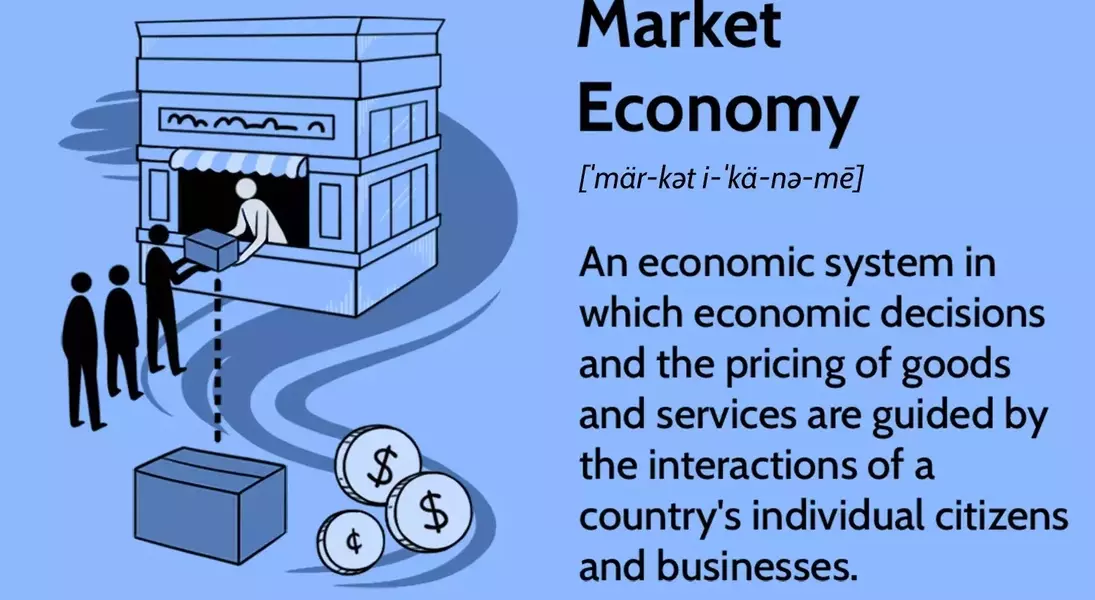
A market economy is an economic model where the production and pricing of goods and services are primarily dictated by the interplay of supply and demand. This framework empowers private entities, such as individuals and businesses, to make autonomous decisions regarding resource allocation and production, with minimal direct government interference. Esteemed economists like Adam Smith have championed the market economy, suggesting that the 'invisible hand' of self-interest and competition naturally leads to efficient outcomes. However, modern economies typically adopt a mixed approach, incorporating some level of government regulation to ensure stability, fairness, and the provision of public goods, acknowledging the complexities and potential pitfalls of an entirely unregulated market.
The Core Principles of Market Economies
In a market economy, the fundamental forces of supply and demand are the primary determinants of what goods and services are produced, in what quantities, and at what prices. This system decentralizes economic decision-making, allowing consumers' preferences and producers' profit motives to shape the economic landscape. Entrepreneurs, leveraging factors of production like land, labor, and capital, create and offer products. Their success is measured by profits, which can be reinvested to fuel further growth, while failure leads to adaptation or withdrawal from the market. This dynamic process fosters a competitive environment that often drives innovation and efficiency.
Market economies operate on the premise that voluntary exchanges between buyers and sellers effectively allocate resources. When consumer demand for a product increases, its price tends to rise, incentivizing producers to increase supply. Conversely, a decrease in demand leads to lower prices and reduced production. This self-regulating mechanism, often referred to as the "invisible hand," is believed to optimize resource utilization and foster economic growth. Historically, figures like Adam Smith, David Ricardo, and Jean-Baptiste Say laid the theoretical groundwork for these economies, advocating for minimal government intervention, as they believed it could lead to inefficiencies and hinder the natural economic progression driven by individual incentives.
Evolution and Balance in Modern Market Systems
Today's market economies are rarely pure; they typically exist as mixed economies, integrating free-market principles with a degree of government intervention. This blend acknowledges that while market forces are powerful drivers of growth and innovation, some regulation is necessary to address market failures, protect consumers, ensure fair competition, and provide essential public services. Governments may implement policies such as minimum wage laws, subsidies for key industries, and regulations against harmful products, aiming to strike a balance between economic freedom and societal welfare. The United States, for example, embodies a market economy where the Federal Reserve actively manages monetary policy to maintain stability, full employment, and low inflation, alongside legislative efforts to regulate economic activity and safeguard consumer interests.
The debate over the optimal level of government involvement in market economies remains ongoing among economists. While there is a broad consensus that market-oriented systems are superior in generating wealth and improving living standards, experts differ on the specific scope and nature of government roles. Interventions can include price controls, licensing, quotas, and the provision of public goods through state-owned enterprises. Nevertheless, the hallmark of these economies remains the decentralized decision-making process, where numerous buyers and sellers engage in daily transactions. This structure, particularly evident in the functional markets for corporate control, enables the efficient transfer and restructuring of productive assets among entrepreneurs, continually adapting to evolving economic conditions and technological advancements.
